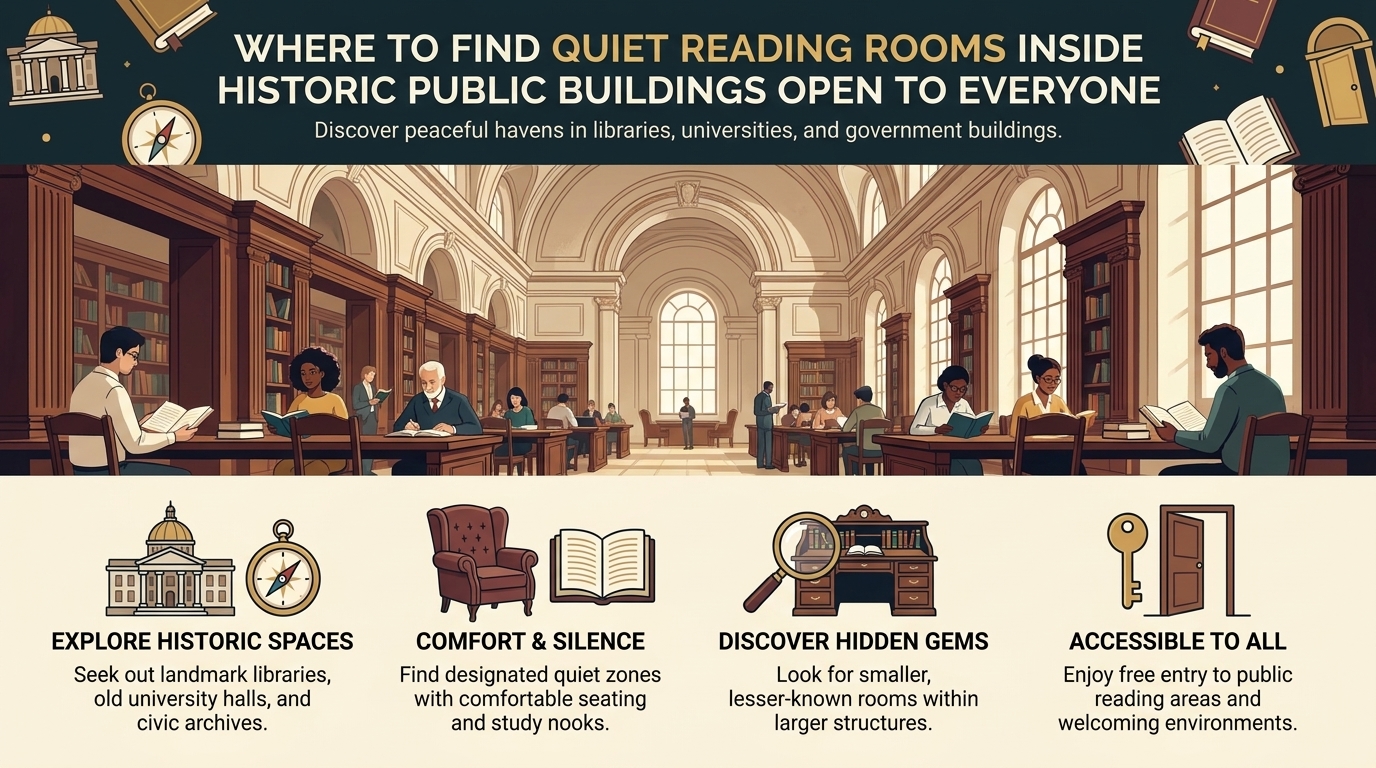
Where to Find Quiet Reading Rooms Inside Historic Public Buildings Open to Everyone
Introduction: Sanctuaries of Silence in the Modern Metropolis
In our hyper-connected, notification-driven world, true silence has become an endangered luxury. We navigate days dominated by digital pings, open-plan office chatter, traffic hum, and the relentless hum of modern urban existence. For the reader, writer, researcher, or anyone simply craving a quiet mental refuge, finding a place to sit undisturbed can feel like an impossible quest.
Yet, hidden right in plain sight across America’s greatest metropolitan centers—from the historic stone corridors of New York and the foggy hills of San Francisco, to the sunlit plazas of California, the rain-washed elegance of Washington State, and the grand civic spaces of Texas—lie magnificent historic public buildings equipped with breathtaking reading rooms.
These architectural masterpieces were designed not merely as storage facilities for books, but as civic “palaces for the people.” Best of all? They are entirely free, open to the general public, and waiting to welcome you into their timeless quiet. This comprehensive guide will show you how to find these hidden reading rooms, navigate their access rules, and make the most of your silent sanctuary.
1. The Philosophy of the Civic Reading Room: Architecture as Mental Medicine
To step inside a historic public reading room is to step backward in time. Constructed during eras when civic pride was expressed through monumental stone, soaring timber, and intricate plasterwork, these spaces were engineered to command reverence.
The Impact of Scale and Acoustics
When you walk under a 52-foot painted ceiling adorned with clouds and chandeliers—such as the legendary Rose Main Reading Room at the New York Public Library—something psychological shifts. High vaulted ceilings, massive oak tables, heavy brass lamps, and sound-absorbing leather-bound volumes naturally alter human behavior. Whispers replace raised voices; hurried footsteps slow down. The physical architecture itself forces your nervous system to downshift, providing an instant antidote to cognitive fatigue.
2. Regional Spotlights: Finding Grand Reading Rooms Across Key Hubs
Every major cultural hub features its own distinct architectural legacy of public reading spaces. Here is where you can find some of the finest open-access sanctuaries across our key regions:
New York: Beaux-Arts Cathedrals and Urban Sanctuaries
New York City is a global capital for historic libraries. Beyond the famous Stephen A. Schwarzman Building on Fifth Avenue with its majestic Rose Main Reading Room, New York is peppered with historic branch libraries and municipal buildings featuring quiet historical reading nooks, vintage wood paneling, and magnificent arched windows looking out onto bustling city streets.
San Francisco & California: Mission Revival, Neoclassicism, and Light
California’s historic public buildings weave Spanish Colonial, Beaux-Arts, and modern classical elements into tranquil spaces. In San Francisco and surrounding California hubs, look toward historic downtown main libraries, municipal archive rooms, and coastal community libraries that blend natural sunlight with rich timber and historic ironwork, offering breezy, calm environments for study.
Washington State: Pacific Northwest Craftsmanship and Light
In Washington’s urban centers, historic reading rooms often lean into the rich natural landscape of the Pacific Northwest. Expect tall vertical windows framing evergreen courtyards, exposed cedar beams, and warm brick interiors that provide a cozy, sheltered refuge during the region’s famous misty afternoons.
Texas: Monumental Scale and Southern Grandeur
Texas cities pride themselves on grand civic architecture. Historic courthouses, converted historic municipal complexes, and grand metropolitan central libraries feature sprawling open-access reading areas, soaring atriums, and comfortable study desks bathed in warm southern light.
3. Step-by-Step Methodology: How to Locate and Access Historic Reading Rooms
While many historic reading rooms are open to the general public, accessing them requires knowing how to navigate institutional rules. Follow this step-by-step framework:
Step One: Distinguish Between Public Reading Rooms and Research-Only Archives
Not every old room with books is open for casual reading. Historic public buildings generally feature two tiers of spaces:
- General Public Reading Rooms: Open to anyone for reading, studying, sketching, or quiet contemplation without a special pass.
- Special Collections / Rare Book Rooms: Often require advance appointments, a reader’s card, photo identification, and a verified research justification. Stick to the general reading rooms for casual afternoon drop-ins.
Step Two: Check Access Policies and Security Protocols
Because these buildings are often housed in historic or government-managed structures, security can be tight. Expect bag checks at entrances. Always check the official website of the building or library system beforehand to confirm operating hours, as historic reading rooms frequently close early on weekends or rotate closure days for preservation maintenance.
Step Three: Respect the Etiquette of Silence
Historic reading rooms are living monuments to quiet scholarship. To blend in seamlessly and honor the space, observe unwritten rules: silence your phone completely before crossing the threshold, use headphones at low volumes if accessing digital audio, and handle historic furniture and writing desks with care.
4. Essential Tips for the Ultimate Quiet Reading Experience
- Arrive Early for Prime Seating: The most coveted seats—usually those directly beneath historic brass table lamps or next to soaring arched windows—fill up quickly during peak hours. Arrive right when doors open for the best selection.
- Bring Layers: Historic public buildings with high ceilings and stone facades can experience dramatic temperature fluctuations. What feels warm outside can feel chilly inside stone reading halls; pack a light sweater or scarf.
- Leave Food and Sugary Drinks Outside: To protect historic carpet, rare book dust, and antique woodwork, almost all historic reading rooms strictly prohibit food and open drinks (though bottled water with a secure lid is occasionally permitted).
- Explore Beyond the Main Desk: Take a self-guided architectural walk through the building’s secondary hallways, exhibition galleries, and exterior courtyards after your reading session to discover hidden historical plaques and architectural details.
5. Frequently Asked Questions (FAQ)
1. Do I need a library card or residency to enter historic public reading rooms?
For general public reading rooms in municipal libraries (like the New York Public Library or San Francisco Public Library), you do not need a library card or local residency just to walk in, sit down, and read. Library cards are only required if you intend to check books out or use specific behind-the-scenes digital databases.
2. Are photographs allowed inside historic reading rooms?
Casual photography (without a flash, tripod, or shutter sound) is generally permitted in the grand open public reading rooms of major libraries for personal use. However, flash photography is strictly banned to protect historic documents, and photography is entirely prohibited in specialized manuscript or rare book reading rooms.
3. Can I use my laptop and plug in devices at historic reading desks?
Yes! Most major historic reading rooms have been thoughtfully retrofitted with discreet power outlets and Wi-Fi access at long oak reading tables, blending 19th-century architecture with 21st-century functionality.
4. Are these reading rooms truly silent?
While people make every effort to maintain a hushed environment, they are public civic spaces, so you may hear soft footsteps on marble floors, turning pages, or quiet laptop typing. If you need absolute acoustic isolation, bringing noise-canceling headphones is recommended.
5. How can I find lesser-known historic reading rooms that aren’t overcrowded?
Look beyond main central branch libraries. Explore historic municipal courthouses, state library archives, university-affiliated public libraries, and historic society headquarters in your city.
6. Are historic reading rooms accessible for visitors with disabilities?
Major public institutions are legally required to provide ADA-compliant access, elevators, and wheelchair-accessible seating within their reading rooms, though entering older historic wings may sometimes require using designated secondary elevators.
7. Can I bring my own books and study materials inside?
Absolutely! In fact, most people visit these rooms specifically to bring their own textbooks, novels, sketchbooks, or laptops to study in a distraction-free environment.
8. What is the quietest time of day to visit a historic reading room?
Weekday mornings immediately after opening (typically 9:00 AM to 11:00 AM) or mid-afternoon on weekdays offer the lowest foot traffic and the highest availability of quiet seating.
9. Are backpacks and large bags allowed inside reading rooms?
Many historic libraries permit backpacks and tote bags, but security personnel may inspect them upon entry. Some institutions require large bags or luggage to be checked at a coat check or locker room before entering the reading floor.
10. Why are these public spaces worth visiting over a modern coffee shop?
Unlike commercial coffee shops where you feel pressured to buy additional items or deal with espresso machine noise and loud ambient music, historic public reading rooms offer unconditional stillness, stunning architectural beauty, and a profound connection to civic history—all entirely free of charge.
Conclusion: Reclaiming Your Right to Quietude
Finding a quiet reading room inside a historic public building is more than just discovering a good place to study; it is an act of reclaiming your focus and mental peace in a noisy world. Whether you are seeking solace beneath the soaring ceilings of New York, exploring the sunlit historic libraries of California and Texas, or enjoying the maritime tranquility of Washington and San Francisco, these architectural treasures stand ready to welcome you.
Step past the heavy oak doors, leave your digital distractions behind, and let the timeless”