What Residents Love Most About the Changing Seasons in the Northeast Region: The Ultimate Cultural & Lifestyle Masterclass
Welcome to nyattitude.com—your premier digital destination for regional culture, urban lifestyle guides, seasonal reflections, and evocative neighborhood explorations spanning the vibrant landscapes of New York, San Francisco, Texas, California, and Washington, with a special dedication to the incomparable spirit of the Northeast.
Introduction: The Symphony of the Four Seasons
There is a distinct, poetic rhythm to living in the American Northeast. While other regions of the country bask in perpetual sunshine or experience a binary loop of mild winters and scorching summers, the Northeast operates on a dramatic, cinematic four-season rotation.
Ask any long-term resident of New York State, the Hudson Valley, New England, or the broader northeastern corridor what keeps them anchored to the region through April mud seasons and January nor’easters, and they will tell you it comes down to one thing: the profound, sensory magic of the changing seasons.
In the Northeast, seasons are not merely shifts in meteorological data; they are profound cultural events. They dictate our wardrobes, our weekend itineraries, our culinary cravings, and our psychological states. When the air crisps, the landscape transforms, and the environment breathes in a completely new personality every three months.
This comprehensive, immersive masterclass explores why Northeast residents cherish this seasonal turnover, breaking down the psychological, aesthetic, and cultural joys of each distinct chapter of the year.
Part 1: Autumn—The Crown Jewel of the Northeast
If you ask a resident of New York or the greater Northeast to name their favorite season, a vast majority will instantly point toward autumn. Fall in the Northeast is world-renowned for good reason—it is an aesthetic masterpiece.
1. The Foliage Explosion (The Great Color Shift)
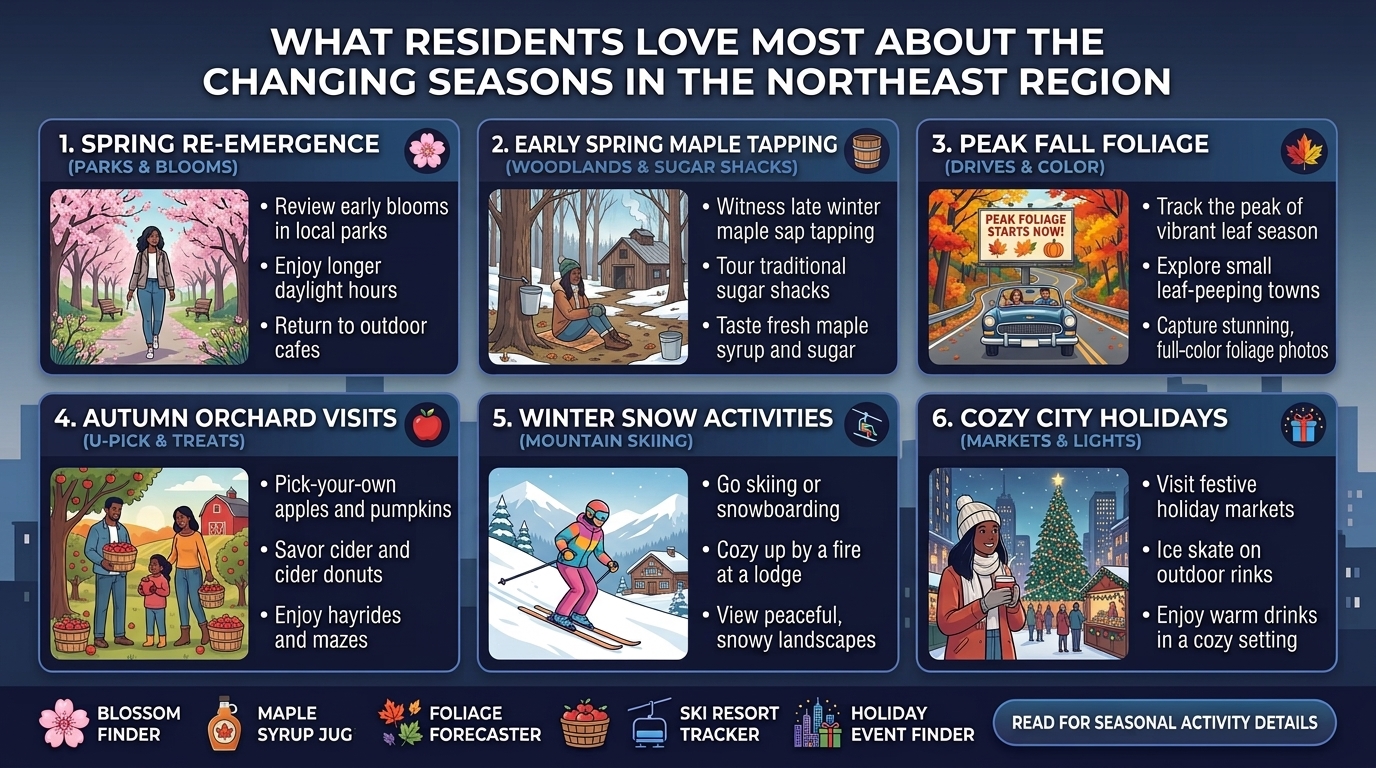
As September fades into October, the deciduous forests of the Northeast—blanketing the Adirondacks, the Catskills, the Berkshires, and suburban neighborhoods alike—undergo a breathtaking chemical transformation. Sugar maples, red oaks, and yellow birches burst into vibrant hues of crimson, amber, burnt orange, and brilliant gold.
- The Ritual: Weekend drives up scenic parkways, apple-picking excursions at historic orchards, and crisp morning hikes up mountain trails become sacred weekly rituals.
2. Harvest Season and Culinary Comforts
Autumn in the Northeast triggers a massive culinary pivot. The farmers’ markets overflow with crisp Honeycrisp apples, fresh pressed cider, warm cider donuts, pumpkins, and squashes.
- The Wardrobe Transition: The return of heavy wool sweaters, vintage tweed jackets, and stylish scarves marks the end of sticky summer heat and the embrace of cozy, layered fashion.
Part 2: Winter—Cozy Refuges and Snowy Wonderlands
While outsiders often associate Northeast winters with icy commutes and shoveling sidewalks, true residents know that winter possesses a quiet, introspective magic that is deeply cherished.
1. The Transformation of City and Countryside
When a heavy winter nor’easter blankets Manhattan brownstones or quiet New England colonial towns in fresh, untouched powder, the world falls into a profound, cinematic hush. The roaring chaos of urban traffic muffled under a foot of snow creates a surreal, peaceful stillness.
- Winter Recreation: Residents embrace the cold rather than hiding from it, heading upstate for weekend skiing, snowboarding, ice skating under historic park arches, and snowshoeing through frosted pine forests.
2. The Culture of “Hygge” and Warm Gathering
Winter forces a shift toward indoor intimacy. Dimly lit pubs with roaring fireplaces, cozy independent bookstores, steaming bowls of French onion soup or New England clam chowder, and long evenings spent reading indoors create an unmatched atmosphere of warmth and community.
Part 3: Spring—The Great Awakening and Rebirth
After months of gray skies and freezing temperatures, the arrival of spring in the Northeast is experienced with visceral, overwhelming gratitude.
1. The Explosion of Color and Blossom
Spring in the Northeast does not whisper; it erupts. As the frost recedes, cherry blossoms burst across Brooklyn Botanic Garden and Washington, D.C. tidal basins, tulips line urban brownstone steps, and vibrant green shoots pierce through thawing soil.
- Outdoor Life Returns: Sidewalk cafes unpack their outdoor tables, parks fill with sun-seeking residents shedding heavy coats, and running paths along rivers become crowded with energetic life.
2. The Psychological Rebirth
The psychological impact of spring is profound. Days grow visibly longer, sunlight lingers past dinner time, and the entire regional mood lifts from winter hibernation into an active, creative renaissance.
Part 4: Summer—Energy, Waterfronts, and Endless Days
Summer in the Northeast is defined by its sheer kinetic energy, long daylight hours, and an exodus to the water.
1. The Coastal Migration (Beaches and Islands)
From the legendary shores of the Hamptons and Long Island beaches to the rocky coasts of Maine and the sandy dunes of Cape Cod, Northeast residents live for summer weekends by the Atlantic.
- Urban Summer Culture: In cities like New York, summer brings free outdoor Shakespeare in the Park, rooftop movie screenings, street fairs, and late-night strolls along the waterfront esplanades.
2. Al Fresco Living
Cooking over open grills, dining on sidewalk patios, and attending outdoor music festivals become the default way of life. The oppressive humidity of August is easily forgiven when balanced by breezy coastal evenings and warm starlit skies.
Part 5: Essential Tips for Embracing the Northeast Seasons
To truly thrive and find joy in the Northeast’s dramatic climate shifts, seasoned locals follow a few essential lifestyle rules:
- Invest in Proper Technical Outerwear: There is no such thing as bad weather in the Northeast, only bad clothing. Invest in a truly windproof, waterproof winter parka, insulated boots, and breathable moisture-wicking layers for autumn hiking.
- Align Your Diet with the Calendar: Eat seasonally. Enjoy fresh berries and corn in the summer, root vegetables and apples in the fall, and rich, braised stews in the winter. It connects you deeply to the local agricultural rhythm.
- Plan Seasonal Traditions: Anchor your year with recurring traditions—such as apple picking every October, ice skating every January, cherry blossom viewing every April, and a coastal beach trip every July.
Part 6: Frequently Asked Questions (FAQ)
1. What makes the changing seasons in the Northeast unique compared to other regions?
The Northeast experiences four distinct, highly defined meteorological and cultural seasons, featuring dramatic changes in temperature, landscape foliage, and lifestyle routines.
2. When is the best time to see fall foliage in the Northeast?
Peak fall foliage typically occurs from late September through mid-October, starting in northern New England and moving southward toward New York and Pennsylvania by late October.
3. How do Northeast residents cope with harsh winters?
Residents embrace winter by investing in high-quality outdoor gear, engaging in winter sports like skiing, and cultivating cozy indoor hobbies and social gatherings.
4. What are some iconic spring traditions in the Northeast?
Popular spring activities include visiting botanical gardens for cherry blossom viewings, opening up weekend farm stands, and participating in Earth Day community cleanups.
5. Where are the best places to experience summer in the Northeast?
Coastal destinations like the Hamptons, Cape Cod, Martha’s Vineyard, the Jersey Shore, and the scenic lakes of upstate New York are premier summer hotspots.
6. Is the cost of living in the Northeast worth the seasonal experience?
For millions of residents, the rich cultural history, career opportunities, and vibrant four-season lifestyle make the Northeast well worth its unique cost of living.
7. How does the seasonal shift affect local food culture?
Local agriculture thrives on seasonality, bringing fresh maple syrup in early spring, sweet corn and berries in summer, apples in autumn, and root vegetables in winter.
8. What is “Mud Season” in the Northeast?
Mud season occurs in early spring between winter snowmelt and true spring blooms, when unpaved rural roads and hiking trails become muddy and temporarily impassable.
9. Why do autumn leaves change color so brilliantly in the Northeast?
The combination of warm, sunny autumn days and cool (but not freezing) nights triggers deciduous trees to break down chlorophyll, revealing brilliant underlying reds, oranges, and yellows.
10. How can newcomers prepare for their first full year of Northeast seasons?
Prepare by purchasing a versatile wardrobe for all four weather extremes, exploring local parks during every season transition, and adopting local seasonal food and outdoor traditions.
Conclusion
The changing seasons in the Northeast offer a rich, dynamic tapestry of life that transforms physical landscapes into emotional milestones. From the fiery amber canopies of autumn and the quiet, snow-draped beauty of winter to the explosive rebirth of spring and the vibrant coastal energy of summer, the Northeast rewards those who lean fully into its seasonal rhythm.
Keep exploring nyattitude.com for more regional lifestyle reflections, urban guides, and cultural essays designed for curious minds spanning New York, San Francisco, Texas, California, Washington, and beyond.