For cultural enthusiasts navigating the fast-paced, high-stress concrete rhythms of major metropolitan epicenters like New York, San Francisco, Los Angeles, Seattle, and Austin, modern nightlife is often dominated by deafening EDM clubs, crowded commercial rooftop bars, and overly produced pop venues. Yet, hidden beneath the sidewalks, down worn flight-of-stairs concrete stairwells, and behind unassuming wooden doors lies a completely different universe: the intimate neighborhood basement jazz lounge.
There is a distinct, irreplaceable magic that occurs when you sit mere feet away from world-class musicians pouring their souls into a saxophone or piano in a room no larger than a spacious living room. It is raw, unvarnished, acoustic, and profoundly atmospheric. However, navigating underground historic venues requires a blend of street-smart logistics, cultural etiquette, and safety awareness.
At nyattitude.com, we champion style, authentic culture, and sophisticated urban living. This comprehensive masterclass acts as your ultimate guide to finding, entering, enjoying, and safely navigating the world of subterranean jazz rooms.
Part 1: The Anatomy of a Subterranean Jazz Lounge
Before descending into your first basement club, it helps to understand the unique architectural, acoustic, and cultural mechanics that define these legendary spaces.
+-----------------------------------+-----------------------------------+
| Modern Commercial Nightclub       | Subterranean Neighborhood Jazz Bar|
+-----------------------------------+-----------------------------------+
| Massive PA systems & heavy bass   | Natural, unamplified acoustic wood|
| Flashing strobe lights & screens  | Low, amber incandescent lighting  |
| VIP bottle service & velvet ropes | Communal tables, tight proximity  |
| Algorithmic pop playlists         | Live, unscripted improvisation    |
+-----------------------------------+-----------------------------------+
1. Acoustic Masonry and Sub-Street Insulation
Basement lounges are naturally insulated from street noise by thick subterranean concrete foundations and masonry walls. This structural dampening traps sound inside, creating a warm, resonant, velvety acoustic envelope where every brush of a drum snare or muted trumpet note resonates cleanly through the air without digital distortion.
2. The Intimacy Factor
Unlike massive stadium jazz festivals, underground basement lounges put you inside the performance space. You can see the sweat on a pianist’s brow, watch fingers dance across fretboards, and feel the physical vibration of upright bass strings through the floorboards.
Part 2: Iconic Subterranean Jazz Hotspots Across the United States
Across our core metropolitan landscapes, historic basements and underground rooms have nurtured jazz legends for decades:
1. New York City: Greenwich Village & Harlem Basements
- The Experience: New York is the global epicenter of basement jazz. Legendary subterranean institutions like The Village Vanguard (operating down a steep basement stairwell on Seventh Avenue South since 1935) and historic Village cellars offer a literal time capsule where Coltrane, Evans, and Monk once performed.
- The Vibe: Sacred, historic, hushed, and intensely reverent toward the music.
2. San Francisco & Northern California: North Beach & Mission Cellars
- The Experience: San Francisco’s deep bohemian beatnik history lives on in hidden neighborhood basement bars and back-alley lounges across North Beach. Venues like The Black Cat or intimate North Beach cellar bars blend craft mixology with cutting-edge modern jazz improvisation.
- The Vibe: Bohemian, moody, artistic, and effortlessly cool.
3. Austin, Texas: Downtown and East Side Underground Rooms
- The Experience: While Austin is globally celebrated as the Live Music Capital of the World for rock, blues, and indie music, its underground jazz scene is thriving in hidden downtown speakeasies and subterranean lounges that offer late-night jam sessions.
- The Vibe: Eclectic, warm, welcoming, and high-energy.
4. Seattle & Washington: Pioneer Square and Belltown Cellars
- The Experience: Seattle’s rich Pacific Northwest jazz heritage—which launched legends like Quincy Jones—is preserved in historic underground rooms and brick cellar bars tucked beneath Pioneer Square.
- The Vibe: Moody, rain-soaked, artistic, and deeply community-focused.
Part 3: Tactical Tips for Navigating Underground Venues Safely and Stylishly
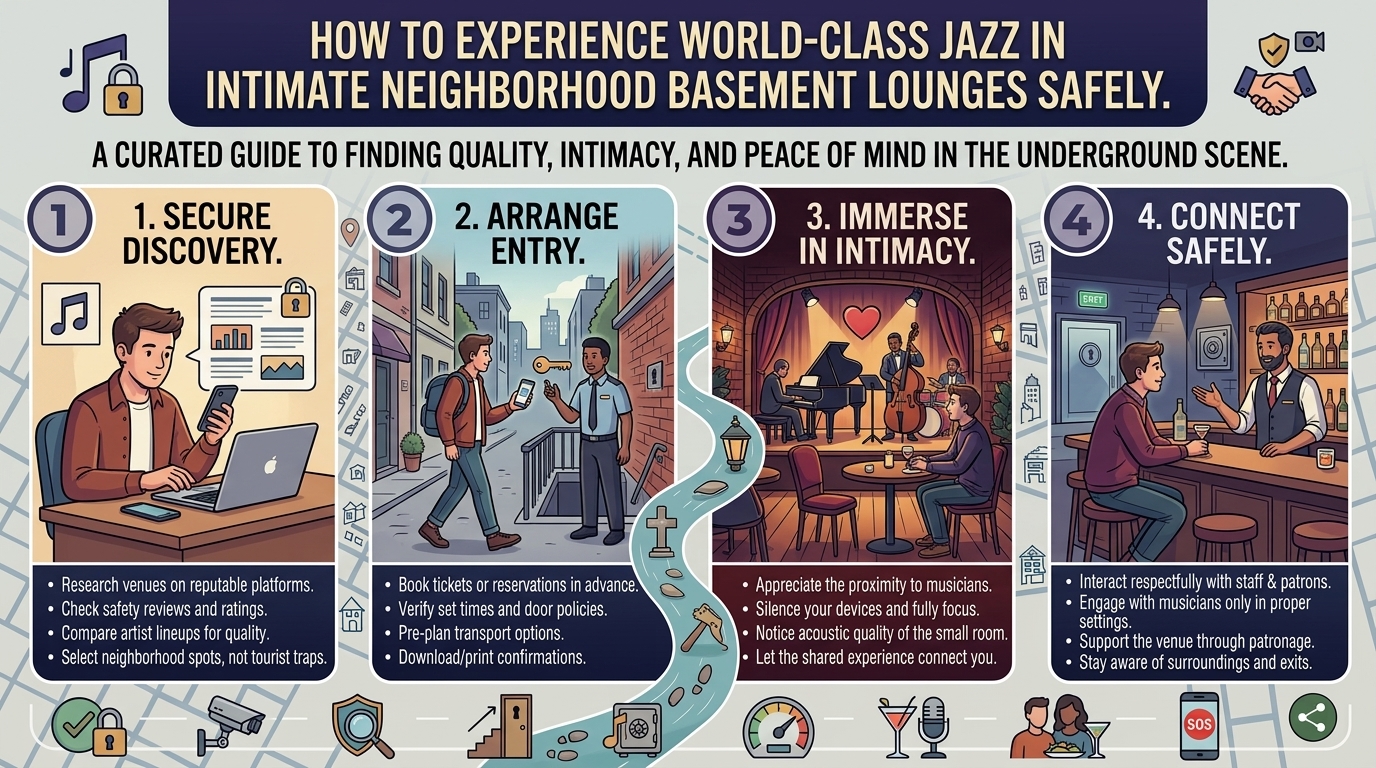
Stepping off a dark street into an unmarked basement lounge requires a mix of urban street smarts and cultural etiquette.
+-------+-----------------------------------+-----------------------------------+
| Tip   | Action Strategy                   | Purpose                           |
+-------+-----------------------------------+-----------------------------------+
| 1     | Master the Unmarked Doorway       | Recognize authentic venues        |
| 2     | Respect the "Silence Rule"        | Honor the musicians and audience  |
| 3     | Prioritize Safety & Exits         | Note secondary stairwells/exits   |
| 4     | Carry Small Cash Denominations    | Vital for cover charges & tips    |
+-------+-----------------------------------+-----------------------------------+
1. Spotting Authentic Subterranean Cues
The best underground jazz clubs rarely have flashy neon signs. Look for subtle architectural cues: a brass plaque beside a heavy wooden door, a faint red glow from a basement window, or a modest line of discerning patrons waiting quietly on a sidewalk stairwell.
2. Mastering Jazz Club Etiquette
- Absolute Silence During Performance: Unlike sports bars or rock concerts where shouting over music is common, traditional jazz rooms demand respectful quiet while musicians are playing. Save your conversations for between sets.
- Tipping the Artists: Jazz musicians make their living largely from door cover charges and cash tips dropped into band tip jars. Support the artists generously.
Frequently Asked Questions (FAQ)
1. Are underground basement jazz lounges safe to visit late at night?
Yes, reputable basement lounges located in established cultural districts are generally safe, provided you practice standard urban awareness, book rideshares that pick you up directly outside the venue, and avoid wandering down unlit alleys alone at 3:00 AM.
2. Do I need to make reservations in advance?
For world-class, intimate basement rooms (like the Village Vanguard), seating is extremely limited (often fewer than 50–100 seats), making online advance reservations mandatory. For neighborhood local jam sessions, arriving early before the first set is usually sufficient.
3. What is a “Two-Drink Minimum,” and why do jazz clubs enforce it?
Because ticket cover charges in intimate venues are often kept artificially low to keep music accessible, clubs rely on beverage sales to pay staff and support the venue. Most spots enforce a minimum purchase of two items (alcoholic or non-alcoholic) per guest.
4. What should I wear when visiting an intimate jazz lounge?
Dress with understated urban elegance. Think smart-casual: dark denim, tailored blazers, vintage leather jackets, stylish boots, or sophisticated cocktail attire. Avoid overly casual gym wear or overly flashy club outfits.
5. Can I bring children or teenagers into basement jazz lounges?
Most basement lounges operate primarily as bars or music listening rooms serving alcohol, meaning they are strictly 21+ venues, though some historic matinee or early evening weekend shows occasionally permit all ages. Always check venue rules.
6. Why is talking loudly discouraged during a jazz performance?
Intimate acoustic jazz is performed without heavy electronic amplification. Loud table chatter, clinking glassware, and phone notifications carry easily across small rooms, disrupting the musicians’ concentration and ruining the listening experience for patrons.
7. How do I find unadvertised neighborhood jam sessions?
Check local independent music blogs, follow regional jazz radio station calendars (like WBGO or KCSM), or ask local record store clerks and bartenders where musicians hang out on their nights off.
8. Is photography permitted during jazz sets?
Quick, flashless smartphone photos taken from your seat between songs are usually tolerated. However, using flash photography, holding up large recording devices, or obstructing sightlines while bands are playing is strictly forbidden.
9. What safety precautions should I keep in mind regarding basement exits?
Because basement venues operate underground, always scan the room upon entry to locate the primary staircase and any secondary emergency exit doors, ensuring you know your evacuation route in an emergency.
10. Where can I find more lifestyle guides and cultural city explorations?
For continuous inspiration on stylish city living, hidden neighborhood gems, and curated cultural experiences, keep your browser locked right here to nyattitude.com!
Conclusion
Stepping down a dark stairwell into an intimate basement jazz lounge is one of the most sublime urban experiences life has to offer. By blending cultural respect, street-smart safety awareness, and an appreciation for live acoustic artistry, you unlock a hidden layer of metropolitan life that mass entertainment can never replicate. Whether you are sipping a classic cocktail in a Greenwich Village cellar, listening to modern improvisation in San Francisco, or enjoying late-night blues in Austin, the underground jazz scene offers unmatched soul.
At nyattitude.com, we empower you to navigate city culture with style, sophistication, and confidence. Find your basement lounge, respect the music, and let the rhythm move you tonight!