In an age dominated by glass screens, digital notifications, and fast-paced virtual environments, a quiet revolution is taking place across major metropolitan hubs. People are seeking ways to reconnect with the physical world, using their hands to create tangible, functional art. Among all crafts, ceramics and pottery have experienced a massive cultural resurgence.
Whether you reside in the bustling concrete canyons of New York, the sun-kissed art enclaves of California, the foggy hills of San Francisco, the tech-forward neighborhoods of Washington state, or the expansive cultural centers of Texas, joining a local ceramic studio offers a rare sanctuary for tactile mindfulness.
Finding the right independent pottery workshop that welcomes beginners can feel daunting amidst a sea of commercial paint-your-own-pottery chains and exclusive artist co-ops. This comprehensive guide provides everything you need to know to locate, evaluate, and choose the best independent ceramic studios offering beginner classes near you.
1. Why Choose Independent Ceramic Studios Over Commercial Chains?
When searching for beginner pottery classes, you will generally encounter two categories of spaces: commercial franchise chains (where you paint pre-fired bisqueware) and independent, community-driven ceramic studios.
The Independent Studio Advantage
- Full Process Education: Independent studios teach you the complete ceramic lifecycle—from wedging raw clay and throwing on a pottery wheel or handbuilding, to trimming, bisque firing, and glaze chemistry.
- Community Culture: These studios are operated by local artists, potters, and educators who foster tight-knit creative communities. You aren’t just paying for a class; you are gaining access to a local network of makers.
- Professional Equipment Access: Independent hubs feature high-end equipment like Shimpo wheels, professional slab rollers, pugmills, and extensive glaze libraries that allow you to experiment with professional-grade materials.
2. Regional Breakdown: Where to Hunt for Local Studios in Key Hubs
Different metropolitan regions possess unique ceramic cultures, architectural styles, and studio landscapes. Knowing where to look in your specific area is half the battle.
New York (Manhattan, Brooklyn, and Beyond)
In dense urban centers like New York, ceramic studios often occupy converted industrial spaces, historic carriage houses, or loft buildings in neighborhoods like Gowanus, Greenpoint, NoMad, and Chelsea. Look for studios that balance tight physical footprints with state-of-the-art ventilation systems and vibrant community open-studio hours.
San Francisco and California
The West Coast has a rich history of avant-garde ceramic art. From San Francisco’s Mission District to Los Angeles and Southern California hubs, independent studios frequently emphasize sustainable practices, high-fire reduction kilns, and earthy, natural glazes that reflect the coastal landscape.
Washington State
In Washington’s urban and suburban centers, ceramic studios are deeply influenced by the surrounding Pacific Northwest environment. Expect cozy, light-filled spaces that emphasize organic shapes, functional tableware, and community-driven workshops inspired by regional craft traditions.
Texas
Texas metropolitan areas feature spacious, large-format studios that make the most of expansive real estate. From Austin and San Antonio to Dallas and Houston, Texas ceramic studios often boast large community worktables, specialized multi-week wheel-throwing courses, and welcoming environments for absolute beginners.
3. Step-by-Step Methodology: How to Locate Hidden Studio Gems
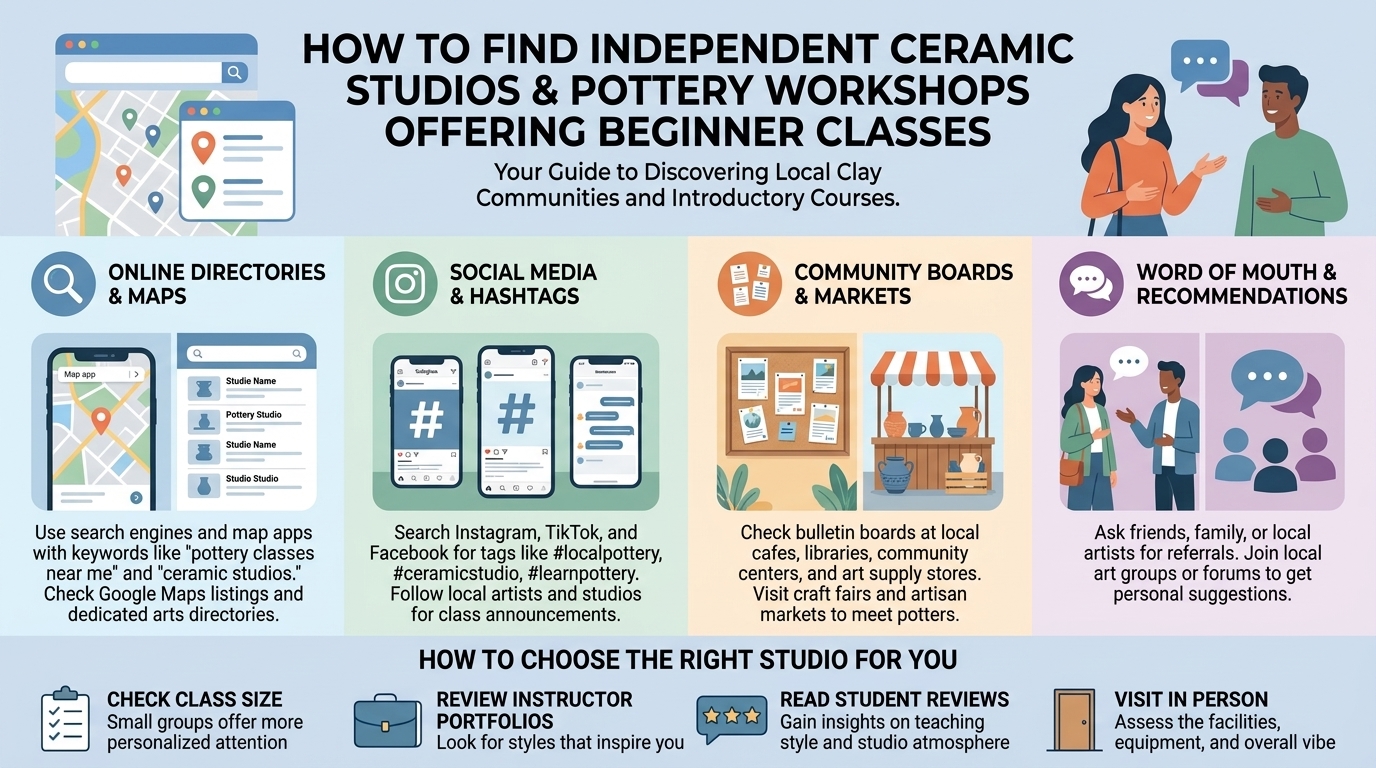
Finding local independent studios requires looking beyond standard search engine results, which often favor large commercial franchises. Follow these steps to find authentic local makerspaces:
Step One: Use Hyper-Local Search and Mapping Terms
Instead of typing generic keywords like “pottery classes,” use targeted search queries such as:
- Independent ceramic studio [City Name]
- Pottery wheel throwing classes for beginners [Neighborhood Name]
- Community clay co-op open studio [City Name]
Step Two: Explore Local Art Districts and Supply Shops
Independent ceramic artists and studio owners usually congregate near art supply shops, university fine arts departments, or industrial warehouse districts undergoing artistic revitalization. Visit local ceramic supply stores and ask the staff where independent potters fire their work or teach classes.
Step Three: Leverage Instagram and Local Maker Directories
Instagram is the primary digital storefront for most independent ceramic studios. Search hashtags like #SFpottery, #NYCeramics, #TexasPotters, or #SeattleClay to discover independent instructors and hidden studio spaces that may not have massive corporate websites.
4. What to Look For in a Beginner-Friendly Class
Not all ceramic classes are created equal. When scanning a studio’s curriculum, check for these essential features to ensure a great first-time experience:
- All-Inclusive Pricing: Ensure that beginner class fees include clay, tool usage, bisque firing, glaze firing, and open studio practice time so you don’t face hidden material costs.
- Class Size Limits: Look for classes with small student-to-teacher ratios (ideally 8 to 12 students per class) to ensure you receive personalized instruction on the pottery wheel.
- Structured Multi-Week Formats: While one-time “date night” workshops are fun, a 4-to-8-week beginner series is necessary if you actually want to learn how to center clay and throw a stable vessel.
5. Frequently Asked Questions (FAQ)
1. Do I need any prior art or drawing experience to take a beginner pottery class?
None at all! Pottery is a tactile, physical craft. Many people who consider themselves “not artistic” thrive in ceramics because it relies on muscle memory, physics, and patience rather than drawing skills.
2. What should I wear to my first pottery class?
Wear comfortable clothes that you do not mind getting dirty or dusty (clay washes out easily, but glazes can sometimes stain). Trim your fingernails short, tie back long hair, and remove rings, watches, and bracelets before sitting at the wheel.
3. How much do beginner ceramic classes typically cost?
One-time introductory workshops generally range from $65 to $125. Comprehensive multi-week beginner courses (ranging from 4 to 8 weeks) typically cost between $300 and $450, which almost always includes materials and firing fees.
4. What is the difference between wheel throwing and handbuilding?
Wheel throwing involves shaping spinning clay on a motorized potter’s wheel to create symmetrical vessels like bowls and mugs. Handbuilding uses techniques like pinching, coiling, and slab construction to build freeform, sculptural, or asymmetrical functional pieces.
5. Will I get to keep the pieces I make in a beginner class?
Yes! Once your pieces dry completely (leather-hard stage), they go through a bisque firing, get glazed by you, and undergo a final glaze firing. The studio will notify you when your finished work is ready for pickup, usually 2 to 4 weeks after class ends.
6. Can I practice outside of class time as a beginner?
Many independent studios include “open studio” access with multi-week class enrollments, allowing you to practice what you learned during scheduled class hours independently.
7. How do I know if a studio is truly “independent” versus a corporate chain?
Check the “About Us” page on their website. Independent studios are usually founded by individual ceramic artists, educators, or local partnerships rather than national franchise corporations.
8. Is clay toxic or dangerous for beginners?
Raw clay and commercial ceramic glazes are generally safe for classroom use when basic studio etiquette is followed (such as wiping down surfaces with wet sponges instead of sweeping dry dust). Instructors provide full safety guidelines during your first session.
9. What if I can’t center the clay on the wheel? Is that normal?
Absolutely! Centering clay is the hardest technical hurdle for every beginner potter. It requires leverage, posture, and muscle memory. Expect your first few attempts to wobble—it is all part of the learning curve!
10. How far in advance do I need to book beginner classes?
Because independent studios maintain small class sizes, popular beginner courses often sell out weeks or months in advance. It is best to check studio schedules and sign up right as new semester blocks are released.
Conclusion: Start Your Ceramic Journey Today
Finding the right independent ceramic studio is your gateway to a rewarding, grounding creative hobby. Whether you want to master the spinning wheel in San Francisco, join a collaborative workspace in New York, or explore handbuilding in Texas or Washington, independent studios offer a welcoming space to slow down, get your hands dirty, and create something uniquely your own. Take the first step today, support your local arts community, and discover the joy of working with clay.