Why Creative Professionals from All Over the World Choose to Move to New York
Introduction: The Global Metropolis of Imagination
From the cobalt-blue twilight stretching across the Brooklyn waterfront to the hum of creative energy crackling through the galleries of Chelsea, New York City has long held an almost mythical status in the global imagination. For generations, painters, writers, architects, filmmakers, designers, musicians, and visionaries of every discipline have packed their belongings, crossed oceans, and boarded cross-country flights with a singular destination in mind: New York.
While modern technology allows creatives to work remotely from almost anywhere on earth, the gravitational pull of New York remains unmatched. It is a city that does not merely accommodate art—it demands it, tests it, and amplifies it on a world stage.
For creative professionals navigating life across major hubs like Texas, California, Washington, and San Francisco, as well as international capitals, making the leap to New York represents a defining professional and personal milestone. This comprehensive, highly informative guide explores the cultural, economic, and psychological catalysts that make New York City the undisputed capital of global creativity, proudly brought to you by nyattitude.com.
1. The Power of Proximity: The Ultimate Creative Ecosystem
In the creative industries, isolation is the enemy of innovation. While a quiet studio in the countryside offers solitude, it rarely offers serendipity. New York City operates on a principle of hyper-density that fuels creative cross-pollination.
The Serendipity of the Streets
In New York, you do not simply go to work; you absorb culture simply by stepping out your front door. A graphic designer grabbing morning espresso in the West Village might strike up a conversation with an independent publisher; an animator living in a cramped Brooklyn loft might share a subway ride with an award-winning documentary editor.
This spatial proximity breaks down professional silos. Fashion designers collaborate with industrial architects; classical musicians experiment with electronic sound designers. The friction of brilliant minds colliding in close quarters creates a breeding ground for groundbreaking projects that could never be conceived in suburban or isolated environments.
2. Economic Gravity: Where Art Meets Capital
Passion fuels the artist, but infrastructure sustains the career. One of the primary reasons international and domestic creatives flock to New York is its unparalleled concentration of economic power, venture capital, high-net-worth patrons, and global media corporations.
Access to Global Decision-Makers
Whether you are pitching a venture-backed design startup, selling high-end fine art, or negotiating a book publishing contract, New York is where the final decisions are made.
- Publishing and Media: Midtown Manhattan remains the beating heart of traditional and digital journalism, literature, and media production.
- Advertising and Branding: Madison Avenue and its modern downtown counterparts house the world’s most influential creative agencies and brand consultancies.
- Fine Art and Auction Houses: Sotheby’s, Christie’s, and the world’s premier commercial galleries establish New York as the financial epicenter of the global art market.
By basing yourself in New York, you eliminate the geographic friction between your creative output and the capital required to scale, exhibit, and monetize your work.
3. Comparing Creative Hubs: Why New York Stands Apart
While creative professionals relocating to New York often weigh options across the United States, each major hub offers a distinct flavor, though none match New York’s specific cultural velocity.
New York vs. California & San Francisco
- California (Los Angeles): Dominated primarily by the film, television, and entertainment industries with a sprawling, car-dependent suburban layout.
- San Francisco: Steeped in software engineering, UI/UX design, and tech innovation, but heavily focused on digital products rather than traditional fine arts, publishing, or live performance culture.
- New York: Offers a pedestrian-first, multi-disciplinary environment where fashion, theater, literature, architecture, music, and visual art intersect seamlessly in real-time physical spaces.
New York vs. Texas & Washington
- Texas (Austin/Dallas/Houston): Austin has blossomed into a vibrant hub for indie music, tech, and film, offering a lower cost of living and vibrant creative culture. However, it lacks the institutional depth and global media saturation of the Northeast.
- Washington (Seattle): Renowned for its rich literary history, design sensibilities, and musical roots, but maintains a more subdued, nature-centric lifestyle compared to New York’s relentless, high-octane tempo.
4. The Crucible Effect: Accountability and Peer Pressure
New York is famously unforgiving, and that very quality is one of its greatest assets for creative professionals.
In smaller markets, a creative person is often the “big fish in a small pond,” easily receiving local praise that can inadvertently stunt professional growth. In New York, you are surrounded by world-class talent in every direction. This creates what psychologists call the crucible effect—an environment of intense peer pressure and high expectations that forces you to elevate your craft.
- No Mediocrity Allowed: The sheer standard of execution in New York galleries, stages, and agencies raises your internal bar.
- Resilience and Grit: Surviving the logistical and emotional hurdles of New York builds an unshakeable professional resilience. Creatives who make it in New York develop a unique brand of confidence and grit that commands respect worldwide.
5. Institutional Infrastructure: Museums, Libraries, and Archives
For research-driven creatives, historians, visual artists, and writers, New York offers a treasure trove of institutional resources that are unmatched anywhere else in the Western Hemisphere.
World-Class Research and Inspiration
- The New York Public Library (NYPL): A staggering network of research centers (such as the Stephen A. Schwarzman Building) offering access to millions of rare manuscripts, maps, and historical documents.
- World-Renowned Museums: The Metropolitan Museum of Art, the Museum of Modern Art (MoMA), the Guggenheim, the Whitney, and hundreds of independent galleries provide an endless, rotating masterclass in visual composition and art history.
- The Performing Arts: From Broadway and Lincoln Center to underground jazz clubs in Greenwich Village and experimental theater spaces in Brooklyn, the city is a living, breathing conservatory.
6. Multiculturalism and Global Perspectives
Creativity is fundamentally about synthesis—taking disparate ideas, cultural traditions, and lived experiences and combining them into something entirely new.
New York City is one of the most ethnically, linguistically, and culturally diverse cities on the planet. Walking through Queens, Brooklyn, or Manhattan exposes a creator to global cuisines, immigrant stories, traditional crafts, and alternative worldviews on a daily basis. For writers, designers, and conceptual artists, this constant immersion in global humanity prevents creative stagnation and expands worldview horizons far beyond domestic echo chambers.
7. Practical Tips for Creatives Moving to New York
Making the transition to New York requires careful strategic planning. Here are essential tips for creative professionals preparing to make the move:
- Secure a Hybrid Income Stream: Before moving, build a baseline of remote freelance clients, part-time remote contracts, or passive income to buffer the high cost of living during your first six months.
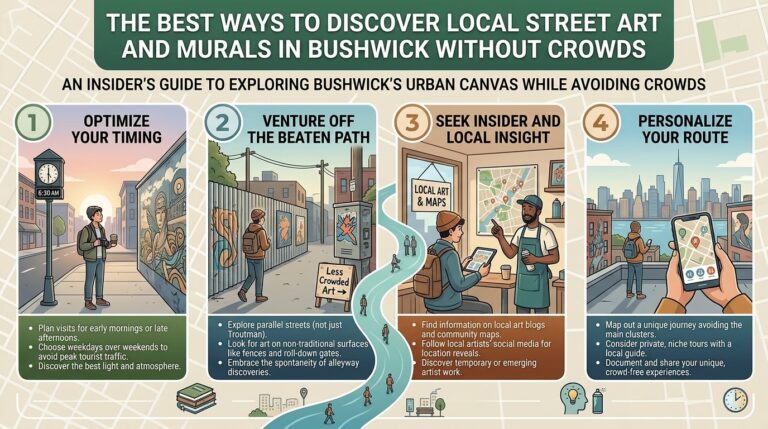
- Embrace the Borough Beyond Manhattan: While Manhattan is the institutional core, neighborhoods in Brooklyn (like Williamsburg, Bushwick, and DUMBO) and Queens (like Astoria and Long Island City) are where the grassroots creative communities, affordable studio spaces, and cooperative lofts thrive.
- Build Your Network Before Landing: Use platforms like LinkedIn, Behance, Dribbble, or professional guilds to connect with local New York creatives, attend virtual portfolio reviews, or join co-working creative spaces (like NeueHouse or The Assemblage) ahead of time.
- Master the Art of the Sublease: Don’t sign a long-term lease sight unseen. Secure a short-term sublet for your first 30 to 60 days so you can explore different neighborhoods and find where your specific creative tribe congregates.
- Budget for Space Sacrifices: Understand that square footage in New York is a luxury. Learn to embrace micro-living, multifunctional furniture, and off-site storage or communal maker spaces for large-scale projects.
Frequently Asked Questions (FAQs)
1. Why is New York considered a global capital for creative professionals?
New York concentrates immense economic power, global media corporations, world-class cultural institutions, and a hyper-dense population of multi-disciplinary artists into a single walkable city, creating unmatched opportunities for collaboration and career advancement.
2. How does living in New York compare to working in creative hubs like Los Angeles or San Francisco?
While Los Angeles centers heavily on film/entertainment and San Francisco on tech/digital products, New York bridges traditional fine arts, fashion, publishing, advertising, theater, and architecture into an interconnected, multi-industry metropolis.
3. Is it financially viable for an emerging creative professional to move to New York?
It is challenging due to high living costs, but entirely viable with careful financial planning. Many emerging creatives start by securing remote income streams, living with roommates in outer boroughs, and leveraging shared studio spaces.
4. What are the best neighborhoods in New York for creative professionals?
Popular creative hubs include Bushwick, Williamsburg, and Greenpoint in Brooklyn; Astoria and Long Island City in Queens; and historic artistic enclaves like the East Village and West Village in Manhattan.
5. How do international creatives secure visas to work in New York?
Creative professionals often pursue specialized visas such as the O-1 Visa (for individuals with extraordinary ability in the arts or sciences) or employer-sponsored working visas like the H-1B, backed by major agencies, design firms, or cultural institutions.
6. Do I need an agent or gallery representation before moving to New York?
No. Many creatives move to New York specifically to build their networks, pitch galleries, and connect with agents in person. Face-to-face networking and studio visits still hold immense weight in the New York art and design world.
7. How can I find affordable studio or workspace in New York?
Look into artist residency programs, cultural non-profits (like the Elizabeth Foundation for the Arts), and shared maker spaces or industrial co-ops in Brooklyn and Queens that offer subsidized or partitioned creative spaces.
8. What is the “crucible effect” in New York’s creative scene?
The crucible effect refers to the intense peer pressure and high standards created by being surrounded by world-class talent, which pushes creative professionals to elevate their skills and produce their best work.
9. How does New York’s multiculturalism influence creative work?
With residents from every corner of the globe, New York exposes creators to diverse cultural traditions, alternative perspectives, and global narratives that deeply enrich writing, design, art, and conceptual thinking.
10. What is the single most important piece of advice for a creative moving to NYC?
Develop emotional resilience and flexibility. New York will test your patience with its pace and logistics, but the rewards, inspirations, and career breakthroughs it offers are well worth the initial adjustment.
Conclusion: Take the Leap and Define Your Legacy
Moving to New York City as a creative professional is not merely a geographic relocation; it is a profound commitment to your craft. It is stepping onto a global stage where your ideas are challenged, refined, and tested against the best in the world.
Whether you are transitioning from the vibrant music scene of Austin, Texas, the tech corridors of San Francisco, the scenic coasts of Washington, or crossing international borders, New York offers an energetic canvas unlike any other.
Embrace the hustle, immerse yourself in the culture, and build your creative legacy right here with us at nyattitude.com!
What inspired you to consider a move to New York City? Share your creative background, questions, or aspirations in the comments below, and let’s connect at nyattitude.com!