Few structures capture the collective imagination quite like major metropolitan bridges. Spanning turbulent waters, connecting divided landmasses, and uniting distinct cultural zones, these engineering titans are much more than mere asphalt and steel corridors. They are physical manifestations of political will, architectural ambition, and social transformation.
Across landmark regions—from the historic East River crossings of New York and the majestic maritime spans of San Francisco and California to the rugged river and sound crossings of Washington state, and the sprawling historic viaducts of Texas—bridges define the identity of the places they anchor.
If you want to look past the postcard views and truly understand the layered, complex histories behind the bridges connecting city hubs, this comprehensive guide will take you deep into their past, engineering breakthroughs, and cultural impact.
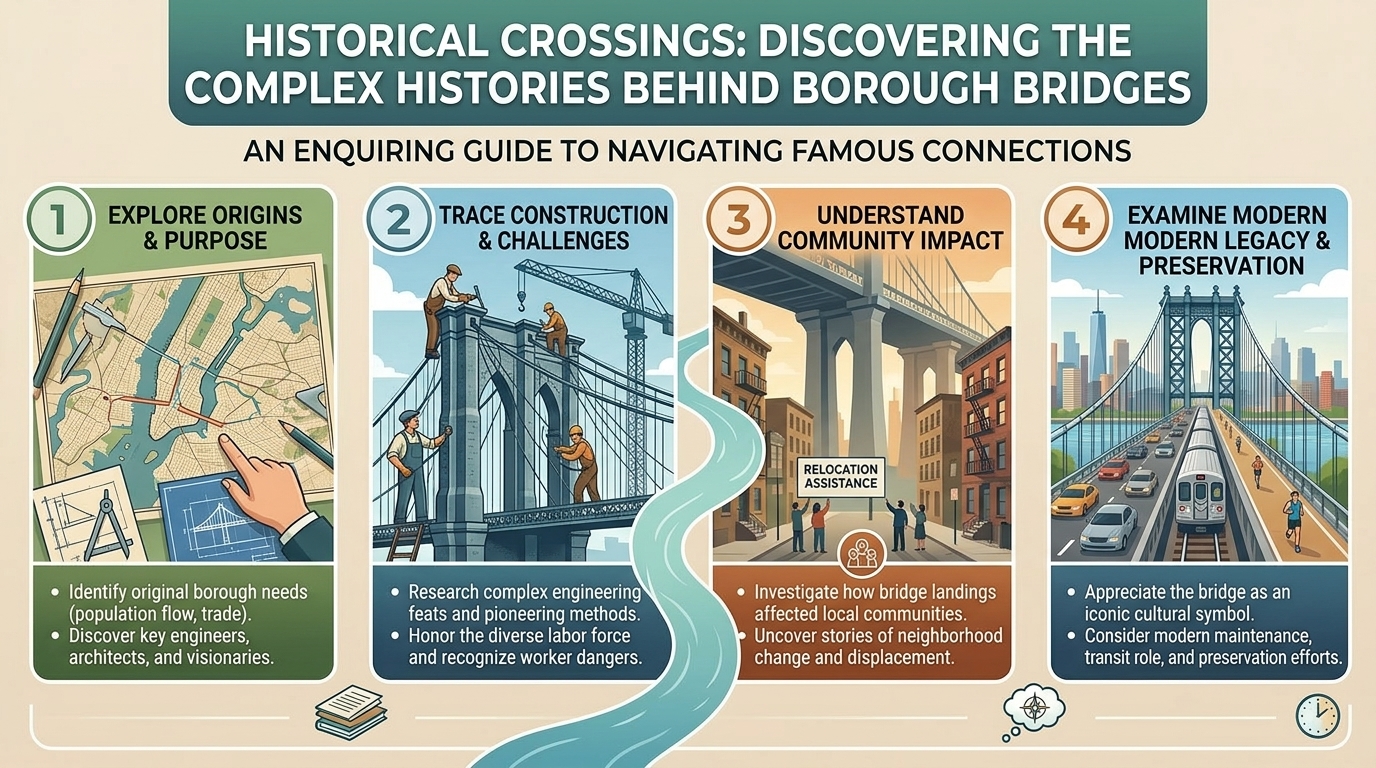
1. The Political and Economic Battles Behind Bridge Construction
Before a single caisson is sunk into a riverbed or a suspension cable is strung across a bay, decades of fierce political debate, funding crises, and fierce civic rivalries usually play out.
- Overcoming Isolation and Monopoly: Historically, municipal expansion relied on slow, weather-dependent ferry services. Private ferry operators often held lucrative monopolies and fought tooth and nail against the construction of permanent fixed bridges. Transitioning a city from a collection of isolated islands or peninsulas to an integrated metropolis meant stepping on powerful political toes.
- The Labor and Human Cost: Building 19th- and early 20th-century mega-bridges was perilous. Projects like the Brooklyn Bridge in New York required groundbreaking deep-water foundation work using pressurized pneumatic caissons. Workers suffered heavily from “caisson disease” (the bends), and dozens lost their lives, embedding a somber human sacrifice into the masonry of these civic monuments.
2. Architectural Evolution: From Gothic Stone to Art Deco Steel
The material evolution of famous bridges tells the story of human industrial progress. As architectural styles shifted, so did the aesthetic footprint left on urban skylines.
- The Neo-Gothic Era (New York): Late 19th-century masterworks utilized heavy limestone towers paired with newly developed galvanized steel wire. The pointed arches of the Brooklyn Bridge’s towers mirrored European cathedrals, signaling that civic infrastructure was the new temple of American progress.
- The Art Deco Triumph (San Francisco & California): By the 1930s, industrial design embraced sleek lines and bold color choices. The Golden Gate Bridge famously rejected plain industrial gray or black in favor of its signature “International Orange”, chosen by architect Irving Morrow to cut through thick marine fog while complementing the natural russet hues of the surrounding Marin headlands.
- Regional Adaptability (Washington & Texas): In the Pacific Northwest, bridge design had to account for massive marine traffic, heavy winds, and deep water channels, leading to pioneering work in floating bridge engineering across Lake Washington. In Texas, historic truss and arch bridges across major rivers like the Colorado and Brazos reflect pragmatic, durable engineering tailored to expansive frontier expansion and rural-urban connectivity.
3. How Bridges Altered the Social Fabric of Cities
Bridges do not just connect geographies; they completely reshape demographics, real estate values, and cultural identities.
- The Suburb Generation: By creating rapid, reliable transit corridors between dense urban cores and outer boroughs or neighboring counties, bridges catalyzed suburbanization. Areas that were once quiet farming villages or isolated marshlands transformed overnight into thriving residential neighborhoods.
- Class and Migration Shifts: Historically, bridges served as vital economic pipelines. Working-class communities often relied on cheap transit access across river spans to chase industrial employment in the core city, shifting the political and economic balance of entire metropolitan regions.
10 Frequently Asked Questions (FAQs)
1. Why are historic bridges often painted distinct colors like International Orange?
Beyond aesthetic appeal, specialized paints and coatings protect structural steel from aggressive saltwater corrosion, high humidity, and weathering.
2. What was the “bends,” and how did it affect early bridge builders?
Caisson disease (decompression sickness) occurred when workers labored inside pressurized underwater chambers and ascended too quickly, causing nitrogen bubbles to form in their bloodstreams.
3. Did pedestrian walkways always exist on historic suspension bridges?
Not always in the way we use them today. Many older bridges were later reconfigured or expanded to accommodate walking and cycling lanes as commuter habits shifted away from exclusive rail use.
4. How do suspension bridges survive high winds and earthquakes?
Modern and historic bridges alike utilize aerodynamic truss systems, flexible cable networks, and deep seismic retrofitting to absorb kinetic energy without collapsing.
5. Why do some bridges charge tolls while others are free?
Tolls historically funded the massive construction bonds required to build these mega-projects. Today, variable tolls or congestion pricing are often utilized to manage daily traffic volumes.
6. What is the difference between a suspension bridge and a cable-stayed bridge?
In a suspension bridge, main cables drape over towers and support vertical suspender wires, whereas cable-stayed bridges feature individual cables running directly from towers down to the deck.
7. How did the Brooklyn Bridge change New York City forever?
It physically unified Manhattan and Brooklyn long before the 1898 consolidation of the five boroughs, proving that massive urban landmasses could be permanently linked.
8. Why is the Golden Gate Bridge considered an engineering masterwork?
It was built across a deep, treacherous, high-current ocean strait exposed to intense Pacific storms, setting new benchmarks for long-span suspension engineering.
9. Are there hidden spaces or chambers inside these historic bridge towers?
Yes! Many historic bridge anchorages and towers feature hidden storage vaults, historic utility rooms, and sometimes even secret architectural flourishes left behind by their builders.
10. Where can I find more deep-dives into regional history and architecture?
Explore our extensive archives and urban exploration guides right here on nyattitude.com to discover the hidden stories behind America’s greatest landmarks.
Conclusion
The bridges connecting our city boroughs and regional hubs are living artifacts of human ambition. They stand as testaments to the engineers who calculated loads in the dark, the laborers who risked everything in the river mists, and the civic leaders who dared to imagine a connected world. The next time you cross a historic span—whether on foot, on a bicycle, or in a car—take a moment to look at the riveted steel and towering stone piers, and remember the complex history holding you up.