In an era dominated by algorithmic streaming queues, home theater setups, and massive corporate multiplexes showing the exact same CGI-heavy blockbusters, a quiet cultural rebellion is taking place. Cinephiles, urban explorers, and lovers of nostalgia are rediscovering the magic of stepping inside historic, independent single-screen cinemas.
These architectural jewels do more than just project light onto a screen; they offer an immersive portal into cinematic history. From the grand movie palaces of New York and San Francisco to the indie strongholds of California, the rainy independent hubs of Washington state, and the booming cultural epicenters of Texas, historic theaters are where community and film culture intersect.
If you are looking to step back in time, support local non-profit arts, and catch rare 35mm prints or indie gems, here is your master guide on how to track down these historic cinematic sanctuaries.
1. Why Historic Independent Theaters Offer an Unbeatable Experience
Before hunting down specific venues, it helps to understand what makes watching a film in a historic theater entirely different from visiting a modern commercial cinema:
- Architectural Splendor: Many of these theaters were built during the Golden Age of Hollywood or the roaring 1920s, featuring ornate plasterwork, velvet curtains, glowing neon marquees, and majestic balconies.
- The Curated Repertoire: Instead of relying strictly on box-office algorithms, independent theater programmers curate thoughtful thematic retrospectives, director spotlights, rare foreign language features, and local filmmaker showcases.
- Celluloid Preservation: Many historic cinemas—such as San Francisco’s legendary Roxie Theater or Los Angeles’s New Beverly Cinema—maintain specialized projection equipment capable of playing original 35mm and 70mm film stock, preserving the authentic grain and texture of classic cinema.
2. Proven Strategies for Finding Independent Cinemas Locally
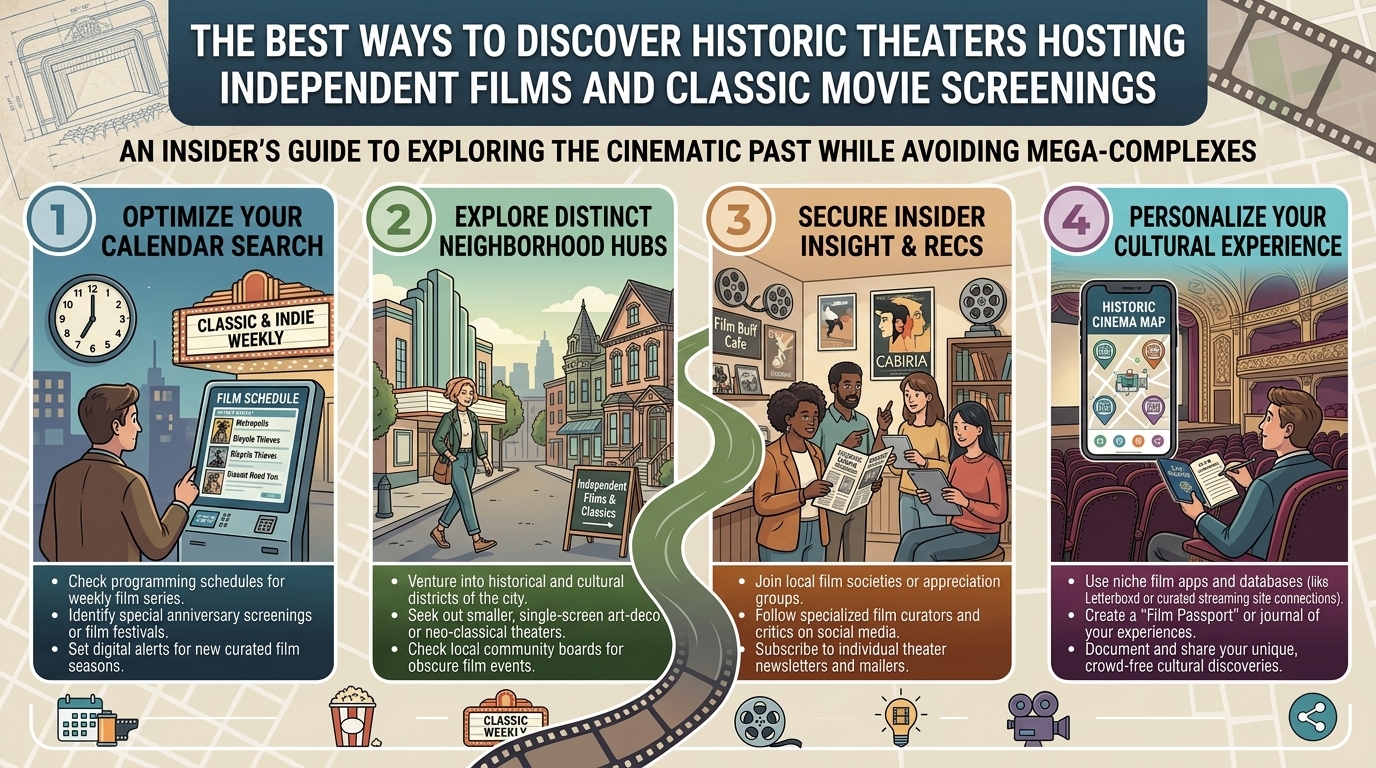
If you have recently moved to a new city or want to uncover hidden film societies right in your backyard, use these practical steps to locate them:
- Dig Past Page One on Search Engines: Modern mapping apps prioritize large commercial chains (like AMC, Regal, or Cinemark). To find true independents, search specialized terms like “arthouse cinema,” “historic movie palace,” “non-profit film society,” or “repertory theater” paired with your city or region name.
- Consult Dedicated Archives and Directories: Websites like Cinema Treasures catalog historic and closed theaters worldwide, helping you spot vintage buildings that may have been restored into modern community screening rooms.
- Follow Local Film Societies and Cooperatives: Many cities feature independent film festivals or non-profit collectives (such as the Austin Film Society in Texas or localized film forums) that partner with historic venues to host weekly screening series.
3. Regional Spotlights: Iconic Historic Hubs Across the Country
Different regions boast distinct architectural styles and programming traditions rooted in their local histories:
- New York: Home to legendary institutions like Film Forum, historic Manhattan and Brooklyn cinemas weave together gritty urban history, avant-garde retrospectives, and deep-rooted neighborhood film culture.
- San Francisco & California: The Bay Area and Southern California are goldmines for movie history. From San Francisco’s historic Mission District arthouses to meticulously restored Hollywood Egyptian and vintage neighborhood venues, California’s independent theaters celebrate both countercultural storytelling and classical Hollywood legacy.
- Washington State: Pacific Northwest theaters often combine rustic charm with deep community engagement, offering cozy indoor refuges during rainy afternoons with eclectic mixes of indie documentaries and classic midnight movies.
- Texas: Texas cities like Austin, Dallas, and Houston blend independent spirit with massive cultural appreciation, hosting everything from open-air historic revivals to state-of-the-art indie cinema showcases supported by local artist foundations.
10 Frequently Asked Questions (FAQs)
1. What is the difference between a multiplex and a repertory theater?
A multiplex shows first-run mainstream commercial releases across multiple standardized auditoriums. A repertory theater typically operates on a single or dual screen, focusing on classic revivals, restored prints, independent films, and rotating thematic series.
2. Why do many historic theaters screen movies on 35mm film instead of digital?
Cinephiles and archivists value 35mm film because it offers a unique organic texture, color depth, and historical authenticity that digital formats cannot perfectly replicate.
3. Do I need a membership to attend independent film screenings?
While most historic theaters are open to the general public, many operate as non-profits and offer membership programs that provide discounted tickets, early access to seats, and invitations to special members-only screenings.
4. Are historic movie theaters accessible for modern audiences?
Many historic venues have undergone delicate, multi-million-dollar modern restorations to incorporate digital projection, comfortable seating, and ADA accessibility while preserving their historic architecture.
5. How can I find out if a director or actor is doing a Q&A at an indie theater?
Check the “Special Events” or “Q&A Calendar” section of local arthouse cinema websites, or subscribe to their weekly newsletter to catch live filmmaker appearances.
6. What kind of food and drinks are typically sold at independent cinemas?
Moving away from standard corporate concessions, many independent theaters offer local craft beers, fine wines, artisanal snacks, and locally sourced treats.
7. Why are single-screen historic theaters struggling financially?
High operational costs, building maintenance of aging historic structures, and shifting consumer habits toward streaming make community donations and ticket sales vital for their survival.
8. Can you rent historic movie theaters for private events?
Yes! Many historic cinemas allow private rentals for birthdays, independent premieres, corporate events, or even private film screenings.
9. How do I find midnight movie screenings and cult classics?
Look for weekend late-night programming schedules at independent theaters, which frequently host cult classics, interactive horror movie nights, and throwback 80s/90s features.
10. Where can I find more cultural guides and weekend itineraries?
Explore our comprehensive lifestyle and city guides right here on nyattitude.com to uncover more hidden artistic treasures across the country.
Conclusion
Finding and supporting historic independent theaters is a powerful way to connect with the soul of a city. Instead of passively consuming media on a handheld screen, stepping into a vintage auditorium surrounded by fellow film lovers turns movie-watching back into a shared ritual. The next time you are looking for an escape from the ordinary, track down your local historic cinema, grab a bag of popcorn, and let the flickering silver screen transport you.