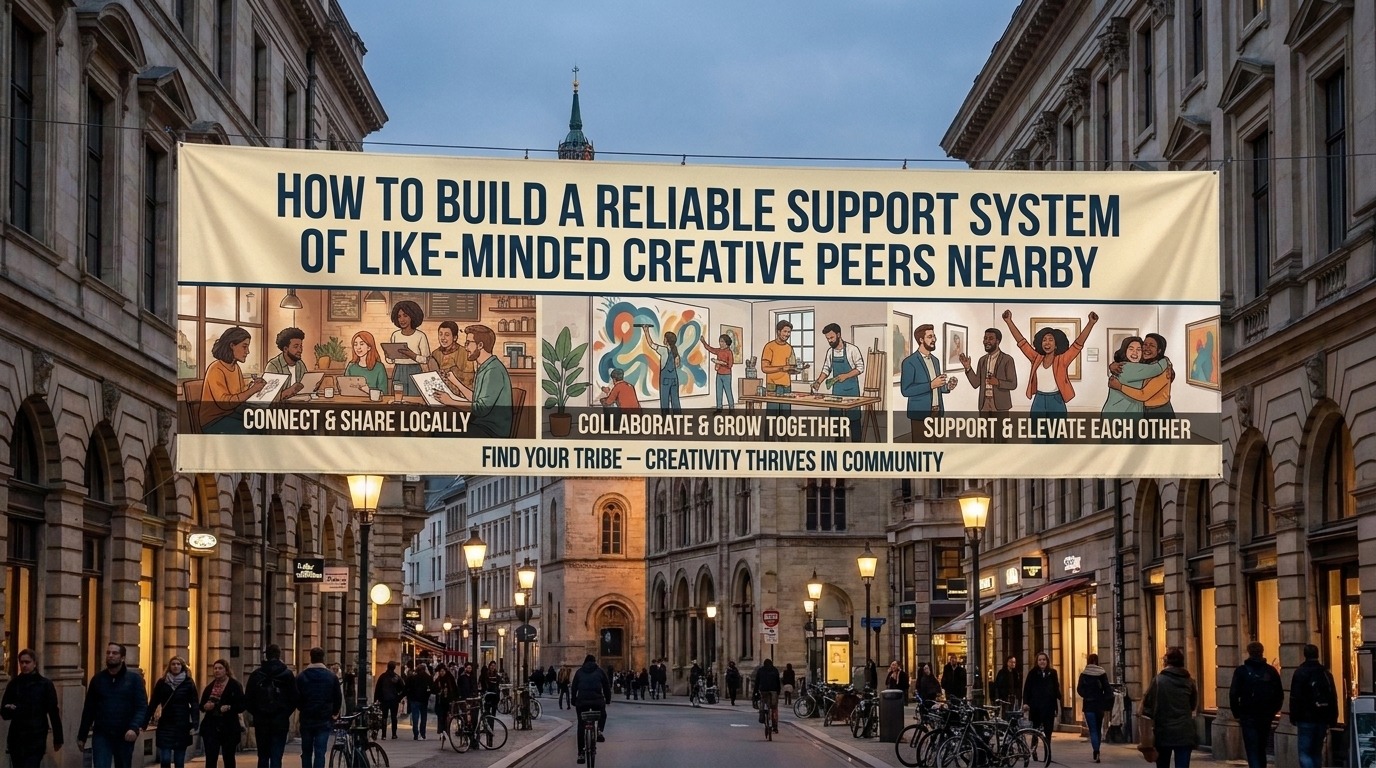
How to Build a Reliable Support System of Like-Minded Creative Peers Nearby
Building a high-impact creative career or innovative venture is rarely a solo endeavor. While individual talent, discipline, and vision provide the foundation, long-term sustainability depends heavily on your professional and creative ecosystem.
Whether operating in the fast-paced media and finance hubs of New York, navigating the tech and design ecosystems of San Francisco, Seattle, and across California and Washington, or tapping into the booming creative and business centers of Texas, finding your tribe is essential.
Without a strong network of like-minded peers, creators and professionals frequently face isolation, creative stagnation, burnout, and limited access to collaborative opportunities. Conversely, a reliable local support system acts as a force multiplier—providing honest feedback, strategic accountability, resource sharing, and emotional resilience during challenging transitions.
The Value of Local Creative Networks
In an era dominated by remote work and global digital platforms, proximity still matters immensely. Local peer groups offer distinct advantages that online communities cannot fully replicate.
Local Ecosystem Presence ───► High-Trust In-Person Interactions ───► Organic Resource Sharing
                                           │
                           [Deep Professional Synergy]
                                           │
                                           ▼
                      Accelerated Growth & Career Resilience
- High-Trust Interaction: Face-to-face meetings build trust faster than digital exchanges. Micro-expressions, shared physical environments, and spontaneous conversations create deeper, more authentic professional relationships.
- Rapid Resource and Opportunity Sharing: Local peers share immediate geographical context—knowledge of local venues, investors, studios, municipal grants, regional client markets, and trusted vendor recommendations.
- Spontaneous Collaboration (Serendipity): Proximity enables casual meetups, studio visits, co-working sessions, and last-minute collaborations that rarely emerge from scheduled video calls.
- Shared Local Context: Operating in major economic hubs like New York, San Francisco, Austin, or Seattle comes with unique regional pressures, cost-of-living realities, and industry dynamics. Local peers understand these specific challenges firsthand.
Community Building vs. Transactional Networking
To build a reliable, high-trust support system, you must fundamental shift your approach from traditional “networking” to authentic community building.
| Dimension | Transactional Networking | Community Building |
| Primary Motivation | Immediate personal gain (contacts, job leads, quick favors) | Mutual growth, long-term support, shared learning |
| Mindset | “What can this person do for me right now?” | “How can we support each other’s vision?” |
| Interaction Depth | Superficial exchanges, card-swapping, broadcast pitching | Deep conversations, vulnerability, active listening |
| Longevity | Short-term, fades once immediate utility ends | Durable, compounding value over years or decades |
Step-by-Step Framework to Cultivate Your Local Peer Network
Building a reliable support system requires strategic effort and consistency. Use this actionable five-step roadmap to cultivate a high-value local network:
1.Map Your Ideal Creative Ecosystem:Clarify the types of peers and collaborators you need.
Identify the specific skill sets, mindsets, and values you are looking for in your network. Are you seeking co-founders, technical advisors, creative critique partners, or accountability buddies? Defining your criteria prevents aimless networking.
2.Identify Local Gathering Nodes:Locate high-density hubs of talent in your region.
Seek out spaces where high-caliber peers naturally gather. Look beyond broad industry conferences to niche co-working hubs, specialized workshops, local gallery openings, independent studios, and curated masterminds across your target hub.
3.Initiate Low-Friction Connections:Lead with value rather than self-promotion.
When meeting potential peers, focus on offering value first—share a helpful resource, introduce them to a useful contact, or offer thoughtful feedback on their work. Generosity breaks down barriers and builds goodwill immediately.
4.Establish a Structured Mastermind or Peer Group:Move informal acquaintances into structured recurring groups.
Transition casual connections into a reliable support system by hosting a recurring monthly mastermind, critique group, or informal breakfast gathering. Structure brings consistency and ensures long-term momentum.
5.Maintain and Nurture Relationships Intentionally:Invest in ongoing relationships through consistent check-ins.
Treat your support system as a long-term investment. Check in regularly, celebrate your peers’ wins publicly, support their launches, and offer assistance during their professional setbacks.
Practical Tips for Connecting in Major Creative Hubs
Building a strong local network across fast-paced markets like New York, San Francisco, Texas, Washington, or California requires tailored strategies:
- Host Micro-Gatherings: Instead of waiting for the perfect event, host small, curated dinners or coffee meetups centered on a specific creative or strategic challenge.
- Leverage Co-Working Spaces Wisely: Choose independent co-working spaces or creative collectives known for hosting community-focused events rather than corporate, silent workspaces.
- Be Consistently Present: Attendance consistency breeds familiarity and trust. Regularly attend the same local meetups, workshops, or industry gatherings rather than hopping sporadically between events.
- Practice Active Listening: In competitive hubs, everyone wants to broadcast their achievements. Stand out by asking insightful questions, listening deeply, and showing genuine interest in others’ work.
Top 10 Frequently Asked Questions (FAQ)
1. How do I find like-minded creative peers if I am an introvert?
Start small. Focus on one-on-one connections through coffee meetings or small group workshops rather than large networking events. Hosting small, structured gatherings also allows you to control the environment and pace.
2. What if my local area lacks an established creative community?
If an active community doesn’t exist in your immediate vicinity, take the initiative to build one. Launch a monthly meetup, create a local digital channel, or host informal roundtables. Being the catalyst positions you as a central connector in your region.
3. How big should a creative peer support group be?
For deep accountability and feedback, the ideal mastermind or critique group size is 4 to 6 people. This allows for meaningful individual participation without meetings running too long.
4. How do I handle competitive dynamics within a peer network?
Cultivate a mindset of abundance. Recognize that a peer’s success elevates the entire local ecosystem and opens doors for future collaborations. Choose peers who value mutual elevation over zero-sum competition.
5. How often should a local peer support group meet?
Bi-weekly or monthly meetings offer the optimal balance between maintaining momentum and respecting everyone’s busy schedules.
6. What is the best way to ask someone to join my mastermind or peer group?
Keep it low-pressure and clear. Invite them to a single trial meeting or coffee chat focused on a specific topic (e.g., “A few of us are getting together for breakfast to discuss Q4 goals and project feedback—would love for you to join us.”).
7. How do I navigate differences in experience levels within a group?
Peer groups function best when members share similar levels of commitment, ambition, and professional maturity, even if their specific technical skills or disciplines vary.
8. How do I gracefully exit a peer group that is no longer adding value?
Be honest, professional, and appreciative. Thank the group for their time and support, explain that your current schedule or strategic focus requires a shift in priorities, and transition to informal individual check-ins.
9. Can online connections turn into reliable local peers?
Absoltuely. Use social platforms and professional networks to identify peers based in your city or region, then invite them to transition the relationship offline over coffee or at a local event.
10. Why is proximity particularly important in hubs like NY, SF, Seattle, or Austin?
Major metropolitan hubs operate at high speed and high density. Having a grounded local network provides a safe harbor to test ideas, navigate local economic realities, and access opportunities before they reach wider public markets.
Conclusion
Building a reliable support system of like-minded creative peers nearby is one of the most effective investments you can make in your professional journey. In competitive, fast-moving environments across Texas, New York, California, Washington, and San Francisco, going it alone is an unnecessary risk. By leading with value, seeking out local gathering nodes, and establishing structured peer groups, you create a resilient ecosystem that fuels your creativity, sharpens your strategy, and sustains your growth over the long haul.