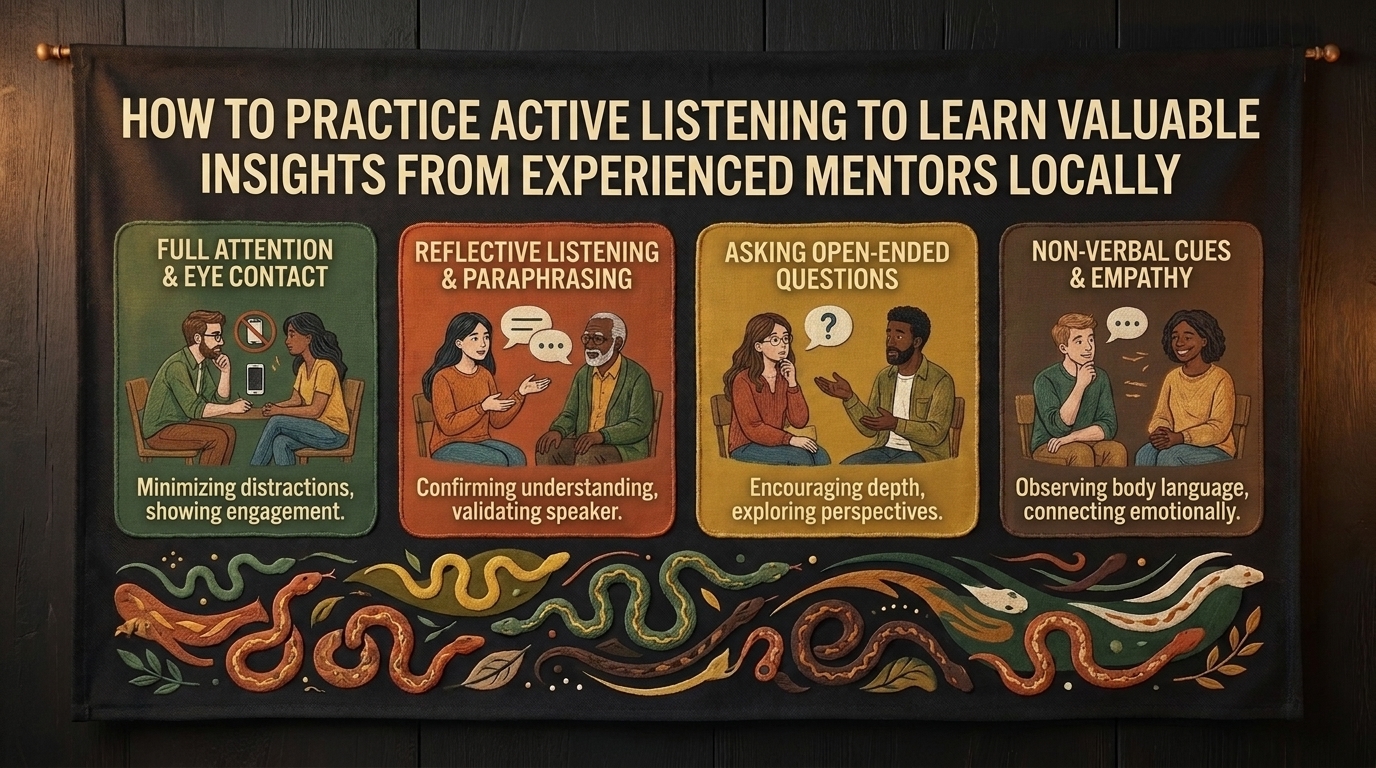
In our modern hyper-connected yet emotionally fragmented society, genuine human dialogue has become a rare commodity. Whether navigating high-stakes venture capital ecosystems in San Francisco, managing corporate finance corridors in New York, scaling innovative enterprises across Texas, spearheading technological breakthroughs in Washington, or balancing creative industries throughout California, accelerated success rarely happens in isolation. It is catalyzed by mentorship.
However, finding a seasoned mentor is only half the battle. The true differentiator between those who merely collect business cards and those who experience transformative professional growth lies in the art of active listening.
Too often, individuals approach experienced mentors with a performance mindset—eager to pitch their own ideas, impress with their résumé, or rush to the next question. This transactional approach squanders invaluable institutional knowledge. Active listening transforms a standard conversation into a masterclass, unlocking tacit insights, nuanced strategic wisdom, and psychological guidance that cannot be found in textbooks or online courses.
For ambitious professionals, entrepreneurs, and community builders interacting with platforms like nyattitude.com, mastering active listening is the ultimate meta-skill for extracting deep local wisdom.
This comprehensive guide explores the neuroscience of listening, the psychological anatomy of active engagement, step-by-step frameworks for local mentorship extraction, regional communication dynamics across major U.S. hubs, actionable listening tips, and answers to the most frequently asked questions.
1. The Neuroscience of Listening Versus Hearing
To understand why active listening is so transformative, we must first distinguish it from physiological hearing. Hearing is a passive sensory process; acoustic waves strike the eardrum and register in the auditory cortex. Listening, by contrast, is an active cognitive and neurological undertaking.
The Brain on Active Listening
When you engage in active listening, multiple regions of your brain light up simultaneously. The temporal lobe processes speech patterns and tone, while the prefrontal cortex—the seat of executive function—analyzes intent, context, and emotional subtext.
- The Empathy Circuitry: Furthermore, active listening activates mirror neurons, allowing you to simulate and deeply comprehend the emotional state and perspective of the speaker. This neurological alignment builds instant psychological rapport, turning a mentor from an intimidating authority figure into a collaborative ally.
Overcoming the Speed Gap
Human beings speak at an average rate of 125 to 150 words per minute, but the human brain can process cognitive information at speeds upwards of 500 to 800 words per minute. This “speed gap” is why passive listeners get distracted, drift off, or mentally formulate their rebuttal while the other person is still talking. Active listeners harness this surplus cognitive bandwidth not to plan their next sentence, but to analyze body language, decode unstated assumptions, and listen between the lines.
2. The Core Pillars of Active Listening with Mentors
Extracting valuable insights from experienced mentors requires a deliberate, structured approach. Active listening is built upon five foundational pillars:
1. Complete Psychological Presence
True presence means leaving your mental to-do list, smartphone notifications, and ego at the door. When sitting across from a mentor, your body language, eye contact, and focused attention must signal that, in that exact moment, nothing else matters more than their perspective.
2. Suspending Immediate Judgment
Novices often listen through the filter of validation—looking only for ideas that confirm what they already believe. Mentors frequently offer challenging, counterintuitive, or uncomfortable advice born from hard-earned failure. An active listener suspends judgment, silencing internal defensiveness to fully absorb why the mentor holds a specific viewpoint.
3. Non-Verbal Attunement
Communication is overwhelmingly non-verbal. Mehrabian’s communication framework suggests that a vast portion of emotional and attitudinal messaging is conveyed through posture, facial expressions, micro-gestures, and vocal tone. Attuning to these cues helps you gauge how passionate or sensitive a mentor is about a particular piece of advice.
4. Strategic Clarification and Probing
Passive listeners nod along blindly, often walking away confused. Active listeners ask precise, open-ended follow-up questions that dig deeper into the mentor’s mental models. They do not interrupt; instead, they wait for natural pauses to probe further into the root causes of historical business successes or failures.
5. Retention and Synthesis
Listening does not end when the conversation stops. Active listeners mentally or physically capture key insights immediately afterward, synthesizing the mentor’s stories into actionable frameworks that can be applied to their own professional trajectory.
3. Regional Dynamics: Mentorship and Communication Across Major U.S. Hubs
Mentorship styles and local communication etiquettes vary dramatically across the diverse economic landscapes represented by nyattitude.com:
- New York: Mentors in Manhattan operate in a hyper-fast, highly competitive environment where time is currency. Active listening here requires extreme conciseness, respect for efficiency, asking high-level strategic questions immediately, and cutting through small talk to get straight to foundational wisdom.
- San Francisco: In the tech, AI, and venture capital hubs of the Bay Area, mentorship often intersects with disruptive thinking and rapid experimentation. Active listening in this space involves understanding complex technical scaling models, embracing calculated risk, and appreciating contrarian viewpoints.
- Texas: Spanning Austin, Dallas, and Houston, Texas professional culture deeply values personal warmth, storytelling, and relationship integrity. Mentors here appreciate conversational authenticity, patience, and community-minded dialogue where listening extends beyond business metrics into family, values, and local legacy.
- Washington: Anchored by policy, public affairs, and Pacific Northwest innovation, Washington mentors value diplomatic precision, systems-level thinking, and regulatory insight. Active listening here requires parsing complex institutional structures and long-term strategic forecasts.
- California (Southern & Broader): Balancing entertainment, design, and holistic wellness, California mentorship often blends creative intuition with entrepreneurial ambition. Listening actively in this region involves tuning into emotional intelligence, brand storytelling, and visionary culture-building.
4. Step-by-Step Framework: How to Extract Insights Locally
Finding a mentor locally is a powerful way to ground your professional growth in the realities of your immediate geographic and economic ecosystem. Here is a step-by-step framework to maximize your mentorship interactions:
Step 1: Research and Cultural Alignment
Before meeting a local mentor—whether at an industry meetup in Austin, a tech roundtable in San Francisco, or a financial seminar in New York—research their background, career trajectory, and known philosophies. Tailor your focus to align with their areas of deep expertise.
Step 2: Formulate Precision Inquiries
Avoid vague questions like “Can you mentor me?” or “How do I become successful?” Instead, bring specific, well-thought-out inquiries born from active observation. For example: “I noticed how successfully your firm navigated the 2008 downturn in the New York market. What specific early warning indicators did you listen to before shifting your capital strategy?”
Step 3: Execute the “Listen-First” Rule
Commit to speaking less than 20% of the time during your interaction. Let the mentor speak freely, share historical anecdotes, and elaborate on their philosophies without interruption.
Step 4: Reflect and Paraphrase
Periodically summarize what you have heard to confirm mutual understanding. Phrases like, “If I am understanding correctly, your primary philosophy during rapid scaling is to prioritize cash flow resilience over top-line expansion—is that accurate?” demonstrate profound engagement.
Step 5: Follow-Up and Execution Accountability
The ultimate compliment to a mentor who has shared their wisdom is execution. Within 48 hours, send a thoughtful follow-up note highlighting one specific piece of advice they shared, how you plan to apply it locally, and a brief update when you achieve a milestone based on their guidance.
5. Actionable Tips to Sharpen Your Active Listening Skills
Active listening is a cognitive discipline that requires continuous practice. Implement these daily tactical exercises to transform your listening capabilities:
- The 3-Second Pause Rule: Train yourself to wait three full seconds after a mentor finishes speaking before you begin your reply. This eliminates overlapping speech, shows deep contemplation, and creates space for the mentor to add supplementary thoughts they might otherwise have kept to themselves.
- Take Structured Notes, Not Transcripts: Avoid staring down at a notebook or laptop typing every word. Instead, jot down single keyword triggers, emotions, or core principles that you can expand upon during the post-meeting debrief.
- Eliminate Digital Distractions: Turn your phone face down and silence all notifications before meeting a mentor. Even the presence of a smartphone on a table can subtly signal divided attention.
- Adopt a “Beginner’s Mind”: Even if you are an expert in your field, approach every mentorship session as if you know nothing. Arrogance is the enemy of listening; genuine curiosity unlocks hidden wisdom.
- Observe Non-Verbal Cues: Pay attention to shifts in posture, eye contact, and animation. When a mentor leans in or becomes animated while discussing a specific topic, recognize that you have struck a vein of profound professional passion or crucial insight.
- Debrief Immediately After: Spend ten minutes immediately following your meeting writing down your key takeaways while your memory is fresh. Codifying these insights ensures they transition into long-term mental models.
6. Ten Frequently Asked Questions (FAQs)
1. What is the primary difference between passive hearing and active listening?
Passive hearing is an involuntary physiological sensory process where sound waves hit the ear. Active listening is a conscious, cognitive, and emotional choice to fully concentrate, comprehend, analyze, and retain what is being communicated while suppressing internal distractions and judgments.
2. How can active listening help me find better mentors locally?
Mentors invest their time where they feel genuinely valued and heard. When you demonstrate advanced listening skills—asking insightful questions, remembering past conversations, and executing on their advice—you become an exceptional mentee, making them far more willing to invest their scarce time in your ongoing development.
3. What should I do if a mentor is long-winded or goes off-topic?
Do not interrupt or check your watch. Instead, practice patient navigation. Use a polite transition when they pause to bridge their story back to your core inquiry, such as: “That historical context about the San Francisco market is fascinating; how did that specific event shape your approach to risk management later on?”
4. How can I practice active listening in virtual mentorship calls?
Virtual calls strip away physical body language cues, making listening harder. Combat this by looking directly into your webcam (rather than at the screen) when the mentor is speaking to simulate direct eye contact, using affirmative verbal nods (like “I see” or “Makes sense”), and minimizing other browser tabs to stay fully engaged.
5. How do I balance taking notes with maintaining eye contact?
Adopt the keyword method. Do not try to write full sentences. Write down a single compelling word or concept that will act as a memory hook for later, allowing you to spend 90% of your visual attention maintaining warm, focused eye contact with your mentor.
6. What are the common signs that someone is a poor listener during a mentorship meeting?
Common signs include interrupting the mentor, checking smartphones, asking questions that the mentor already answered five minutes prior, looking around the room, or immediately pivoting the conversation back to their own achievements without acknowledging the mentor’s input.
7. How does cultural background influence listening styles in business mentorship?
Different cultures have varied expectations regarding eye contact, conversational pacing, and silence. For example, some cultures view a respectful pause before answering as a sign of deep thoughtfulness, while others view it as hesitation. High-EQ active listeners adapt to these cultural norms seamlessly.
8. How long does it take to become a skilled active listener?
Like learning any cognitive discipline, noticeable improvements in active listening happen within weeks of conscious practice, but mastering advanced micro-cue observation and intuitive questioning takes months or years of deliberate application across diverse professional environments.
9. Why do intelligent people often struggle the most with active listening?
High intelligence and specialized expertise often breed a strong internal monologue. Intelligent individuals frequently use the other person’s talking time to formulate clever rebuttals, prove a point, or display their own competence, short-circuiting their ability to truly absorb new perspectives.
10. Can active listening improve my leadership and professional output outside of mentorship?
Absolutely. Active listening is the cornerstone of exceptional leadership, negotiation, sales, and team management. When you master listening, you understand your clients’ true pain points, resolve team conflicts before they escalate, and build fiercely loyal professional networks.
Conclusion
Mentorship is one of the most powerful accelerants for personal and professional evolution, yet its true value remains locked behind the barrier of poor communication. By abandoning the urge to perform and embracing the discipline of active listening, you unlock a treasure trove of nuanced, battle-tested wisdom from experienced leaders.
Whether you are building a transformative enterprise, scaling a startup, or refining your professional philosophy across Texas, New York, California, Washington, or San Francisco, remember that the most successful individuals in any room are rarely the loudest talkers. They are the most attentive, focused, and strategic listeners.
What is the single most valuable piece of advice you have ever received from a mentor simply because you took the time to truly listen to their story?