The modern creative paradox is sharp, beautiful, and deeply exhausting: the cultural ecosystems, networking hubs, and inspiration hubs required to launch a serious artistic career are almost universally located in the world’s most expensive metropolitan areas.
Whether you are painting in a cramped studio apartment in New York City, designing digital media in San Francisco, scoring indie films in Los Angeles, writing screenplays in Seattle, or launching a boutique design agency in the booming creative pockets of Texas cities like Austin, the financial math rarely feels welcoming to artists. Rent spikes, inflation, student debt, and basic daily survival can easily consume 100% of your emotional and physical bandwidth, leaving little to no fuel left for your actual craft.
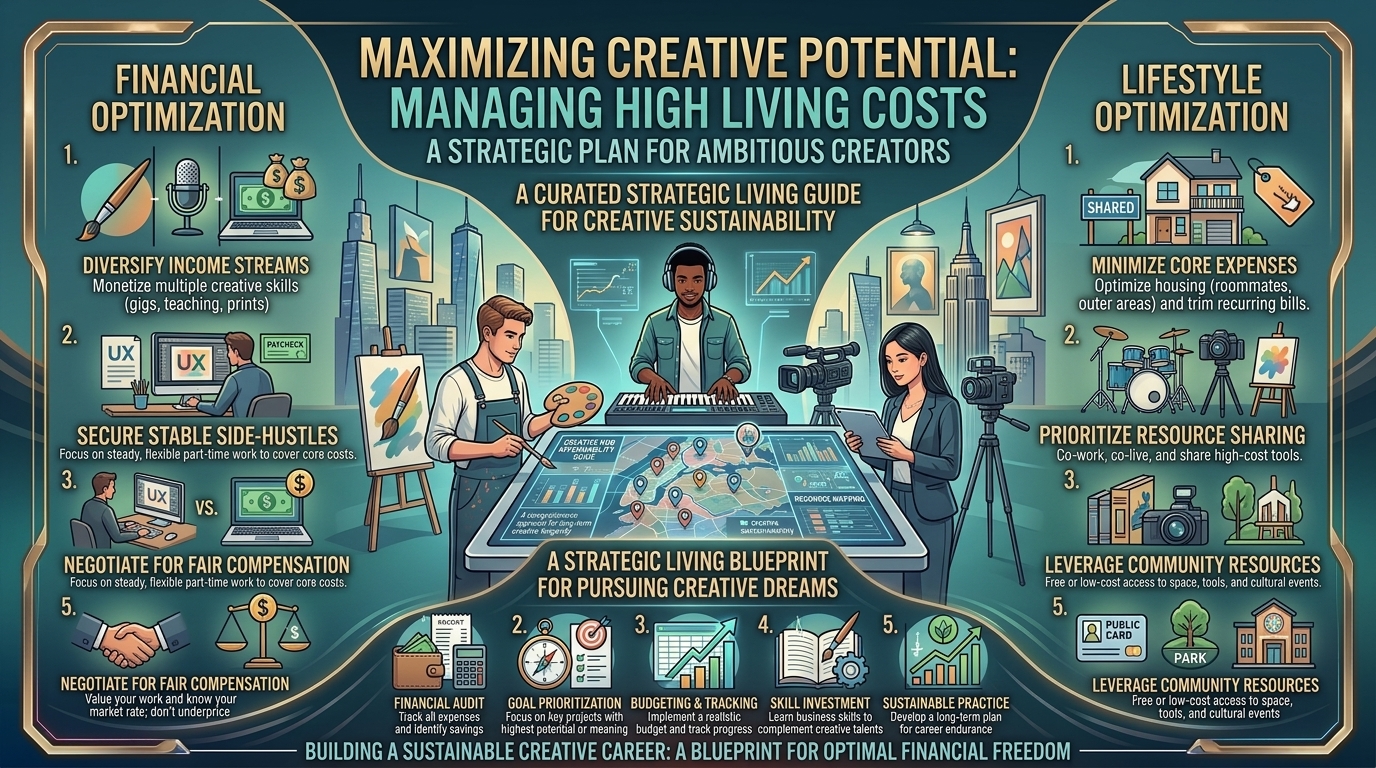
How do you reconcile the steep price tag of urban living with the uncompromising urge to create? Managing high living costs while pursuing creative dreams is not about finding a magical shortcut; it is about building a tactical, resilient operational framework for your life.
This comprehensive guide breaks down actionable financial strategies, housing hacks, career alignment tactics, and psychological survival techniques to help you thrive as a modern creator without burning out or going broke.
1. The Realities of Urban Creative Hubs: Understanding Your Terrain
Before you can conquer your financial overhead, you must understand the landscape you are operating within. Major metropolitan areas dictate different economic constraints:
- New York City & San Francisco: The ultimate pressure cookers. Rental markets are notoriously fierce, and space is heavily commodified. However, the density of galleries, publishers, tech-backed creative tools, and elite networking events means opportunity is concentrated right outside your door.
- Seattle & Washington Hubs: Balancing damp, moody climates with high tech-driven costs of living, these cities offer rich indie arts, literary communities, and design scenes, but require strict budgeting around housing and utilities.
- Texas Metros (Austin, Dallas, Houston): While historically touted as affordable havens, rapid growth has driven up housing costs. Yet, Texas offers zero state income tax, making it a viable launchpad for self-employed creators willing to optimize their overhead.
2. Financial Engineering for Creators: Budgeting Beyond the Spreadsheet
Standard budgeting advice (“stop buying avocado toast”) falls flat when your monthly rent swallows 60% of your income. Creators need an intentional financial architecture designed for variable income streams.
The Dynamic Three-Tier Budget
- The Survival Baseline: Calculate the absolute minimum amount of cash required each month to keep a roof over your head, basic groceries in the fridge, utilities paid, and health insurance active. This is your floor.
- The Creative Investment Fund: Allocate a small, non-negotiable percentage of your income (even if it’s just 5% or $50 a month) specifically toward your craft—software subscriptions, art supplies, domain hosting, or portfolio printing. Treat this line item like an essential utility bill.
- The Buffer Pool: Freelance and creative income notoriously fluctuates. Build a separate cash buffer designed to smooth out lean months so you never have to panic-accept predatory commercial work just to cover next month’s groceries.
Optimize Your Tax Status Early
As a creator—whether you freelance, sell prints, or take on client commissions—you are running a micro-business. Working with a CPA or utilizing modern tax software to track deductions (home office space, equipment depreciation, travel, software licenses) can save you thousands of dollars annually. Remember: every dollar saved in taxes is a dollar earned for your creative studio.
3. Housing Hacks: Lowering Your Largest Expense
Housing is invariably your highest monthly fixed cost. If you can hack your housing overhead, your entire financial ecosystem opens up.
- Strategic Roommate Pairing: Living alone in a prime urban core is a luxury reserved for established success or inherited wealth. Embrace intentional co-living. Find fellow creators, writers, or developers to rent multi-room spaces, splitting costs on high-speed internet, utilities, and common-area furniture.
- Property Caretaking and Alternative Living: Look into live-in artist residencies, property management caretaker roles, or house-sitting networks. Many institutional cultural spaces and educational trusts offer subsidized live-work lofts or studios in exchange for minor operational duties.
- Micro-Neighborhood Expansion: You do not need to live in the trendiest ZIP code to be part of the culture. Look one or two neighborhoods outward—borderline districts where transit lines still connect you to the center, but rent prices drop drastically.
4. Career Alignment: Choosing the Right “Day Job”
The old trope of the starving artist working a soul-crushing job that drains all creative life out of them is a fast track to burnout. Modern smart creators curate bridge jobs that actively feed their skills.
- High-Value Freelance Synergy: If you are a writer, take on freelance copywriting or technical documentation. If you are a visual artist, look into UX/UI design, front-end web development, or freelance video editing. These roles pay standard urban wages, keep your schedule flexible, and sharpen adjacent technical skills.
- The Remote Arbitrage Model: Secure a remote digital role based out of a high-paying urban headquarters while trimming your lifestyle expenses, or work asynchronous hours that leave your mornings or afternoons entirely free for deep creative flow.
- Institutional Art Ecosystems: Look for administrative, archival, or technical positions inside museums, universities, public libraries, or non-profit cultural foundations. These jobs often grant you internal access to expensive equipment, printing labs, workshops, and high-level professional networks.
5. Frequently Asked Questions (FAQ)
1. How much of my income should go toward rent as a creator living in a major city?
While traditional financial advice suggests keeping rent under 30% of your income, this is often unrealistic in cities like New York or San Francisco for early-stage creators. Aim to keep housing under 40% to 45% by utilizing roommates or looking slightly outside prime districts, and aggressively scale down other non-essential lifestyle costs.
2. Is it better to freelance or work a steady day job when starting out?
A steady day job provides financial stability, predictable budgeting, and health insurance, which lowers anxiety. However, freelancing offers schedule flexibility. Many creators find success with a part-time or flexible contract day job that guarantees a baseline income while protecting 3 to 4 days a week for deep creative production.
3. How do I protect my mental health while dealing with financial stress and creative pursuits?
Separate your self-worth from your net worth or commercial output. Establish clear boundaries where your art is a space of personal exploration and play, not just a desperate vehicle for monetization. Build a community of peer creators who normalize the financial struggle so you don’t feel isolated.
4. What are the best tax deductions for independent artists and creators?
Common legitimate deductions include home office square footage, specialized software subscriptions (Adobe, Logic Pro, Notion), hardware (cameras, computers, microphones), art materials, professional website hosting, marketing costs, and educational workshops or courses related to your craft.
5. How can I build a professional network in an expensive city without spending a lot of money?
Take advantage of free gallery openings, public library lecture series, community open-mic nights, park meetups, and open-source tech or art collectives. Most organic, high-value artistic collaborations happen in grassroots spaces, not expensive ticketed galas.
6. Should I move to a cheaper city if I can’t afford the rent in places like NYC or SF?
It depends on your medium and industry. If your field relies entirely on physical proximity to publishers, galleries, or specific industry executives, staying in a major hub may be necessary. If your work is digital or portable, moving to a secondary creative market can dramatically reduce financial pressure and buy you time.
7. How do I handle irregular freelance income when bills are due monthly?
Create a “rolling baseline account.” In months where you earn a surplus, do not inflate your lifestyle; instead, sweep the excess into a cash buffer account. Pay yourself a consistent “salary” out of this buffer every single month, mimicking the stability of a traditional job.
8. What free or low-cost resources do major cities offer to creators?
Major cities often feature public maker spaces, library-run digital creation labs, city arts council grants, subsidized artist workspace lotteries, and community workshops that provide free access to professional-grade tools and equipment.
9. How do I avoid creative burnout when working a demanding day job?
Protect your energy through strict time-blocking. Instead of waiting for large blocks of free time, commit to micro-habits—such as 30 minutes of writing or sketching every single morning before your day job begins. Consistency beats sporadic marathon sessions.
10. Where can I find grants or funding opportunities for independent creators?
Look into local municipal arts commissions, state cultural endowments, private philanthropic foundations, creator crowdfunding platforms, and niche artistic fellowships that specifically fund early-career projects without taking equity or imposing commercial pressure.
Conclusion
Chasing creative dreams in high-cost metropolitan areas is an exercise in resilience, strategic trade-offs, and financial discipline. You do not need to live in a state of perpetual starvation or exhaustion to validate your artistic journey. By optimizing your housing overhead, choosing flexible bridge careers, managing variable cash flow with intention, and tapping into local community resources, you can build a sustainable life where your art finally gets the space and time it deserves.