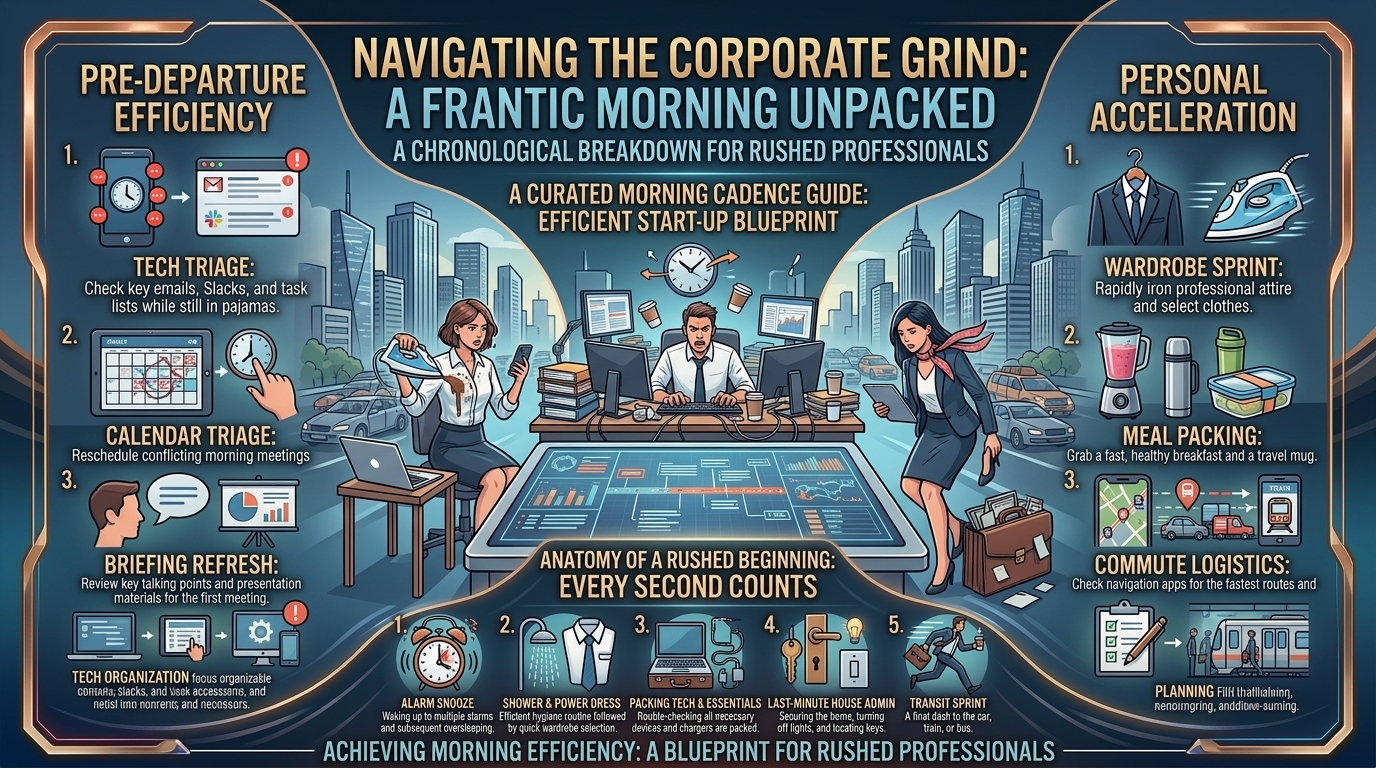
What a Typical Frantic Morning Looks Like for a Fast-Paced Corporate Worker Here
Welcome to nyattitude.com, your definitive digital pulse for high-drive urban living, fast-lane careers, and the unapologetic grit required to thrive in America’s most demanding metropolitan hubs.
Whether you are sprinting up the subway stairs into a sleek glass monolith in Manhattan, dodging morning gridlock to make a 9:00 AM stakeholder sync in San Francisco, rushing through a drizzle-soaked commute in downtown Seattle, or accelerating your daily tempo across high-powered corporate corridors in Texas and California, one universal reality binds the modern high-achiever: the morning rush is an extreme sport.
For the fast-paced corporate worker, mornings are not a gentle awakening of stretching, meditation, and leisurely sipping artisanal pour-over coffee while birds chirp outside a suburban window. No. Mornings here are a high-stakes, meticulously calculated, adrenaline-fueled military operation. Every second is optimized, every micro-delay carries a cost, and survival requires a rhythm so tightly wound it would make a Swiss watchmaker sweat.
Strap in. This comprehensive, deeply immersive look breaks down what a typical frantic corporate morning looks like for the relentless urban professional—packed with time-management insights, psychological survival tactics, expert optimization tips, and 10 frequently asked questions to help you master the chaos.
Part 1: The Pre-Dawn Prelude (05:00 AM – 06:00 AM)
Long before the sun casts light over the skyscrapers of New York, the bay bridges of San Francisco, or the sprawling highways of Texas, the corporate worker’s morning has already been engineered the night before.
1. The Alarmed Reality
At 05:00 AM, the first alarm blares. There is no snooze button in the playbook of a high-earning finance executive, tech product manager, or corporate legal associate. Hitting snooze is a tactical error that cascades into missed trains, delayed rideshares, and missed quarterly syncs.
2. The Mental Triage
Before feet even hit the hardwood or carpeted floor, the brain is already online. Within 30 seconds of waking, the corporate worker’s internal operating system boots up:
- Did the overnight email from the London office require a response?
- Is the 8:00 AM client presentation fully uploaded to the cloud?
- What outfit matches today’s investor pitch aesthetic?
3. The Fuel Protocol
Breakfast is rarely a sit-down affair with pancakes and bacon. It is functional, fast, and driven by stimulants. A capsule of high-grade supplements, a quick protein shake, or a pre-loaded espresso machine hissing to life sets the biological baseline. The objective isn’t culinary enjoyment; it is cellular activation.
Part 2: The Grooming and Armor Phase (06:00 AM – 06:45 AM)
In corporate environments across New York, San Francisco, Washington D.C., Los Angeles, and Austin, appearance is non-verbal communication. It is tactical armor.
1. The Wardrobe Calculus
The outfit was chosen forty-eight hours ago. Whether it’s sharp Wall Street tailoring, minimalist Silicon Valley tech-executive casual, or structured professional chic, getting dressed is executed with pit-stop efficiency. Shoes are polished the night before. Laptop bag, gym clothes (for the rare evening workout attempt), security badge, and AirPods are staged by the front door in a designated “launchpad.”
2. The Grooming Sprint
Teeth brushed while reviewing the calendar on an Apple Watch; hair styled while listening to a 2x-speed business podcast or financial news briefing. Every grooming habit is compressed into the tightest possible window without compromising the polished, put-together facade required to command a boardroom.
Part 3: The Urban Commute Gauntlet (06:45 AM – 08:00 AM)
The commute is where the frantic morning morphs into a test of psychological endurance. Depending on your zip code, the battlefield changes, but the stress levels remain identical.
Scenario A: The New York / San Francisco Subway Sprint
You are weaving through subterranean turnstiles with a MetroCard or contactless digital pass ready before you even reach the gate. You calculate train arrivals with mathematical precision. If the platform is packed, you stand exactly where the doors are statistically proven to open. You are dodging slow walkers, listening to audiobooks at 2.5x speed, and replying to Slack messages with one thumb while holding a handrail with the other.
Scenario B: The Texas / California Gridlock Highway
You are locked inside a climate-controlled sedan crawling along a multi-lane interstate or expressway. The dashboard display is a glowing array of Bluetooth audiobooks, navigation rerouting around an accident on the freeway, and hands-free conference calls starting twenty minutes early. You sip lukewarm coffee from a thermal travel mug while gripping the steering wheel, scanning brake lights like an F1 driver.
Part 4: Arrival and the 8:00 AM Adrenaline Spike
Walking through the revolving glass doors of the corporate office—or opening the laptop lid at the home workstation if remote—marks the transition from transit chaos to professional execution.
1. The Desk Landing
It is 08:15 AM. The laptop snaps open. Biometric login. The screen floods with notifications: 47 unread emails, 12 urgent Slack tags, calendar alerts for a back-to-back marathon of video conferences starting in fifteen minutes.
2. The First Victory
Before the official workday even begins for the rest of the world, the high-paced corporate worker has already triumphed over logistics, traffic, weather, and technology. They take one breath, swallow the last dregs of their cold coffee, and unmute themselves for the 8:30 AM global standup. The machine is running.
Part 5: Pro-Tips for Surviving and Thriving in the Corporate Fast Lane
If you are trying to navigate this frantic morning tempo without burning out, you need systems, not just willpower. Implement these elite productivity strategies:
- Adopt the “Zero-Decision” Morning: Eliminate morning choices by batching your outfits, breakfast menus, and workout gear the night before. Decision fatigue is real; save your brainpower for your job.
- Master the Micro-Commute Window: Use transit time intentionally. Do not scroll social media mindlessly; use your commute for deep listening, language learning, or clearing low-priority email triages.
- Hydrate Before You Caffeine: Drink a full 16 ounces of water before your first cup of coffee. High-stress environments dehydrate the body rapidly, triggering morning brain fog.
- Protect the First 30 Minutes: If possible, keep the first 30 minutes of your workday strictly offline to organize your daily task matrix before others dictate your schedule.
- Embrace Digital Automation: Set up automated calendar reminders, smart-home lighting routines, and auto-pay bills to strip friction out of your domestic life.
Part 6: Frequently Asked Questions (FAQ)
1. Is this frantic morning pace sustainable long-term?
While many high-achievers maintain this tempo for years to climb the corporate ladder, it requires deliberate recovery strategies (like strict weekend boundaries and sleep hygiene) to prevent chronic burnout.
2. How do corporate workers in New York handle the commute differently than those in Texas?
New York workers rely heavily on high-speed public transit (subways and commuter rail) and walking, requiring navigation of crowded physical spaces. Texas workers rely primarily on personal vehicles, spending their commute navigating highway gridlock and hands-free conference calls.
3. What is the best way to avoid morning decision fatigue?
Meal-prepping breakfast and laying out professional attire the night before (often referred to as wardrobe staging) is universally regarded by executives as the single best way to preserve morning energy.
4. How do remote corporate workers handle the morning rush?
Remote workers often replace the physical transit commute with an “invitation-to-work” ritual—such as a morning walk around the neighborhood or a home gym session—to simulate the psychological transition into work mode.
5. Why do high-powered workers listen to audio at 2x speed?
It is a manifestation of time-optimization culture. High-drive professionals consume news, books, and industry briefings at accelerated speeds to maximize information intake before their workday distractions begin.
6. How do corporate workers manage urgent emails that arrive overnight?
Most professionals use a strict triage system: scanning for red-flag items from international stakeholders or executive leadership while archiving or flagging non-urgent items for core working hours.
7. What role does caffeine play in the corporate morning routine?
Caffeine is viewed less as a luxury and more as a biological performance enhancer. High-octane coffee, matcha, or nootropic supplements are standard tools used to accelerate mental acuity during the early morning hours.
8. How do professionals in San Francisco differ in their morning habits?
San Francisco corporate workers frequently incorporate wellness tech, fitness tracking, and active transit (such as electric scooters or biking across the city) into their morning routines compared to traditional corporate hubs.
9. What should I do if my morning routine completely falls apart?
Build buffer time into your schedule (10 to 15 minutes of padding) and focus on ruthless prioritization. Drop non-essential grooming steps or delegate minor tasks rather than letting a single delay derail your entire morning.
10. Can you be successful in the corporate world without a frantic morning?
While some senior executives carve out calm, meditative mornings by waking up at 4:00 AM, the early phase of career growth in fast-paced corporate sectors almost universally demands high speed, high urgency, and rigorous discipline.
Conclusion
The frantic morning of a fast-paced corporate worker is a masterclass in human logistics, time-blocking, and high-stakes performance. Whether you are navigating the concrete canyons of New York, the tech corridors of San Francisco, or the booming corporate hubs across Texas, California, and Washington, mastering your morning chaos is the ultimate competitive advantage. Streamline your systems, armor up with intention, and conquer the day before the day conquers you.