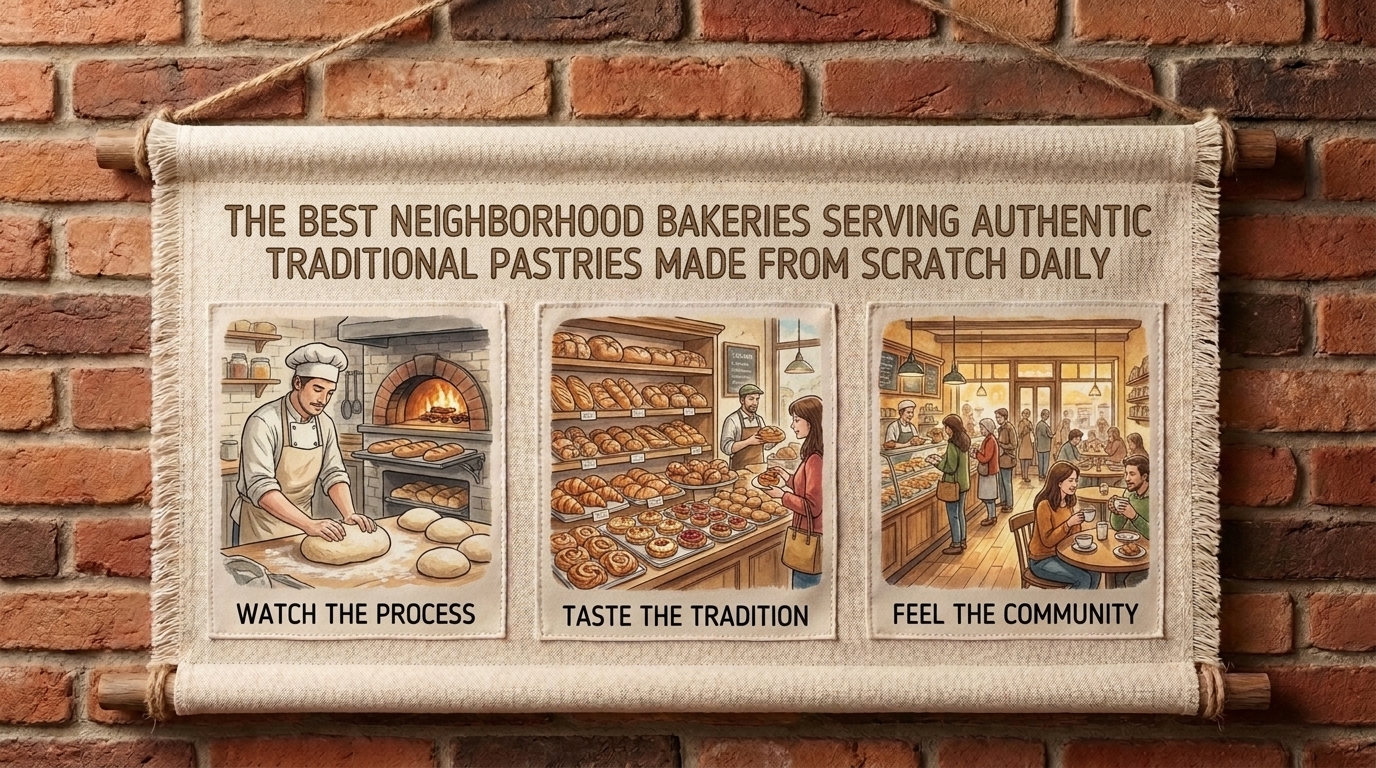
The Best Neighborhood Bakeries Serving Authentic Traditional Pastries Made from Scratch Daily
Introduction
In an era of mass-produced, flash-frozen, and chemically preserved commercial goods, the art of true baking has become an act of quiet culinary rebellion. Whether you are hunting for a buttery, perfectly laminated croissant amid the historic brownstones of New York, seeking sourdough excellence in San Francisco or the vibrant culinary corridors of California, searching for comforting, time-honored heritage treats near Washington’s bustling districts, or craving scratch-made kolaches and rustic pies across the expansive food hubs of Texas, nothing compares to the sensory magic of a neighborhood bakery operating on pure tradition.
The best neighborhood bakeries do not rely on commercial mixes, artificial flavorings, or industrial shortcut ovens. They rely on time, microbiology, patience, and generational craft. Walking into one of these sanctuaries at dawn—greeted by the aroma of browning butter, bubbling sourdough starters, roasting fruit, and caramelized sugar—connects us deeply to the rhythm of human history.
This comprehensive guide explores the science of scratch baking, the heritage behind classic pastry techniques, actionable tips for identifying genuine artisan bakeries, regional highlights across America’s greatest urban centers, and a definitive breakdown of how to source the freshest traditional treats daily.
Part 1: Deconstructing “Scratch Baking” vs. Industrial Production
To appreciate why authentic neighborhood bakeries command loyalty, we must first understand the stark divide between scratch baking and modern industrial baking.
1. The Industrial Shortcut Matrix
Most commercial coffee shop chains and supermarket bakeries do not bake; they bake-off. Centralized industrial facilities produce raw doughs, freeze them solid, and ship them nationwide. Local outlets merely thaw and blast them in convection ovens.
- The Cost: This process requires chemical dough conditioners, emulsifiers, artificial preservatives, and shelf-life extenders to survive transit. The resulting pastry may look uniform, but it lacks structural integrity, deep flavor complexity, and digestibility.
2. The Integrity of From-Scratch Daily Production
A true neighborhood bakery operates differently. Work begins long before sunrise. Bakers feed wild yeast cultures, hand-roll laminated doughs sheet by sheet, peel fresh seasonal fruit, and shape every loaf by hand.
- The Benefit: Scratch baking honors the grain and the ingredient. Without chemical shortcuts, your body processes authentic, slow-fermented, and scratch-made pastries with far greater ease and appreciation.
Part 2: The Pillars of Authentic Pastry Craft
What makes a traditional pastry exceptional? It comes down to four foundational pillars of technique and ingredients:
[ THE PILLARS OF AUTHENTIC BAKING ]
       │
       ├── 1. Butter Fat Content (European-style 82%+ butter for lamination)
       ├── 2. Long Fermentation (Wild sourdough starters & 24+ hour cold retard)
       ├── 3. Seasonal Sourcing (Locally milled heirloom grains & fresh fruit)
       └── 4. Zero Chemical Additives (Pure flour, water, salt, eggs, butter)
1. High-Fat European Style Butter
The secret to shatter-crisp croissants, puff pastry, and buttery brioche is moisture content and butterfat. Authentic scratch bakeries source high-fat European-style butter (82% to 85% butterfat, compared to standard American 80%). Lower moisture means distinct, flaky layers that melt on the tongue rather than leaving a greasy film on the roof of your mouth.
2. Slow Fermentation and Wild Yeast
Industrial bread uses commercial instant yeast to force a loaf to rise in 45 minutes. Traditional artisan bakeries rely on wild sourdough cultures (levain) and long, cold fermentation cycles lasting 24 to 48 hours. This slow enzymatic breakdown predigests gluten proteins, creates complex lactic and acetic acid flavor notes, and results in bread that is far easier on the digestive system.
Part 3: Actionable Tips for Identifying and Sourcing from True Bakeries
Finding genuine neighborhood bakeries requires looking past flashy storefront branding and evaluating operational clues. Implement these five strategies:
1. The “Morning Window” Audit
Traditional scratch bakeries operate on a natural biological clock.
- Actionable step: Arrive between 7:30 AM and 8:30 AM. This is when items emerge fresh from the deck ovens. If a bakery has a massive inventory of every single pastry item at 4:00 PM on a Tuesday, or if display cases look uniformly glossy and identical, exercise caution—they may be reheating frozen product.
2. Inspect the Lamination and Crumb Structure
When buying a croissant or Danish, look closely at the exterior and interior.
- Visual cues: A true laminated pastry should have distinct, honey-comb internal air pockets (not a dense, bread-like inside) and visible, crisp exterior layers that flake gently when bitten. If it feels rubbery or heavy, butter layers were melted during production.
3. Ask the Baker About Their Sourcing
True artisans love talking about their craft.
- Actionable step: Ask simple questions: “Where do you source your flour?” “Is your sourdough starter wild or commercial?” “When was this pastry laminated?” A genuine baker will light up and explain their process in meticulous detail.
4. Check the Bread Crust and Bottoms
Pick up a loaf of artisan sourdough. Look at the bottom—it should show flour dusting from the banneton (proofing basket) and a dark, caramelized (not burnt) crust showing deep Maillard reaction flavors. Pale crusts indicate under-baking.
5. Follow the Local Culinary Community
Neighborhood gems rarely spend massive budgets on corporate marketing. They grow through word-of-mouth. Look for recommendations from local pastry chefs, independent cookbook authors, and trusted regional food writers.
Part 4: Regional Profiles: Historic and Traditional Baking Across Major Hubs
Baking traditions vary dramatically depending on the cultural history and microclimates of your region:
- New York: Deeply influenced by historic Jewish European delis, Italian pastry shops in Little Italy, and modern French bistros. Expect exceptional babkas, rugelach, sourdough boules, and flawless butter croissants baked in historic brick-lined spaces.
- San Francisco & California: The birthplace of modern American sourdough culture, shaped by coastal fog, wild yeasts, and agricultural abundance. Look for rustic country loaves with blistered crusts, seasonal fruit galettes using local stone fruits, and artisan morning buns.
- Washington: Blends historic Mid-Atlantic baking traditions with diverse international communities. You will find classic butter pound cakes, heritage pie crusts, and stellar neighborhood patisseries serving diplomats and locals alike.
- Texas: Celebrates a rich fusion of German heritage baking (Kolaches, strudels in the Hill Country), traditional southern pie making, and modern artisan bakeries pushing boundaries in Austin, Dallas, and Houston.
Part 5: Step-by-Step Guide to Enjoying Your Bakery Visit
[ THE BAKERY VISIT RITUAL ]
       │
       ├── 1. Arrival Timing (7:30 AM – 8:30 AM for peak warmth)
       ├── 2. Sensory Evaluation (Inhale aromas, inspect crusts & layers)
       ├── 3. The Balanced Selection (One pastry, one loaf of hearth bread)
       ├── 4. Proper Storage (Paper bags, never plastic, to preserve crust)
       └── 5. The Mindful Tasting (Enjoy fresh with a pourover coffee)
- Step 1: Time It Right: Beat the mid-morning rush to secure items fresh out of the deck oven.
- Step 2: Engage the Senses: Inhale deeply upon entry. The smell should be rich, toasted, and yeasty—never chemical or overly sweet.
- Step 3: Curate Thoughtfully: Pick one signature morning pastry (like a Kouign-Amann or almond croissant) and one heritage hearth loaf for the week ahead.
- Step 4: Protect the Crust: Ask for paper bags rather than plastic. Plastic traps residual steam, softening the crisp crust that the baker spent hours developing.
- Step 5: Savor Mindfully: Pair your pastry with a simple drip coffee or espresso, allowing the butter and fermentation notes to shine.
Part 6: 10 Frequently Asked Questions (FAQs)
1. How can I tell if a bakery uses frozen dough without asking?
Look for uniformity. If every single croissant or muffin in the display case is identical down to the millimeter, they are likely industrial frozen bake-offs. Scratch-baked goods made by human hands always carry subtle, beautiful variations in shape and color.
2. Why do authentic artisan pastries cost more than supermarket pastries?
Supermarket pastries are made with cheap hydrogenated oils, artificial flavorings, and industrial chemical additives produced at massive scale. Artisan bakeries use expensive European butter, organic unbleached flour, local farm eggs, and spend hours of skilled human labor laminating and shaping doughs. You are paying for food integrity.
3. What is the best way to store leftover artisan bread?
Never put artisan bread in the refrigerator—it accelerates the staling process by causing starch retrogradation. Store your loaf cut-side down on a wooden cutting board, wrap it in a clean linen kitchen towel, or use a paper bread bag. For longer storage, slice and freeze airtight.
4. How can I revive a day-old artisan croissant?
Preheat your oven to 300°F (150°C). Lightly mist the day-old croissant with a tiny spray of water, place it on a baking sheet, and warm it for 3 to 5 minutes. It will emerge with its crisp, flaky exterior and buttery interior restored as if fresh from the oven.
5. What is the difference between sourdough and regular commercial yeast bread?
Commercial yeast is a single isolated strain bred for rapid rising. Sourdough relies on a symbiotic culture of wild yeasts and lactic acid bacteria. This wild fermentation yields a complex sour/tangy flavor profile, a chewy crumb, and superior nutritional digestibility.
6. Are traditional pastries bad for a healthy diet?
Everything in moderation. When consumed as an occasional mindful treat, traditional pastries made with pure, unadulterated ingredients (butter, flour, eggs, sugar) are far healthier for your metabolic system than industrial ultra-processed snack cakes loaded with high-fructose corn syrup and chemical preservatives.
7. Why do some bakeries sell out of items so quickly?
True scratch bakeries produce limited daily batches based on how much dough their mixers and ovens can handle without compromising quality. When they sell out, they close. This lack of waste is a hallmark of authentic sustainability.
8. Can I freeze unbaked artisan pastries at home?
Yes! Many bakeries sell frozen unbaked butter croissants or cinnamon rolls for home baking. Proof them overnight in your refrigerator, let them come to room temperature to rise, and bake them fresh for weekend brunch.
9. What makes European butter different from standard American butter?
European butter contains higher butterfat content (82%–85%) and less water content than standard American butter (80%). This extra fat content is crucial for creating the delicate, shatter-crisp layers in laminated pastries like croissants and puff pastry.
10. How do I find hidden neighborhood bakeries when traveling?
Look beyond main tourist strips into residential neighborhoods. Check local independent coffee shops to see whose pastries they serve, search for independent mills and grain advocates, and consult regional food artisans online.
Conclusion
Sourcing authentic traditional pastries from neighborhood bakeries serving scratch-made goods daily connects us to a rich culinary heritage. Whether you are savoring laminated layers in New York, wild sourdough in San Francisco, classic comforts in Washington, or heritage treats in Texas, supporting local independent bakers ensures that the timeless art of real baking continues to thrive. Step away from industrial shortcuts, seek out the warmth of the neighborhood oven, and taste the difference that authentic craft makes.