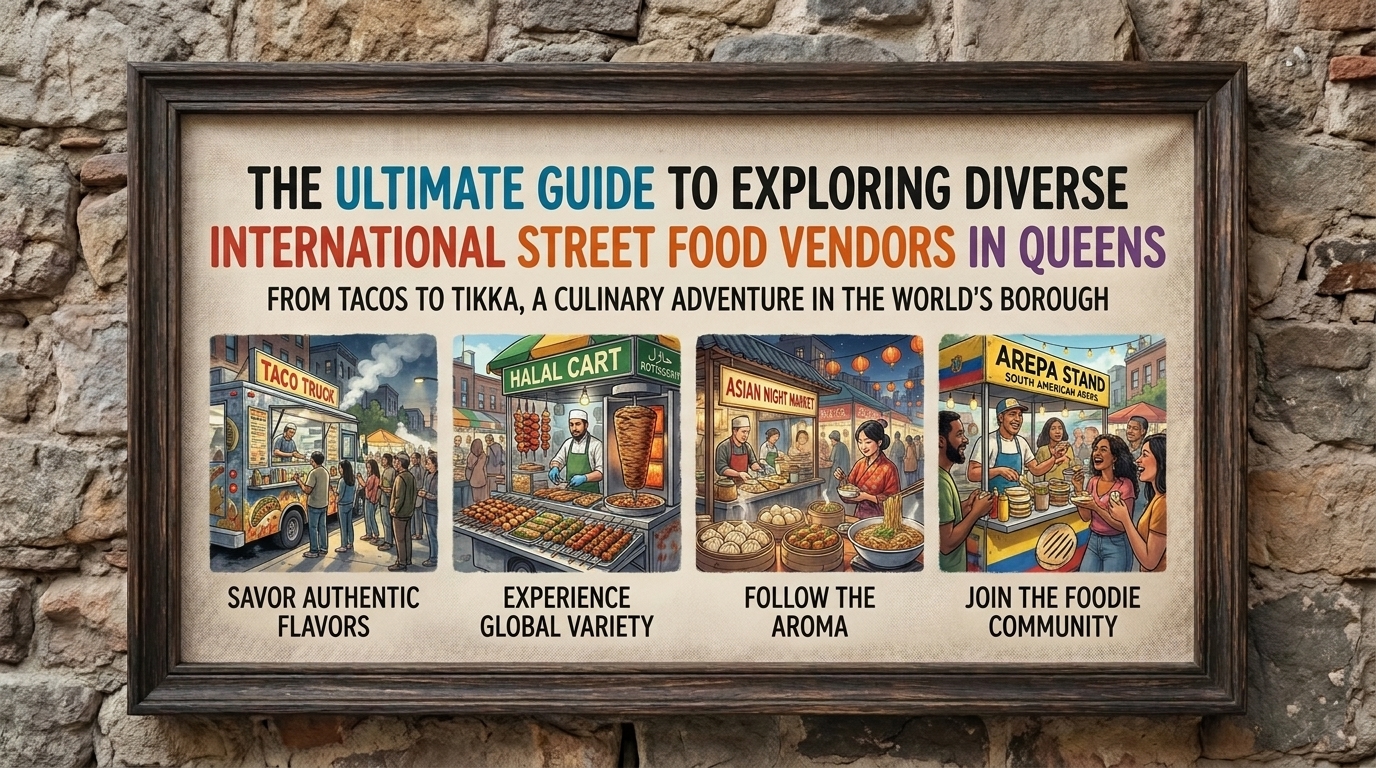
The Ultimate Guide to Exploring Diverse International Street Food Vendors in Queens
Introduction
If New York City is the culinary capital of the world, then Queens is its beating, multicultural heart. While Manhattan boasts Michelin-starred tasting menus and high-end dining rooms, Queens offers something far more visceral, democratic, and globally authentic: world-class international street food.
Spanning more than 100 spoken languages and representing dozens of sovereign nations within just a few square miles, Queens is widely celebrated as the most ethnically diverse urban area on the planet. For the curious food explorer, epicurean traveler, and passionate foodie, navigating the bustling transit hubs, elevated train platforms, and vibrant neighborhood avenues of Queens—such as Jackson Heights, Flushing, Astoria, and Elmhurst—is the closest thing to taking a round-the-world culinary expedition without ever leaving New York State.
However, exploring international street food vendors in Queens requires more than an empty stomach; it requires cultural curiosity, logistical preparation, an understanding of regional flavor profiles, and insider tactical know-how.
This comprehensive guide explores the rich immigrant history of Queens street food, the logistics of navigating public markets and food trucks, detailed regional breakdowns, actionable tips for a successful food crawl, and a definitive breakdown of how to taste the world across the borough’s legendary corridors.
Part 1: The Socio-Cultural Fabric of Queens Street Food
To truly appreciate what you are eating on a Queens street corner, you must understand the human stories behind the food.
1. The Immigrant Engine of Culinary Authenticity
Street food in Queens is not a trendy, corporatized concept born out of a marketing focus group. It is a lifeline of cultural preservation, community sustenance, and immigrant entrepreneurship.
When people immigrate to New York from Tibet, Colombia, Ecuador, Egypt, Bangladesh, Mexico, or Taiwan, they bring their most cherished culinary traditions with them. Unable to afford high commercial restaurant rents upon arrival, many culinary artists launch their enterprises as street carts, bicycle vendors, truck windows, or modest walk-up stalls.
When you purchase food from a Queens street vendor, you are tasting recipes perfected over generations—cooked with authentic spices imported directly from home, prepared with uncompromising devotion to tradition.
2. Why Queens Outshines Other Food Destinations
While other global culinary hubs offer pockets of international cuisine, Queens is unique because of its neighborhood segregation and hyper-concentration:
- Jackson Heights serves as a South Asian and Andean sanctuary.
- Flushing hosts one of the largest and most vibrant Chinatowns outside of Asia.
- Astoria preserves rich Greek and Middle Eastern traditions alongside modern Mediterranean fusions.
- Elmhurst offers a dense concentration of authentic Southeast Asian (Thai, Indonesian, Malaysian) eateries and street vendors.
Part 2: The Core Neighborhoods of Queens Street Food Exploration
To plan an effective street food crawl across Queens, you must map out the borough’s primary culinary ecosystems:
[ QUEENS INTERNATIONAL FOOD HUBS ]
               │
               ├── Jackson Heights ──► Tibetan momos, Colombian empanadas, Bangladeshi chaat
               ├── Flushing ────────► Taiwanese night market stalls, hand-pulled noodles, dumplings
               ├── Astoria ────────► Egyptian foul and taameya, Greek souvlaki, Balkan pastries
               └── Elmhurst ───────► Thai boat noodles, Indonesian satay, Malaysian street snacks
1. Jackson Heights: The Himalayan and Latin American Crossroads
Centering around Roosevelt Avenue and 74th Street, Jackson Heights is an explosion of global color, sound, and aroma.
- Must-Try Specialties: Steamed Tibetan beef momos served with fiery red chutney from sidewalk cart operators; Colombian arepas choclo loaded with melted cheese; Ecuadorian hornado (slow-roasted pork); and Bangladeshi spiced sweets.
2. Flushing: The Epicenter of East Asian Street Fare
Flushing’s bustling downtown core—centered around Main Street and Prince Street—rivals any night market in Taipei or Shanghai.
- Must-Try Specialties: Pan-fried pork buns (shengjian bao), Tianjin crepes (jianbing), hand-pulled Xi’an cumin lamb burgers (roujiamo), and bubbling hot pots served in underground food basements like the famous Golden Shopping Mall.
3. Astoria: Mediterranean and Middle Eastern Heritage
Long known as New York’s Greek capital, Astoria has evolved into a melting pot where Greek souvlaki stands sit side-by-side with Egyptian falafel carts and Balkan bakeries.
- Must-Try Specialties: Egyptian taameya (fava bean falafel) wrapped in warm flatbread with tahini; charcoal-grilled octopus skewers; and Syrian pastries dripping with honey and pistachios.
4. Elmhurst: Southeast Asia in Miniature
Often called the most concentrated Southeast Asian food neighborhood in New York City, Elmhurst along Broadway and Grand Avenue is a haven for spice lovers.
- Must-Try Specialties: Thai boat noodles with rich, dark broth; Indonesian beef rendang; and crispy Filipino lumpia fresh out of the fryer.
Part 3: Actionable Tips for Navigating Queens Street Food Markets Like a Pro
Conquering the bustling street food scene of Queens requires tactical planning. Implement these five strategies during your expedition:
1. Bring Cash in Small Denominations
While digital payment apps are gaining ground, many traditional street vendors, cart operators, and indoor food court stalls operate strictly on a cash-only basis.
- Actionable step: Visit an ATM before you arrive and stock up on $1, $5, and $10 bills. Handing a vendor exact change for a $3 momo or a $4 arepa speeds up transactions and keeps lines moving smoothly.
2. Master the “Progressive Grazing” Strategy
The biggest mistake amateur food explorers make is ordering an entire meal at the first amazing cart they see.
- Actionable step: Practice progressive grazing. Order one or two items per stop, split them with your companions, and pace yourself. A successful Queens food crawl should span at least four or five different micro-stops across a single afternoon.
3. Follow Your Nose and Look for Long Queues of Locals
Ignore glossy tourist reviews. The single best indicator of exceptional street food is the demographic of the queue.
- Actionable step: If a cart or stall has a line of immigrant grandmothers, neighborhood cab drivers, or busy local workers waiting patiently during their lunch break, get in that line immediately. It is an ironclad guarantee of authentic flavor and quality.
4. Overcome Language Barriers with a Smile and Point
Many incredible street vendors may have limited English proficiency, and you might not speak Tibetan, Mandarin, or Spanish.
- Actionable step: Don’t let language hesitation stop you. Pointing politely at what someone else is eating (“I’ll have what he’s having!”), using translation apps on your phone, or simply smiling and using universal hand gestures builds immediate warmth and successful orders.
5. Equip Yourself with Practical Street Gear
Street food is meant to be eaten on the curb, standing up, or while walking down busy avenues.
- Actionable step: Pack wet wipes or hand sanitizer (street food can be wonderfully messy, from dripping chili oil to melting cheese), wear comfortable walking shoes for traversing subway stairs and crowded sidewalks, and bring reusable shopping bags to carry your finds.
Part 4: Regional Perspectives: Connecting Queens to National Food Culture
While Queens stands as New York’s premier street food capital, its ethos mirrors the vibrant immigrant food movements found in other major American culinary hubs:
- New York (Queens & Brooklyn): Defined by density, transit accessibility, and hyper-local ethnic enclaves where subway lines drop you directly into international food markets.
- San Francisco & California: Blends Latin American street food traditions (such as Mission District Oaxacan tlayudas and street tacos) with vibrant Asian night markets and coastal food trucks.
- Washington: Features a dynamic fusion of diplomatic food carts, Salvadoran pupusa trucks, and Ethiopian street-adjacent eateries reflecting the capital’s diverse global community.
- Texas: Celebrates massive outdoor food truck parks, vibrant Tex-Mex taco trucks, and sprawling weekend farmers markets blending southern hospitality with global flavors in Austin, Houston, and Dallas.
Part 5: Step-by-Step Guide: Your Queens Street Food Crawl Itinerary
[ THE QUEENS FOOD CRAWL TIMELINE ]
       │
       ├── 1. Morning Stop (Jackson Heights ── Tibetan Momos & Chai)
       ├── 2. Midday Trek (Elmhurst ────────── Thai Boat Noodles or Skewers)
       ├── 3. Afternoon Dive (Flushing ──────── Xi'an Burgers & Bubble Tea)
       ├── 4. Evening Finish (Astoria ──────── Egyptian Taameya & Baklava)
       └── 5. The Aftermath ───────────────── Rest, reflect, and plan round two
- Step 1: Morning Kickoff in Jackson Heights: Take the 7 train to 74th Street. Start your morning around 11:00 AM with freshly steamed beef momos from a sidewalk cart, paired with spiced milk tea.
- Step 2: Midday Spice in Elmhurst: Hop back on the 7 train two stops west to Elmhurst. Sample grilled meat skewers or authentic Thai street snacks along Broadway.
- Step 3: Afternoon Feast in Flushing: Ride the 7 train to its eastern terminus in Flushing (Main Street). Dive into the underground food stalls of the Golden Shopping Mall for hand-pulled noodles and pork buns.
- Step 4: Sweet Sunset in Astoria: Take a rideshare or cross-borough bus over to Astoria. Conclude your marathon with warm Egyptian falafel or a Greek honey pastry.
- Step 5: The Reflection: Head home with a full stomach, a deeper appreciation for global cultures, and a mental list of neighborhood spots to revisit on your next culinary expedition.
Part 6: 10 Frequently Asked Questions (FAQs)
1. Is street food in Queens safe to eat?
Yes, absolutely. Because street food vendors in Queens have high turnover rates, ingredients are exceptionally fresh and restocked daily. Furthermore, many mobile carts and food stalls are subject to NYC Department of Health letter grading and rigorous regulatory oversight. Look for clean workstations and high customer volume as indicators of stellar food safety.
2. What is the best way to travel between different neighborhoods in Queens?
The historic 7 Train (affectionately known as the “International Express”) is your absolute best friend. It runs elevated above Roosevelt Avenue, connecting transit hubs from Long Island City through Woodside, Jackson Heights, Corona, and terminating in Flushing, offering easy access to multiple major food districts.
3. Are there vegetarian or vegan options available at international street food stalls?
Yes! Many global street food traditions are naturally plant-forward. In Jackson Heights, you can find vegetarian potato-and-pea momos or chickpea chaat. In Flushing, try scallion pancakes, vegetable dumplings, and sesame noodles. In Astoria, enjoy falafel, stuffed grape leaves (dolmas), and lentil soups.
4. Do I need to speak foreign languages to order from street vendors?
Not at all. Pointing to menu pictures, using translation apps, or simply saying “One of these, please” with a friendly smile works universally. Most vendors are proud to share their food with curious visitors regardless of language barriers.
5. Why are prices at Queens street food vendors so affordable?
Street food vendors operate with minimal overhead—no expensive dining rooms, interior decor, or large front-of-house waitstaff teams. These savings are passed directly to the consumer, allowing you to sample multiple gourmet dishes for just a few dollars each.
6. What time of day is best for exploring Queens street food markets?
Most street carts and food markets are most active during peak lunch hours (12:00 PM to 2:00 PM) or weekend afternoons. For night markets and indoor food court basements (like Flushing), evening hours (5:00 PM to 9:00 PM) offer the most vibrant, energetic atmosphere.
7. How do I find underground food courts in Flushing that don’t have street-level signs?
Many of Flushing’s best food stalls are tucked inside subterranean commercial arcades and shopping malls (such as the Golden Shopping Mall on Main Street). Look for glass doors between standard storefronts with stairwells leading downward, or follow the irresistible aroma of simmering chili oil and roasted garlic.
8. Can I bring children or elderly family members on a Queens food crawl?
Yes, but keep logistics in mind. Street food crawls involve walking several blocks, standing in outdoor lines, and often eating curbside without tables or chairs. Plan shorter routes with nearby seating or parks (such as Flushing Meadows Corona Park) if you are traveling with family members who need rest breaks.
9. What should I do if a vendor only accepts cash and I run out?
Most major commercial avenues in Queens (like Roosevelt Avenue in Jackson Heights or Main Street in Flushing) have ATM machines located every block inside bodegas, pharmacies, and convenience stores. Keep a backup debit card handy just in case.
10. How can I support Queens street food vendors beyond just buying food?
Spread the word! Take respectful photos of your food, tag independent vendors on social media, write glowing reviews on local food blogs, recommend them to friends visiting New York, and return as a loyal regular. Your patronage helps sustain these vibrant immigrant micro-businesses.
Conclusion
Exploring diverse international street food vendors in Queens is much more than a budget-friendly dining excursion—it is a celebration of global humanity, cultural heritage, and culinary mastery.
Whether you are savoring steaming momos in Jackson Heights, hand-pulled noodles in Flushing, falafel in Astoria, or spicy boat noodles in Elmhurst, Queens reminds us that the best food in the world is often found on a busy street corner served by people who pour their hearts into every single dish. Grab your cash, hop on the 7 train, and taste the world across Queens.