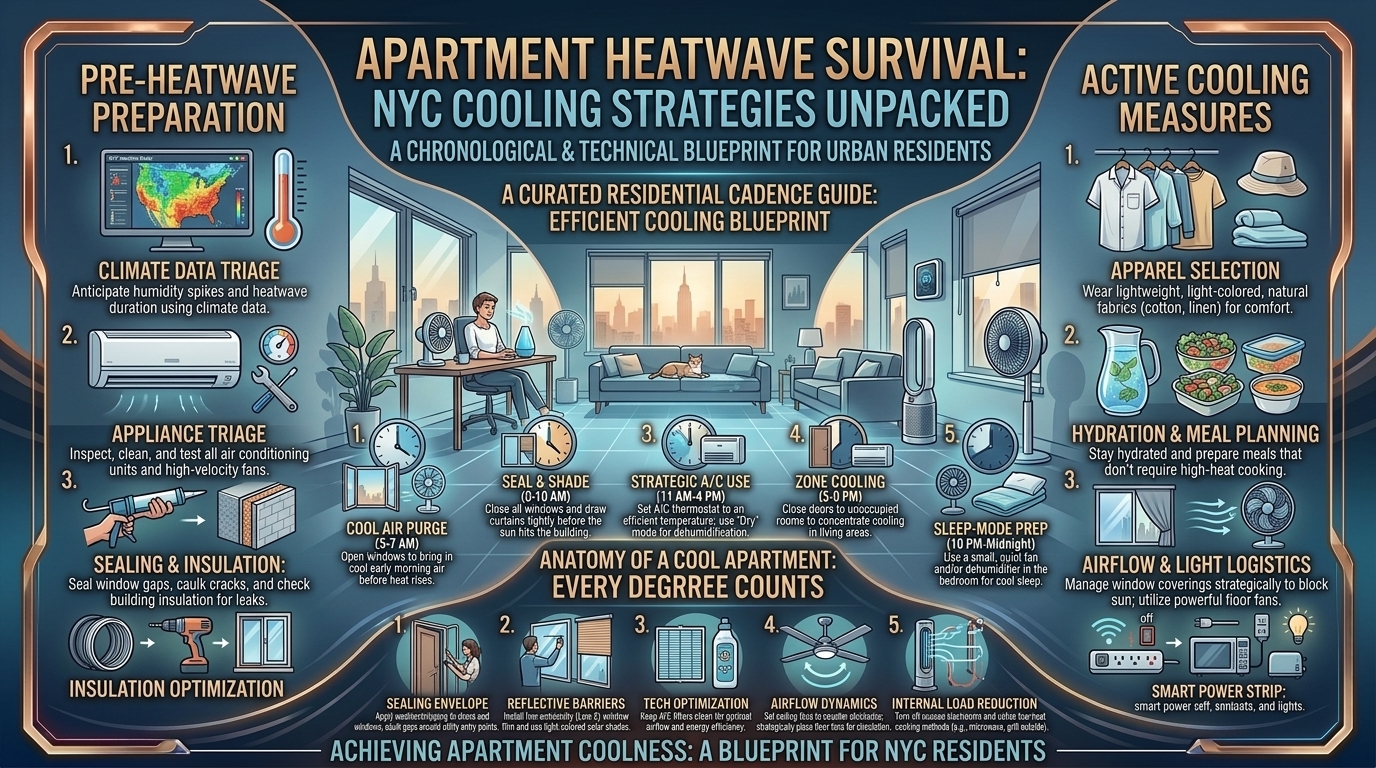
How to Keep Your Apartment Cool During the Humid Summer Heatwaves in New York
Welcome to nyattitude.com, your definitive digital guide to surviving and thriving in America’s most intense urban environments. Whether you are navigating the concrete canyons of Manhattan, managing a top-floor walk-up in Brooklyn, or working remotely through a sweltering July afternoon across major metropolitan hubs in New York, California, Texas, Washington, and San Francisco, one universal summer truth unites us all: urban heatwaves are brutal.
When a severe heatwave slams New York City, the ambient temperatures soar, but the real enemy isn’t just the thermometer—it is the infamous New York humidity. Trapped between towering brick buildings, asphalt streets that retain solar radiation long after sunset, and historic pre-war apartment architecture lacking modern central air conditioning, apartments can quickly transform into literal ovens.
If your apartment feels like a sauna and your electric bill is climbing faster than the humidity levels, you need a battle-tested strategy. This comprehensive guide explores how to cool your New York apartment naturally, optimize your air conditioning, block solar gain, and survive the city’s most punishing summer heatwaves without breaking the bank.
Part 1: Why New York Apartments Trap Heat (The Urban Heat Island Effect)
To cool your space effectively, you first need to understand why your apartment gets so hot and stays hot long after dark.
1. The Urban Heat Island (UHI) Phenomenon
New York City is a textbook example of the Urban Heat Island effect. Concrete, asphalt, brick, and stone absorb massive amounts of solar energy during the day and slowly radiate that heat back into the surrounding air overnight. Unlike suburban homes surrounded by lawns and trees, NYC apartments are enveloped by thermal mass that rarely cools down completely during a multi-day heatwave.
2. Pre-War Architecture vs. Modern Glass
- Pre-War Apartments: Characterized by thick plaster walls, high ceilings, and radiators that occasionally hiss residual warmth, older apartments can hold onto trapped heat for days. However, their thick masonry does offer some initial thermal insulation.
- Modern High-Rises: Floor-to-ceiling glass windows look stunning, but they act as giant greenhouses, trapping solar radiation (the greenhouse effect) and turning apartments into convection chambers if window treatments are inadequate.
Part 2: Strategic Solar Blocking (Keeping the Sun Out)
The single most effective way to cool an apartment is to stop heat from entering in the first place, rather than trying to cool it down after it has already baked your interior.
1. Install Blackout Cellular Shades or Reflective Film
- The Science: Up to 30% of unwanted indoor heat comes through unprotected windows.
- Action: Invest in heavy thermal blackout curtains or cellular shades, and keep them drawn tightly closed during peak sunlight hours (typically 10:00 AM to 6:00 PM). For windows facing direct southern or western sun, apply a roll of adhesive window solar tint film or UV-reflective film. It blocks up to 75% of solar heat gain while still allowing you to see outside.
2. Exterior Shading Solutions
If you live in a brownstone or have windows accessible from a fire escape (check local fire codes first), installing exterior awnings, bamboo matchstick blinds, or exterior solar screens blocks the sun’s rays before they hit the glass, reducing interior solar heat gain exponentially.
Part 3: Mastering Air Circulation and Ventilation
Airflow is your best friend during a humid heatwave. Moving air accelerates the evaporation of sweat from your skin, creating a subjective “wind chill” effect that makes you feel several degrees cooler, even if the room temperature remains constant.
1. The Cross-Ventilation Strategy (Nighttime Flushing)
During a heatwave, the outdoor air is usually cooler at night (between 2:00 AM and 6:00 AM) than your indoor air.
- Open windows on opposite sides of your apartment to create a cross-breeze.
- Place a box fan in a window facing outward (exhausting warm indoor air) on one side of the apartment, and leave a window open on the opposite side to pull fresh, cooler night air inward. This acts as a powerful vacuum flush for trapped heat.
2. The Strategic Positioning of Fans
- Ceiling Fans: Ensure your ceiling fans are spinning counter-clockwise during the summer at high speed. This pushes air straight down, creating a direct cooling breeze.
- The DIY Ice Fan Trick: Place a shallow metal bowl or tray filled with ice cubes directly in front of a oscillating desk fan. As the fan blows air across the melting ice, it creates a localized, chilled micro-breeze reminiscent of a makeshift air conditioner.
Part 4: Optimizing Your Air Conditioning Unit
If you rely on window AC units (a staple of New York living), a few adjustments will drastically improve their efficiency and reduce your monthly electric bill.
1. Clean or Replace Filters Monthly
A clogged, dust-choked AC filter restricts airflow, forces the compressor to work twice as hard, and reduces cooling capacity by up to 30%. Slide out your washable mesh filter every two to four weeks, rinse it clean in the sink with warm soapy water, let it dry completely, and reinstall it.
2. Seal the Gaps Around the Unit
Window AC units rarely fit window frames perfectly. Gaps around the accordion sides leak precious cold air out and let muggy New York humidity in.
- Use high-density foam insulation panels, weatherstripping tape, and clear silicone caulk to seal every microscopic crack around the housing unit.
3. Smart Thermostat Management
Avoid setting your AC to 60°F (15°C) the moment you walk in. An AC unit cools at a fixed rate; setting it lower doesn’t make it cool faster—it just causes the compressor to run continuously until you freeze. Set your thermostat to a comfortable, efficient 72°F to 74°F (22°C–23°C), and use ceiling or floor fans to circulate the chilled air throughout the room.
Part 5: Lifestyle and Environmental Adjustments
When the heat reaches extreme levels, your daily habits must adapt to minimize internal heat generation within your apartment.
- Kill the Heat-Generating Appliances: Avoid using your oven or stovetop during peak afternoon hours. Opt for no-cook meals, salads, microwaves, or outdoor grilling. Running an oven for an hour can raise a small apartment’s ambient temperature by several degrees.
- Switch to LED Lighting: Old incandescent light bulbs waste 90% of their energy as heat rather than light. Swap every bulb in your apartment to cool-running LEDs to eliminate hidden interior heat sources.
- Unplug “Vampire” Electronics: Televisions, gaming consoles, cable boxes, and computer chargers emit radiant heat even when turned off in standby mode. Unplug unused electronics to keep the baseline room temperature down.
- Dress for the Climate: Swap heavy fabrics for loose-fitting, breathable natural fibers like 100% linen, lightweight cotton, or moisture-wicking bamboo sheets and sleepwear.
Part 6: Frequently Asked Questions (FAQ)
1. What is the most cost-effective way to cool an apartment without central AC?
The most cost-effective approach is a combination of strategic solar blocking (keeping blackout curtains closed during peak sun) and running cross-ventilation box fans at night combined with a single efficient window AC unit in your primary bedroom or living area.
2. Why does my top-floor New York apartment get so much hotter than lower floors?
Heat naturally rises (convection), and top-floor apartments sit directly beneath flat or poorly insulated roofs that absorb direct solar radiation all day long, turning the ceiling into a giant radiator.
3. Should I leave my AC running all day when I go to work to keep the apartment cool?
No. Leaving an AC running in an empty apartment wastes massive amounts of electricity. Modern window units cool a room down within 15 to 20 minutes of turning them back on. Use a smart plug or programmable timer to turn the unit on roughly 30 minutes before you arrive home.
4. How can I lower the indoor humidity in a pre-war NYC apartment?
Beyond running your air conditioner (which naturally acts as a dehumidifier), consider purchasing a dedicated standalone portable dehumidifier. Lowering indoor humidity from 70% to 50% makes a 78°F room feel significantly cooler and more comfortable.
5. Is it safe to run a box fan in a window facing outward?
Yes, as long as the fan is securely wedged, mounted, or locked in place with window sills and cardboard/foam spacers so it cannot fall out onto the street or fire escape below.
6. Can indoor houseplants help cool my apartment?
Yes! Through a process called transpiration, plants release water vapor into the air, creating a natural evaporative cooling effect. Plants like Boston ferns, Areca palms, and snake plants are great additions to humid urban apartments.
7. What is the ideal temperature to set my window AC unit during a heatwave?
The U.S. Department of Energy recommends setting your AC to 78°F (26°C) when you are home and awake, but in high-humidity urban environments like New York, most residents find 72°F to 74°F (22°C–23°C) combined with a ceiling fan provides optimal comfort.
8. How do I stop light and heat from leaking through my window AC unit?
Inspect the accordion sides of your window unit. If light is passing through, heat is passing through. Cover the sides with rigid foam insulation board cut to size, or wrap heavy reflective bubble insulation around the exterior gaps.
9. Why does my circuit breaker trip when I turn on my AC and microwave together?
Older New York apartments (especially pre-war buildings) feature older electrical wiring systems with limited amperage capacity. Running high-draw appliances like window AC units, microwaves, hair dryers, or irons on the same circuit will overload the breaker. Plug your AC into a dedicated wall outlet without power strips.
10. Are portable floor AC units better than window AC units?
Generally, no. Single-hose portable floor AC units are notoriously inefficient because they pull conditioned indoor air out of the room to exhaust heat through the window hose, creating negative pressure that draws hot outdoor air back in through cracks. Window units are always superior in cooling power and efficiency.
Conclusion
Surviving a punishing summer heatwave in a New York apartment requires a proactive mix of physics, smart equipment maintenance, and lifestyle discipline. By blocking solar radiation before it enters your windows, optimizing your window AC units, maximizing nighttime cross-ventilation, and minimizing internal heat generation, you can transform your sweltering urban box into a cool, comfortable sanctuary. Stay cool, protect your indoor environment, and conquer the summer heat with city-tested resilience.
How to Cool Down Your Apartment Fast During a Heatwave
Watch this practical video demonstration for a visual guide on blocking window solar heat, installing insulation panels, and maximizing airflow to cool your apartment during extreme summer heatwaves.