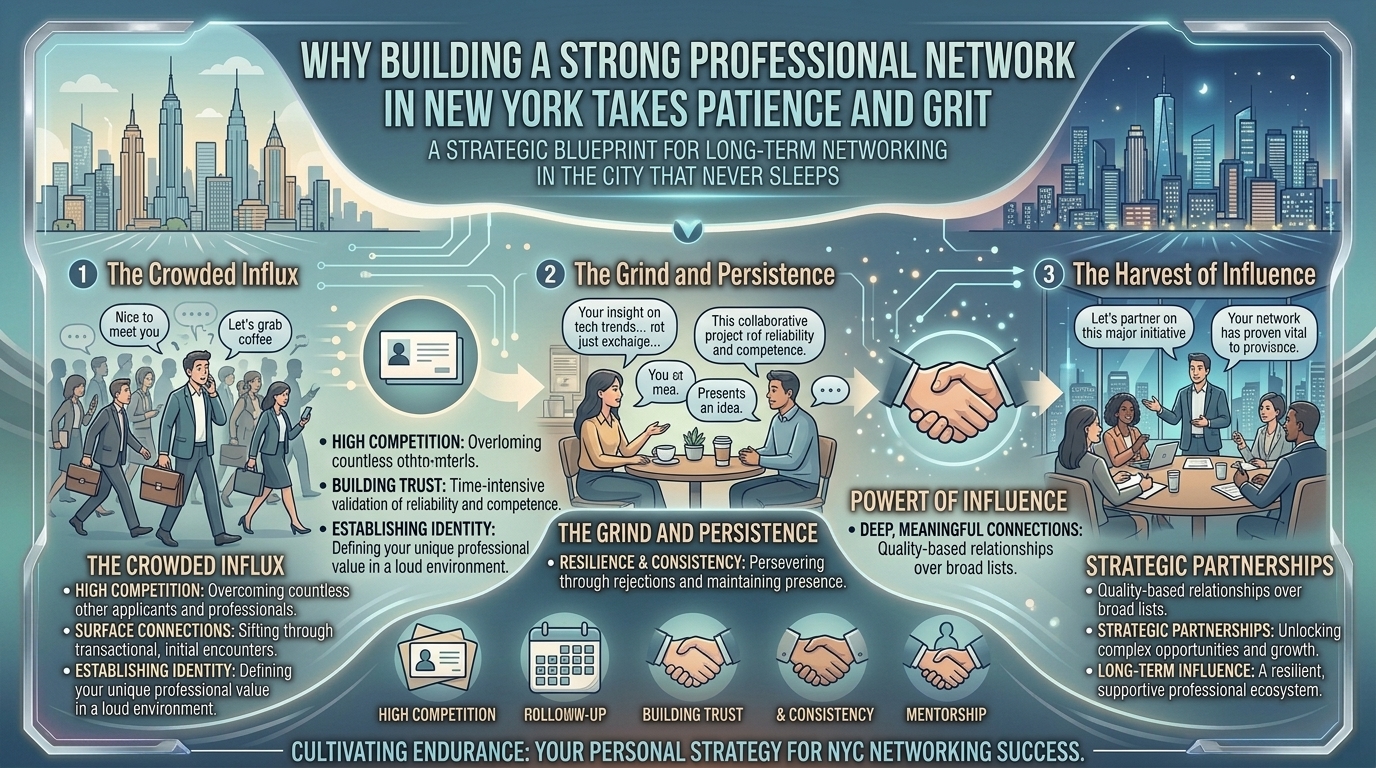
Why Building a Strong Professional Network in New York Takes Patience and Grit
Welcome to nyattitude.com, your premier digital destination for high-performance career insights, metropolitan hustle culture, and the unapologetic resilience required to conquer America’s most competitive business capitals. Whether you are scaling the corporate ladder in Manhattan, closing tech deals in San Francisco or Silicon Valley, navigating political and aerospace corridors in Washington D.C., or expanding enterprise footprints across high-growth commercial hubs in Texas and California, one immutable professional truth remains absolute: your network is your net worth.
Nowhere is this statement tested more intensely than in New York City.
Ask any newcomer what they expected when they moved to the Big Apple, and they will likely describe a cinematic montage of glamorous rooftop mixers, sparkling industry galas where business cards effortlessly change hands, and mentors eagerly waiting to hand-deliver career advancement to ambitious talent.
The reality? A cold awakening.
Building a high-value, authentic professional network in New York is not a sprint; it is an endurance marathon that demands relentless grit, emotional resilience, strategic patience, and thick skin. This comprehensive guide explores the unique psychology of New York networking, why traditional superficial tactics fail, actionable strategies to build lasting connections, and a definitive blueprint to turn the city’s fast-paced skepticism into your greatest professional asset.
Part 1: The New York Networking Ecosystem (Why It’s Different)
To build a powerhouse network in New York, you must first understand the unique cultural and economic microclimate of the city.
1. High Density, High Skepticism
New York is one of the most densely populated cities on earth, packed with millions of hyper-ambitious people vying for the exact same corner offices, board seats, venture capital funding, and media spotlights. Because everyone is constantly pitched, solicited, or approached, New Yorkers possess an involuntary, razor-sharp bullshit detector.
- When you approach someone at a networking event with an overly aggressive sales pitch or an immediate “What can you do for me?” attitude, their defensive walls go up instantly.
- Building trust in this environment requires time, authenticity, and proof of character. Superficial charm wears off within thirty seconds.
2. The Transactional vs. Relational Trap
Many professionals arrive in New York viewing networking as a purely transactional sport—collecting LinkedIn connections like trading cards. In reality, the city’s elite networks are fiercely loyal and deeply relational. People do business with, invest in, and promote those they genuinely trust, respect, and enjoy being around when deadlines are burning and crises hit.
Part 2: The Core Pillars of Building a Resilient Network
Forging unbreakable professional ties in a high-speed metropolis requires a deliberate framework built on four foundational pillars.
1. Radical Value-First Contribution
The fastest way to alienate a successful New York executive or founder is to ask for a favor before offering anything in return.
- Shift your mindset from extraction to contribution.
- How can you help them? Can you share a relevant industry data point? Can you introduce them to a rising star in a complementary sector? Can you solve a minor bottleneck for them without expecting an immediate payoff? Leading with generosity breaks down cynicism.
2. Consistency Over Intensity
Showing up to one massive industry conference, collecting 50 business cards, and never following up is a waste of time. True networking happens in the quiet, unglamorous trenches:
- Attending the same monthly roundtable, industry meetup, or alumni gathering consistently for six months.
- Becoming a familiar, reliable face in the room.
- Trust is built through repeated, predictable positive interactions over time—this is where patience becomes your ultimate competitive advantage.
3. Cultivating “Thick Skin” (Embracing Rejection)
In New York, silence is a standard response. You will send cold emails that get ignored. You will pitch coffee meetings that get politely declined due to packed calendars.
- If you take rejection personally, you will burn out within a month.
- High-achievers treat professional outreach like a numbers game combined with targeted tailoring. A non-response isn’t a permanent door closed; it’s simply bad timing. Adjust your approach, maintain your professionalism, and keep moving forward.
Part 3: Step-by-Step Blueprint for Strategic Network Expansion
Stop relying on awkward, forced small talk at generic happy hours. Execute this strategic, multi-phase framework to build a high-caliber professional circle:
Step 1: Map Your Ecosystem
Identify the exact intersection where your career goals meet the city’s key players. Don’t try to network with “everyone in business.” Narrow your focus:
- Are you in fintech? Target specific niche incubators in downtown Manhattan and Brooklyn.
- Are you in media or creative arts? Focus on curated salon dinners and gallery openings.
- Know your target companies, key decision-makers, and industry thought leaders.
Step 2: Craft Personalized, Low-Friction Outreach
When reaching out to a respected professional for a virtual or in-person coffee chat, throw away generic templates.
- Reference Specific Work: Mention a specific article they wrote, a podcast appearance they made, or a recent company milestone they achieved.
- Keep It Brief: Respect their time. A 15-minute coffee or a brief phone call is a much easier “ask” than an open-ended request to “pick your brain.”
Step 3: Master the Follow-Up (The Gold Standard)
The magic in New York networking almost always happens in the follow-up.
- Within 24 hours of meeting someone, send a concise, personalized note referencing a specific insight from your conversation.
- Three weeks later, send them a helpful article or resource related to something you discussed. This simple act of intellectual follow-through separates you from 95% of other professionals.
Part 4: Frequently Asked Questions (FAQ)
1. Is cold outreach on LinkedIn actually effective for building a New York network?
Yes, provided it is hyper-personalized and focused on mutual value rather than a direct job hunt. Senior executives receive dozens of generic messages daily; a thoughtful, concise note referencing a shared interest or specific mutual connection will occasionally cut through the noise.
2. How long does it realistically take to build a solid professional circle in a new city like New York?
Most seasoned urban professionals agree that it takes roughly 12 to 18 months of consistent, intentional effort to move from knowing a few acquaintances to having a reliable, supportive professional network in a major market like New York.
3. What should I do if I suffer from social anxiety at large networking events?
Skip the massive, chaotic hotel ballroom mixers. Instead, opt for smaller, intimate workshops, niche masterminds, roundtable discussions, or structured professional association dinners where conversations are seated and structured around a specific topic.
4. How do I maintain professional relationships without feeling fake or transactional?
Treat your network like friendships rather than business tools. Check in on people when you don’t need anything from them—congratulate them on a promotion, share an interesting book, or send a brief note wishing them a great quarter. Authenticity always wins.
5. Are expensive paid networking clubs and private social clubs worth the money?
For certain industries (like finance, venture capital, and luxury real estate), private clubs and curated membership networks offer high-density access to decision-makers. However, they are accelerators, not magic wands; you still must bring genuine competence and character to the table.
6. How do networking norms in New York differ from cities like San Francisco or Austin?
New York networking tends to be fast-paced, direct, and driven by financial and operational results (“What do you do, and how does this scale?”). San Francisco networking is heavily technology-, vision-, and innovation-obsessed, while Austin leans more casual, relationship-driven, and collaborative.
7. What is the biggest mistake people make when meeting senior executives?
Trying too hard to impress them or immediately asking for a job or investment. Senior leaders can smell desperation instantly. Approach them with genuine curiosity, humility, and a desire to learn from their journey.
8. How many close professional contacts do I actually need in my network?
Quality beats quantity every single time. Having 5 to 10 deeply trusted, fiercely loyal advocates who will vouch for your character and skill set in a closed room is infinitely more valuable than having 5,000 superficial LinkedIn connections who don’t know your name.
9. Can I network effectively if I am naturally an introvert?
Introverts often make exceptional networkers because they excel at deep listening, asking thoughtful questions, and following up with genuine care. Lean into your strengths rather than trying to be the loudest person in the room.
10. What role does grit play when your networking efforts stall?
Grit is the refusal to quit when your first 20 coffee requests are ignored or your favorite startup project falls through. In New York, resilience is the separating line between those who wash out and those who ultimately build enduring, elite careers.
Conclusion
Building a strong professional network in a high-stakes metropolis like New York is not for the faint of heart. It requires an uncompromising blend of patience, thick skin, strategic grit, and a commitment to providing genuine value to others. By moving away from superficial transactions, showing up consistently, and mastering the art of the follow-up, you can cut through the urban noise and forge a powerful network that will sustain your career for decades to come. Own your hustle, protect your integrity, and conquer the city on your own terms.
How to Build a Powerful Professional Network in a Competitive City
Watch this insightful video exploration breaking down advanced networking strategies, psychological resilience, and relationship-building tactics used by top executives in competitive metropolitan markets.