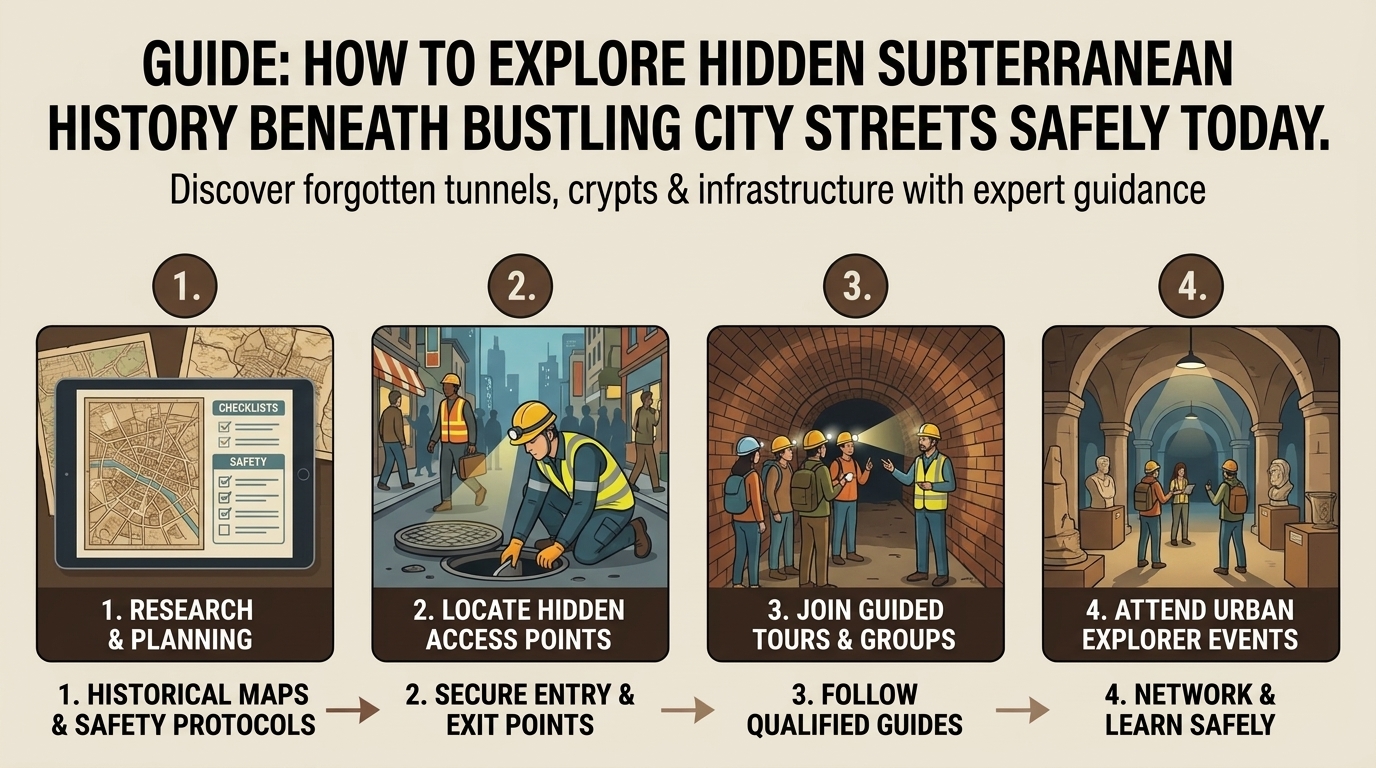
Beneath the asphalt grids, screaming sirens, and hurried footsteps of our modern metropolises lies another world entirely. Cities are like geological layers of a layered cake, with every decade and century burying its former iterations beneath the ground. From forgotten brick transit tunnels, nineteenth-century subterranean crypts, and sealed-off mercantile basements to historic underground utility networks, the hidden subterranean history of urban centers holds an undeniable magnetism.
Across America’s most dynamic cultural regions—from the labyrinthine basements and transit ghosts of New York and the historic maritime vaults of San Francisco, to the pioneer layers of Washington, the architectural strata of California, and the deep historical vaults of Texas—curious explorers are increasingly drawn to what lies beneath.
However, unauthorized underground exploration—often called urban speleology or “urbex”—carries severe legal, environmental, and physical risks. Exploring subterranean history safely today requires a balance of historical curiosity, strict safety protocols, and a preference for legitimate, legally sanctioned underground heritage tours. This comprehensive guide details how you can safely uncover, understand, and experience the hidden layers beneath bustling city streets without putting yourself in danger or breaking the law.
1. The Allure and Reality of Subterranean Urban History
Why does the underground captivate us so deeply? Psychologically, subterranean spaces represent the unconscious mind of a city. They hold the physical remains of old utility systems, abandoned train platforms, prohibition-era tunnels, and the original street grades of cities that had to raise their elevations to combat flooding or fire.
Yet, stepping off the sidewalk and into a subterranean space is vastly different from walking through a park or a museum. The realities of the underground environment include:
- Atmospheric Risks: Subterranean spaces often suffer from low oxygen levels, trapped toxic gases (such as methane, carbon monoxide, or hydrogen sulfide), and heavy mold spores.
- Structural Instability: Century-old brick arches, rotted timber supports, and water-damaged masonry can collapse without warning.
- Zero Connectivity: Subterranean locations guarantee complete cellular dead zones, meaning if you are injured or lost, calling for emergency help on your own is virtually impossible.
2. Regional Subterranean Landscapes: Coast-to-Coast Underground Secrets
Different regions developed unique subterranean profiles based on their geography, historical challenges, and economic booms.
New York and San Francisco: Transit Ghosts and Maritime Vaults
- New York: The city beneath New York is legendary. From abandoned subway stations (like the stunning, tiled old City Hall station) and closed postal pneumatic tubes to historic basements in Lower Manhattan that once connected to the waterfront, NYC’s underground is a masterclass in high-density engineering history.
- San Francisco: Beneath the bustling streets of San Francisco—particularly around the Embarcadero and Financial District—lie the hulls of historic 19th-century gold-rush ships buried beneath landfill, along with old brick basements and remnants of early Chinatown subterranean passageways.
Texas, California, and Washington: Raised Cities and Frontier Basements
- Washington: In Seattle’s historic Pioneer Square district, the underground is famous. After the Great Seattle Fire of 1889, the city decided to rebuild on top of itself, raising the street level by a full story. This left an entire network of subterranean storefronts, sidewalks, and hollow tunnels intact beneath modern crosswalks.
- California and Texas: While less famous for sprawling tunnel networks, cities across California and Texas feature extensive historic basement systems, old utility vaults, and nineteenth-century drainage and brewery tunnels that reflect early regional commerce, cooling innovations, and flood control projects.
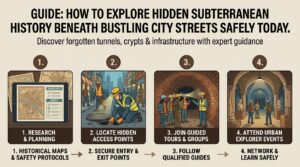
3. Legal and Safe Ways to Experience Subterranean History
Because unauthorized entry into storm drains, active transit tunnels, and abandoned basements is illegal (frequently classified as criminal trespassing, vandalism, or interference with critical infrastructure), the smartest, safest, and most rewarding way to explore subterranean history is through authorized, guided heritage tours and municipal archives.
| Exploration Method | Description & Benefits | Best For |
| Sanctioned Underground Heritage Tours | Led by professional historians, structural engineers, or local conservancies (e.g., Seattle’s Beneath the Streets or transit museum tours). Safe, legal, and packed with verified historical lore. | Families, history buffs, and anyone wanting guaranteed safety. |
| Municipal Archives & Digital Map Rooms | Visiting city planning departments, historical societies, or university map rooms to study historical Sanborn fire insurance maps and cross-sections. | Uncovering the cartography and engineering blueprints of lost underground structures from above ground. |
| Special Open-House Weekends | Participating in events like “Doors Open” festivals, where historic subterranean vaults, bank basements, and utility tunnels are temporarily opened to the public under professional supervision. | Experiencing rare spaces legally with lighting and security present. |
4. Essential Safety Framework for Independent Above-and-Below Research
If you are researching subterranean history for writing, architectural study, or photography, you will spend a lot of time examining street-level clues and legal access points. Follow this framework to stay safe and compliant:
- Prioritize Street-Level Archaeology: You don’t need to go underground to see subterranean history. Look for sidewalk vault lights (thick purple or glass lenses embedded in concrete to light old basement storage areas), coal chute covers, historic cornerstone plaques, and sudden elevation changes in doorways.
- Never Tamper with Infrastructure: Never lift manhole covers, pry open utility hatches, or breach sealed building doors. Doing so violates municipal codes, triggers automatic security alerts, and poses extreme physical danger from fast-moving traffic or confined-space hazards.
- If You Pursue Legal Access, Dress Appropriately: If you are touring a legal historic cave, mine, or subterranean exhibit, wear closed-toe shoes with thick grip soles, bring a light jacket (underground temperatures remain cool year-round, typically hovering around 10°C to 15°C or 50°F to 60°F), and follow all guide instructions.
- Respect Private Property and City Ordinances: Law enforcement agencies and transit authorities treat unauthorized subterranean incursions with zero tolerance due to post-9/11 security protocols and structural liability. Always stay on the right side of the law.
5. Ten Frequently Asked Questions (FAQ)
1. Is unauthorized urban exploration (urbex) of underground tunnels legal?
No. Entering abandoned subway tunnels, utility corridors, storm drains, or sealed basements without explicit written permission from the property owner or municipal authority is considered criminal trespassing and can result in heavy fines or arrest.
2. Can tourists visit the famous Seattle Underground?
Yes! Seattle features fully legal, highly rated guided walking tours (such as Beneath the Streets and Bill Speidel’s Underground Tour) that safely take visitors through the historic subterranean street-level spaces of Pioneer Square.
3. What are “sidewalk vault lights” and where can I find them?
Vault lights are circular or square purple or clear glass lenses set into concrete sidewalks. They were invented in the 19th century to allow natural sunlight to filter down into basement storage rooms and transit areas beneath the pavement. You can still spot them in historic districts across New York and San Francisco.
4. Why are underground subterranean spaces dangerous?
Subterranean spaces present severe hidden risks, including structural collapse, toxic gas accumulation, oxygen depletion, sudden flooding, biohazards (such as mold and rodent droppings), and a complete lack of mobile phone reception.
5. Are there abandoned subway stations you can visit in New York City?
While regular public trains pass through historic closed stations like the old City Hall station, general public access is strictly restricted due to safety and active transit operations. However, the New York Transit Museum occasionally offers exclusive members-only tours of select historical sites.
6. How can I study underground history without going underground?
You can explore historic engineering through digital archives, library map collections, historical Sanborn fire insurance maps (which detail basement construction and utility paths), and municipal historical planning documents.
7. Why did cities like Seattle raise their street levels?
Following devastating fires and frequent flooding due to high tides, cities like Seattle intentionally engineered major regrading projects in the late 19th century, building new streets higher and leaving old storefronts and walkways permanently enclosed underneath.
8. What should I wear if I attend a legal underground or cave tour?
Always wear comfortable, closed-toe walking shoes with non-slip soles, and bring a warm jacket or sweater, as subterranean environments are notoriously cool and damp regardless of summer outdoor temperatures.
9. Can I use a drone to explore underground tunnels?
No. Drones rely on GPS signals, which do not function underground. Flying a drone into a tunnel or enclosed structure will almost certainly result in a crash, loss of equipment, and potential legal penalties for illegal aircraft operation.
10. Where can I find more guides on exploring local urban history safely?
Keep exploring specialized regional travel and culture hubs like nyattitude.com, where we uncover the rich layers, historical secrets, and safe urban adventures waiting across America’s greatest cities.
Conclusion
The history beneath our feet is a fascinating testament to human ingenuity, resilience, and urban evolution. While the temptation to slip past a fence or lift a manhole cover in search of secret history is strong in popular culture, the smartest way to explore subterranean history today is through legal, authorized channels, guided heritage tours, and rigorous above-ground archival research. Whether you are uncovering the raised streets of Washington, the maritime layers of San Francisco and New York, or the historical vaults of California and Texas, respecting the underground ensures that these fragile historical artifacts remain preserved for generations to come.
Ready to dive deeper into local urban history, hidden architectural gems, and safe regional explorations? Continue browsing nyattitude.com to map out your next adventure!