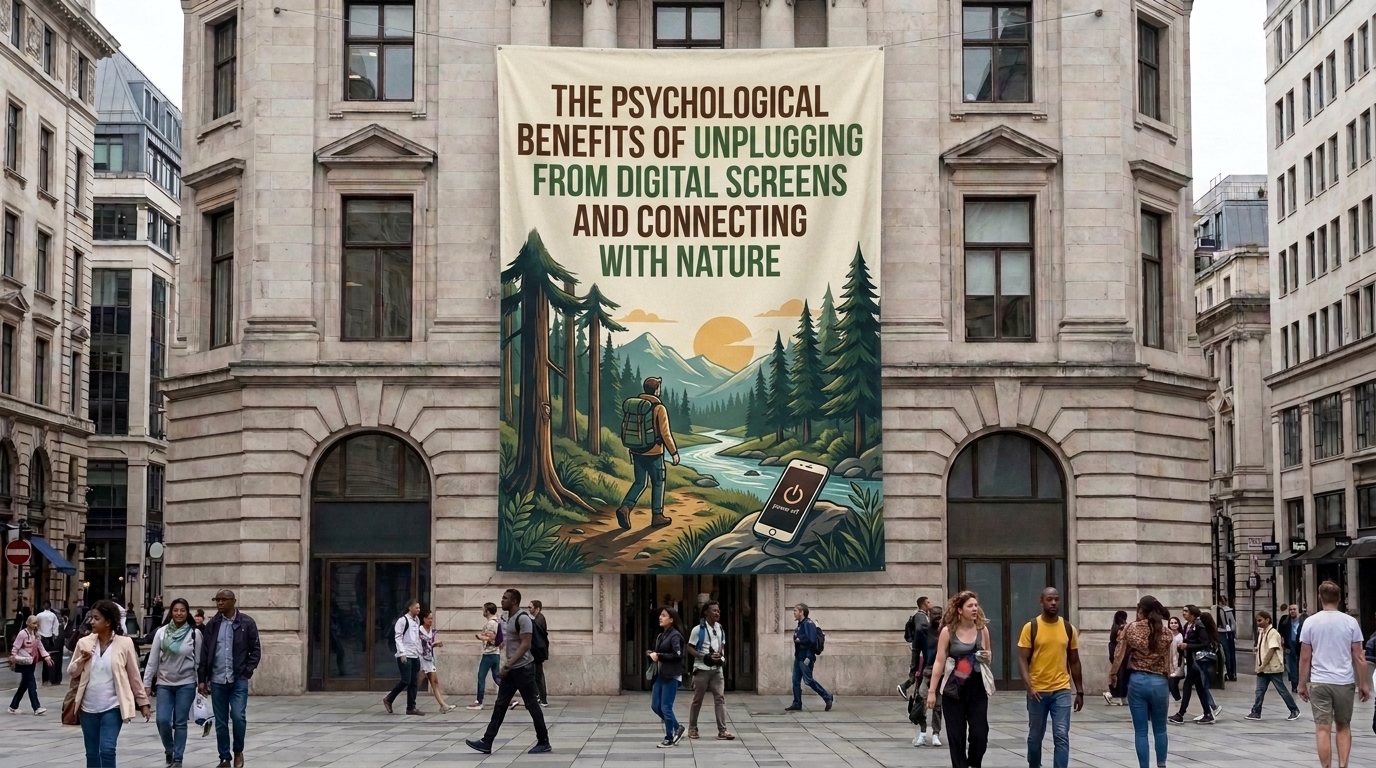
The Psychological Benefits of Unplugging from Digital Screens and Connecting with Nature
In today’s hyper-connected, high-velocity economy—from the financial corridors of New York City and the tech hubs of San Francisco, Silicon Valley, and Seattle, Washington, to the expanding business centers across California and Texas—digital screens dominate daily existence.
Professionals, creatives, and entrepreneurs spend upwards of 10 to 12 hours daily navigating laptops, smartphones, video conferences, and notification feeds. While digital tools enable unprecedented scale and connectivity, they also exert continuous, artificial cognitive demands on the human nervous system.
The result is a widespread mental health crisis marked by chronic attention fragmentation, digital burnout, elevated anxiety, and a profound sense of disconnection.
The antidote to this technological fatigue is not simply “doing less”; it requires a deliberate shift in environment. Unplugging from digital screens and reconnecting with natural environments provides a scientifically proven, neurobiologically grounded pathway to restore executive focus, lower stress hormones, and rebuild creative bandwidth.
The Neurobiology of Screen Fatigue and Nature Recovery
To appreciate why nature exposure provides rapid psychological recovery, we must examine how screens disrupt brain function and how natural environments restore it.
Continuous Digital Stimulation ───► Directed Attention Fatigue & Elevated Cortisol
                                           │
                             [Intentional Unplugged Nature Break]
                                           │
                                           ▼
                   Soft Fascination & Parasympathetic Activation
                                           │
                                           ▼
                 Restored Executive Focus & Emotional Stabilization
1. Directed Attention Fatigue vs. Soft Fascination
Pioneered by psychologists Stephen and Rachel Kaplan, Attention Restoration Theory (ART) distinguishes between two modes of attention:
- Directed Attention (Screen Work): Requires conscious, effortful control to filter out distractions and stay focused on emails, code, financial models, or spreadsheets. Prolonged use drains the prefrontal cortex, leading to irritability, decision fatigue, and cognitive errors.
- Soft Fascination (Natural Environments): Nature engages your mind effortlessly through natural movement, open horizons, rustling leaves, and flowing water. Soft fascination allows the prefrontal cortex to rest, triggering recovery of directed attention capacity.
2. Parasympathetic Nervous System Activation
Screen interaction—particularly rapid task-switching and unexpected notifications—maintains a baseline state of low-grade sympathetic nervous system arousal (the “fight-or-flight” response).
Natural environments activate the parasympathetic nervous system (the “rest-and-digest” state). Studies show that spending time in green and blue spaces significantly reduces salivary cortisol levels, lowers blood pressure, and slows heart rate variability (HRV) within minutes.
3. Mitigating Artificial Blue Light and Over-Stimulation
Digital screens emit high levels of artificial blue light that disrupt melatonin secretion and alter circadian rhythms. Stepping away from artificial light and exposing your eyes to natural daylight resets circadian timing, deepens sleep quality, and restores emotional stability.
Screen-Saturated State vs. Nature-Recharged State
The psychological contrast between continuous digital engagement and regular nature immersion highlights the value of unplugging:
| Psychological Dimension | Screen-Saturated State | Nature-Recharged State |
| Primary Attentional Mode | Fragmented, hyper-vigilant, high cognitive load | Restored, spacious, soft fascination |
| Autonomic Nervous System | Sympathetic dominance (elevated anxiety/cortisol) | Parasympathetic dominance (calm composure) |
| Emotional Spectrum | Irritability, imposter syndrome, sensory fatigue | Groundedness, perspective, emotional stability |
| Creative Capacity | Reactive, incremental, derivative thinking | Original synthesis, divergent thought, clarity |
5-Step Framework for Effective Digital Detox and Nature Connection
To turn digital unplugging into a sustainable, high-impact routine, implement this structured framework:
1.Create Hard Tech-Free Enclaves:Establish firm digital boundaries before stepping into nature.
When stepping into natural environments, leave your work devices behind or place your primary phone on Airplane Mode. Removing the immediate possibility of incoming notifications is necessary to allow your nervous system to down-regulate.
2.Practice Multisensory Grounding:Engage all senses to anchor your mind in the present moment.
Avoid treating nature walks as another exercise task. Instead, engage all five senses: observe natural colors and textures, listen to ambient sounds, feel the terrain underfoot, and notice natural scents. Multisensory engagement deepens parasympathetic activation.
3.Institute Daily ‘Micro-Nature’ Breaks:Build brief, recurring nature connections into daily schedules.
You do not need a wilderness expedition to recharge. Dedicate 15 to 20 minutes daily to walking through a local park, sitting under trees, or spending time near water without digital distractions.
4.Plan Weekly Macro-Excursions:Dedicate weekly half-days to deeper wilderness immersion.
Block out a 3-to-4-hour window every weekend to explore regional state parks, hiking trails, coastal paths, or nature preserves near your urban area. Deeper exposure compounds cognitive restoration.
5.Incorporate Biophilic Design at Work:Bring natural elements into your primary workspace.
Enhance your indoor environment by adding indoor plants, maximizing natural window light, and using natural materials in your workspace. Biophilic elements help soften cognitive fatigue during essential screen blocks.
Practical Tips for Busy Urban Professionals
Reconnecting with nature while navigating high-demand markets across New York, California, Texas, Washington, or San Francisco requires low-friction integration:
- Locate Nearby Regional Assets: Identify green and blue spaces close to your home base—such as Central Park or the Hudson River in New York, the Presidio and Marin Headlands in San Francisco, Discovery Park in Seattle, or the Greenbelt in Austin.
- Combine Nature Walks with Thought Work: If completely stopping work feels difficult, use solo nature walks for high-level, unstructured reflection rather than execution. Bring a physical notebook to capture spontaneous breakthroughs.
- Set Up a Morning Outdoor Anchor: Spend the first 10 minutes of your day outside in natural light before looking at any digital screen. This simple habit locks in healthy circadian alignment and anchors your morning state.
- Practice ‘Forest Bathing’ (Shinrin-yoku): Adopt the Japanese practice of walking slowly and intentionally through wooded areas without a destination, goal, or time pressure.
Top 10 Frequently Asked Questions (FAQ)
1. How long do I need to stay in nature to experience psychological benefits?
Research indicates that as little as 20 minutes of daily nature exposure significantly lowers stress hormone levels. A consolidated 120 minutes per week yields optimal improvements in overall well-being and cognitive function.
2. What if I live in a dense urban environment with limited access to nature?
Urban parks, botanical gardens, waterfront piers, and tree-lined neighborhood streets all provide psychological benefits. The core key is the absence of digital screens and active engagement with natural elements.
3. Can I listen to podcasts or music while taking a nature walk?
To maximize cognitive restoration and attention recovery, avoid audio consumption. Listening to podcasts keeps your prefrontal cortex in an active processing mode, preventing true Default Mode Network recovery.
4. How does unplugging from screens improve sleep quality?
Eliminating evening screen exposure reduces artificial blue light, allowing natural melatonin production to rise. Combined with the stress-reducing effects of nature exposure, this leads to faster sleep onset and deeper slow-wave sleep.
5. Is indoor nature (biophilic design) as effective as being outdoors?
While outdoor exposure offers the richest benefits due to fresh air, natural sunlight, and broad scale, indoor biophilic elements (such as house plants, natural light, and nature views) still measurably lower stress and boost mood.
6. How do I manage work expectations when taking digital detox breaks?
Communicate your availability boundaries clearly. Set structured offline windows in your calendar, inform key collaborators, and use auto-responders during extended nature retreats.
7. Why do breakthrough creative ideas often occur while walking in nature?
Nature walks disengage the Central Executive Network and activate the Default Mode Network (DMN). The DMN allows your brain to synthesize distant ideas, process subconscious information, and solve complex problems effortlessly.
8. How does nature exposure impact anxiety and mood disorders?
Time in green spaces lowers activity in the subgenual prefrontal cortex—the brain region associated with repetitive negative thoughts and rumination—leading to sustained improvements in mood and reduced anxiety.
9. Can virtual nature videos or VR offer the same mental benefits as real nature?
Virtual nature can offer mild, short-term relaxation if physical access is impossible, but it lacks the sensory depth, fresh air, natural light, and complete screen disconnect required for full physiological recovery.
10. Why is digital unplugging particularly critical in major hubs like NY, SF, Seattle, or Austin?
High-density metropolitan areas present high levels of sensory noise, competitive pressure, and screen dependency. Intentional nature breaks serve as an essential buffer to maintain long-term mental health and executive performance.
Conclusion
Unplugging from digital screens and connecting with nature is not an idle luxury; it is an essential biological requirement for maintaining cognitive clarity, emotional balance, and sustainable high performance. By stepping away from artificial inputs, allowing your directed attention to recover, and spending time in natural environments, you restore your mental bandwidth and protect your well-being. Whether operating in Texas, New York, California, Washington, or San Francisco, reconnecting with the natural world remains your most powerful, accessible tool for long-term psychological resilience.