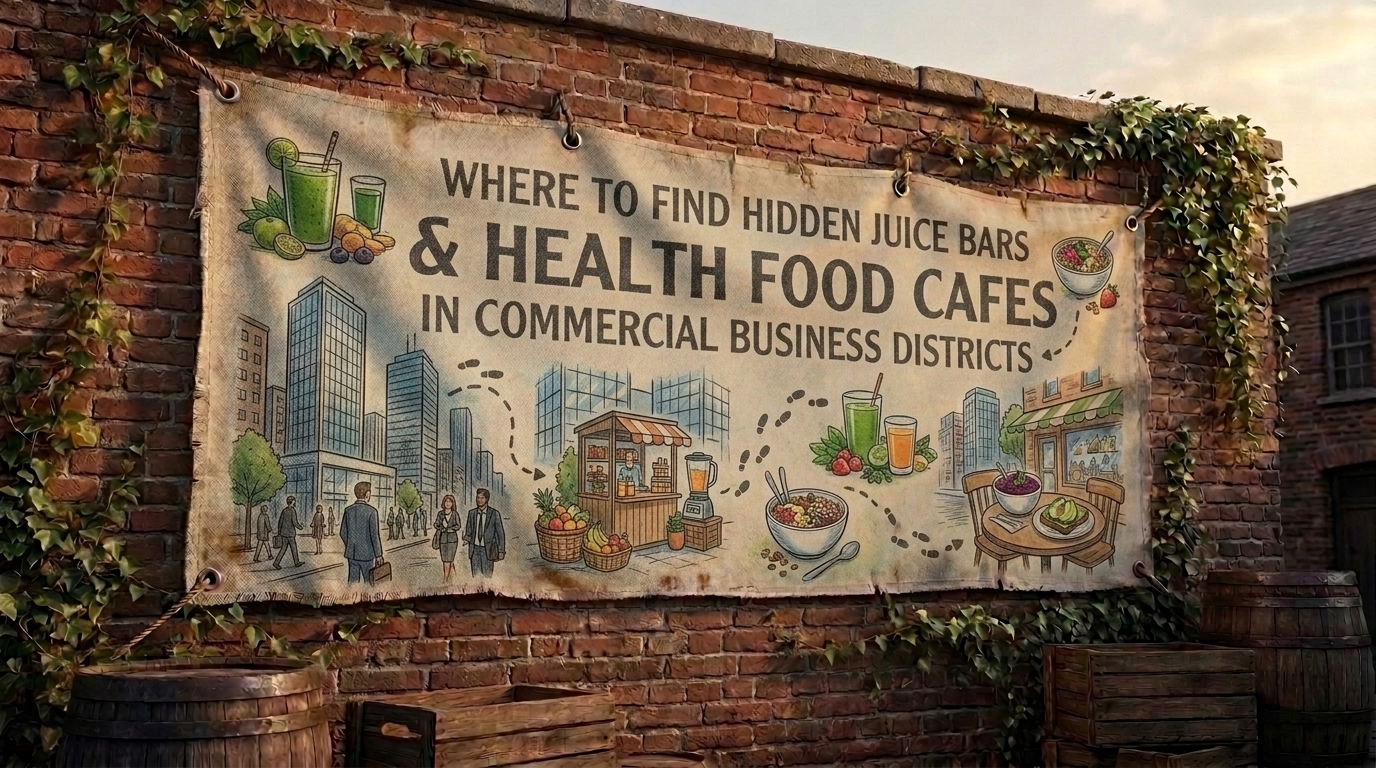
Commercial business districts are universally recognized as concrete jungles of high-speed productivity. Towering steel skyscrapers, relentless pedestrian traffic, honking delivery trucks, and rows of sleek corporate offices dominate the urban landscape. For professionals spending ten hours a day under fluorescent lights staring at spreadsheets and attending back-to-back meetings, survival often depends on quick, accessible fuel. Yet, for decades, the culinary default of the downtown business district has been greasy fast food, over-processed deli sandwiches, and vending machine snacks.
Fortunately, a quiet culinary wellness revolution is transforming corporate cores. Tucked away on underground concourses, nestled inside historic office building lobbies, hidden down sunlit pedestrian alleyways, or operating out of micro-storefronts wedged between massive financial institutions, a new breed of independent wellness havens is thriving. These hidden juice bars and health food cafes provide vital sanctuaries of vitality, offering cold-pressed green juices, adaptogenic smoothies, vibrant grain bowls, and plant-based nourishment.
Spanning the high-stakes financial and corporate hubs of New York, the tech-forward downtown corridors of San Francisco, the sprawling commercial centers of Texas, the executive avenues of Washington, and the innovative business districts of California, this comprehensive guide explores everything you need to know to locate, evaluate, and seamlessly integrate hidden health food spots into your workday routine.
1. The Urban Oasis: Why Health Cafes Thrive in Corporate Corridors
At first glance, a high-rent commercial business district might seem like an counterintuitive place for an independent, health-conscious juice bar or organic cafe. However, astute culinary entrepreneurs and wellness innovators recognize that corporate professionals are starved for clean nutrition.
- Combating Office Fatigue: Sedentary desk jobs, artificial indoor lighting, and high-stress decision-making deplete physical energy and mental focus. Sugary snacks and heavy fast-food lunches trigger sluggish crashes by mid-afternoon. Clean, nutrient-dense cold-pressed juices and fiber-rich grain bowls provide sustained, crash-free cognitive fuel.
- The Counter-Culture of Wellness: As corporate culture increasingly prioritizes employee health, burnout prevention, and sustainable lifestyles, business workers actively seek out spaces that offer mental decompression. A quiet juice bar draped in pothos plants and filled with the whir of commercial blenders offers a therapeutic psychological escape from the office cubicle.
2. Where to Look: Decoding Commercial Architecture and Zoning
Hidden wellness spots in commercial business districts do not use traditional roadside advertising banners or sprawling street-level storefronts. They adapt to the unique architectural constraints of corporate real estate. Look for them in these specialized urban zones:
- New York (Financial District & Midtown): Look below ground level into labyrinthine pedestrian concourses, inside the soaring marble lobbies of historic Art Deco insurance and banking towers, or tucked down narrow cobblestone side streets just a block away from major Wall Street trading floors.
- San Francisco & California (Financial District & SOMA): Tech hubs and corporate centers hide incredible plant-based cafes inside converted brick-and-beam industrial lofts, ground-floor courtyards of modern high-rise tech campuses, and open-air pedestrian arcades designed to capture midday sunlight.
- Texas (Downtown Austin, Houston, & Dallas): In Texas commercial centers dominated by extensive skywalk networks and climate-controlled underground tunnels, health food cafes and juice bars are strategically positioned near major parking garages and corporate transit links to catch executive foot traffic.
- Washington (Downtown & Golden Triangle): Focus on government and commercial corridors where busy staffers and lobbyists look for quick, premium health food options tucked into historic row-house conversions or modern office podium levels.
3. Digital Sleuthing: Insider Search Strategies to Unearth Hidden Spots
Because these establishments rely heavily on word-of-mouth among local office workers and digital ordering apps rather than tourist foot traffic, standard search engines can sometimes bury them beneath massive corporate chains. Use these advanced search tactics:
- Hyper-Specific Keyword Strings: Instead of searching “healthy food near me,” use targeted queries like “basement juice bar financial district,” “hidden organic cafe office lobby,” “cold-pressed juice micro-storefront,” or “adaptogenic smoothie bar downtown.”
- Scanning Delivery App Filters: Open food delivery apps (such as DoorDash, UberEats, or Ritual) while your GPS is pinned to your office address. Filter by “Healthy,” “Juice & Smoothies,” or “Vegan,” and look for independent local shops with high ratings but physical addresses that look unfamiliar. They are usually tucked away off the main thoroughfare.
- Local Business Professional Networks: Check regional business journals, local foodie newsletters, and professional lifestyle blogs that specifically review weekday lunch spots for corporate workers.
4. Decoding the Menu: Superfoods, Adaptogens, and Functional Nutrition
When you step into a high-end commercial district health cafe, the menu can sometimes look like a chemistry textbook. Understanding the key terminology helps you order precisely what your body needs for peak workday performance:
- Cold-Pressed vs. Centrifugal Juice: Centrifugal juicers use fast-spinning blades that generate heat, oxidizing nutrients quickly. Cold-pressed juice uses a hydraulic press to extract maximum vitamins, minerals, and live enzymes without heat degradation, allowing the juice to stay fresh for up to 72 hours.
- Adaptogens and Functional Boosts: Look for menu additions like ashwagandha (for stress relief), lion’s mane mushroom (for cognitive focus and memory), maca root (for steady hormonal energy), and spirulina or chlorophyll (for deep cellular detox).
- The Macro-Balanced Bowl: A true workday health bowl should feature a structural balance of complex carbohydrates (quinoa, brown rice, sweet potato), clean plant or lean proteins (hemp seeds, grilled tofu, wild salmon), healthy fats (avocado, tahini drizzle), and dark leafy greens.
5. Efficiency Hacks: Navigating the 12:30 PM Lunch Rush
In a corporate district, the lunch hour is brutally compressed. Between 12:00 PM and 1:00 PM, hundreds of hungry office workers descend on every food vendor simultaneously. Master the lunch rush with these strategies:
- Pre-Order via Proprietary Apps: Independent health spots frequently use mobile ordering platforms (like Ritual or Toast Tab). Place your order at 11:15 AM for a designated 12:15 PM pickup window, allowing you to bypass the massive queue entirely.
- The Off-Peak Window: If your work schedule is flexible, hit the juice bar during the mid-morning lull (10:00 AM – 11:00 AM) for a fresh wheatgrass shot or green juice, or slide in during the late afternoon dip (2:30 PM – 4:00 PM) for an adaptogenic matcha latte.
- Establish a Routine: Becoming a familiar face to the counter staff not only speeds up your service but often grants you insider knowledge on secret daily specials or unlisted menu modifications.
10 Frequently Asked Questions (FAQs)
1. How do I find hidden health food cafes in high-rise business districts?
Look inside office building lobbies, lower-level concourses, pedestrian tunnel networks, and narrow side streets just off major corporate thoroughfares. Digital food apps filtered by “healthy” or “juice” can also reveal tucked-away spots.
2. What is the difference between cold-pressed juice and regular juice?
Cold-pressed juice is extracted using hydraulic pressure without heat, preserving maximum vitamins, minerals, and enzymes. Regular juice is typically made using high-speed centrifugal blades that generate heat and cause rapid nutrient oxidation.
3. Are health food cafes in business districts open on weekends?
Many corporate district health spots operate primarily on a Monday-through-Friday schedule to cater to the working professional crowd, though locations in mixed-use neighborhoods may maintain weekend hours.
4. What are adaptogens and why are they added to smoothies?
Adaptogens are natural botanical herbs, roots, and mushrooms (such as ashwagandha, reishi, and cordyceps) that help the body adapt to stress, regulate cortisol levels, and maintain steady physical and mental energy.
5. Why are juices and health bowls in commercial districts often more expensive?
They utilize high-cost, perishable organic ingredients, premium superfoods (like wild blueberries, chia, and spirulina), and labor-intensive prep methods (like cold-pressing and grain-soaking) without the massive purchasing economies of scale used by fast-food chains.
6. Can I customize my order if I have severe food allergies?
Yes. Independent health food cafes are exceptionally accommodating regarding dietary restrictions (such as gluten-free, dairy-free, nut-free, or vegan), as they prep food in smaller, transparent batches.
7. What is the best time to visit a business district juice bar to avoid lines?
Avoid the peak 12:00 PM to 1:00 PM lunch crush. The best times to visit are mid-morning (10:00 AM) or mid-afternoon (3:00 PM) when the counter staff has maximum time to chat and customize your order.
8. Do juice bars in financial districts accept mobile payments?
Almost universally. Corporate professionals rarely carry physical cash, so hidden juice bars and cafes rely heavily on contactless card payments, Apple Pay, Google Pay, and digital app orders.
9. How long does cold-pressed juice stay fresh?
True raw, unpasteurized cold-pressed juice typically remains fresh for 3 to 5 days when stored consistently in a refrigerated environment below 38°F.
10. How do these hidden cafes sustain themselves against major coffee and fast-food chains?
They survive by offering superior nutritional quality, highly personalized customer service, specialized wellness menus that corporate chains cannot easily replicate, and deep loyalty from health-conscious office workers.
Conclusion
Finding hidden juice bars and health food cafes tucked away in the commercial business districts of New York, San Francisco, Texas, Washington, and California is a game-changer for anyone navigating the demanding corporate grind. By stepping away from processed fast food and seeking out these underground, lobby-level, and side-street sanctuaries, you nourish your body, protect your mental focus, and support independent culinary entrepreneurs. The next time workday fatigue sets in, skip the sugary vending machine and go hunt down a fresh, nutrient-dense green elixir in your district’s most unexpected corner.
What is your absolute favorite functional superfood ingredient or green juice combination to help you power through a stressful workday afternoon?