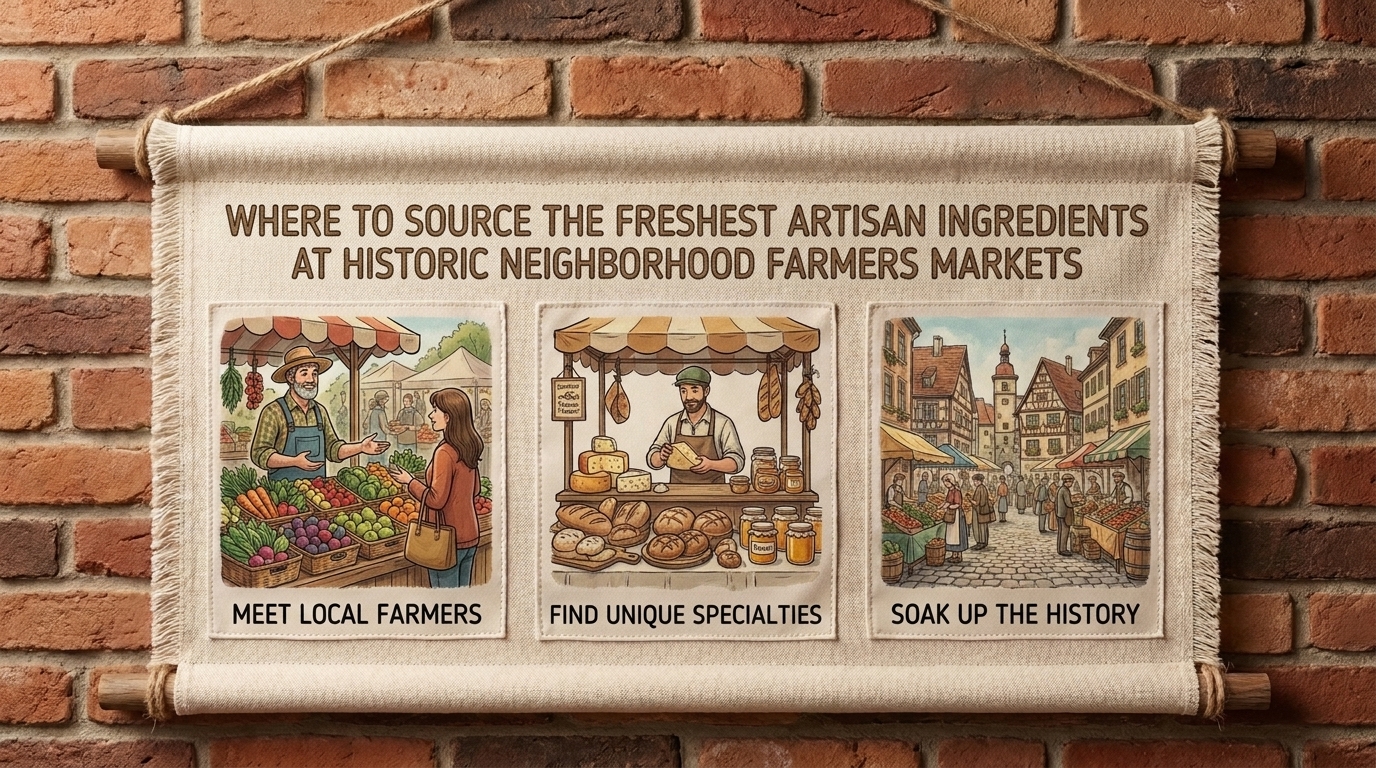
Where to Source the Freshest Artisan Ingredients at Historic Neighborhood Farmers Markets
Introduction
In an era dominated by hyper-processed convenience foods, industrial supply chains, and uniform supermarket aisles, a quiet culinary revolution is taking place. Discerning home cooks, passionate foodies, and top-tier chefs are returning to a time-tested tradition: sourcing raw, seasonal sustenance directly from the people who grow, harvest, and craft it.
Whether you are navigating the historic public squares of New York, exploring the sun-drenched agricultural bounty of California and San Francisco, engaging with public policy and local food networks in Washington, or celebrating the rich, sprawling culinary heritage across the diverse food hubs of Texas, historic farmers markets offer a vibrant portal to authentic flavor.
However, shopping at a historic neighborhood farmers market is vastly different from pushing a cart down a supermarket aisle. It requires an understanding of seasonality, regional microclimates, vendor relationships, and the subtle art of timing. Sourcing the freshest artisan ingredients demands more than just financial exchange; it requires culinary literacy.
This comprehensive guide explores the rich history of public markets, the geography of regional produce, insider tips for picking peak-season goods, strategies for building relationships with artisan vendors, and a definitive breakdown of how to transform market finds into extraordinary meals.
Part 1: The Evolution and Anatomy of Historic Farmers Markets
To truly appreciate what you buy at a farmers market, you must understand the cultural and historical framework that sustains these institutions.
1. The Heritage of Public Marketplaces
Historic farmers markets are not modern hipster novelties; they are the oldest commercial institutions in human civilization. From the agoras of ancient Greece to the historic public markets of Lower Manhattan, San Francisco’s Ferry Plaza, and legendary Texas courthouse squares, markets have always served as the social and economic heartbeat of a community.
When you purchase ingredients at a historic market, you bypass the standard corporate food matrix—where produce is harvested weeks underripe, gassed with ethylene for color, and shipped thousands of miles. Instead, you enter a localized circular economy where food travels hours from farm to table, retaining maximum nutrient density, structural integrity, and peak flavor.
2. The Direct-to-Consumer Advantage
Supermarket produce is bred for shelf-life, shipping durability, and uniform appearance (often at the expense of taste). Farmers market vendors, conversely, breed and harvest crops for flavor, aroma, and heirloom variety. An heirloom tomato picked vine-ripened that morning in California or a heritage cut of meat raised on open Texas pasture carries an entirely different molecular profile than mass-market equivalents.
Part 2: Regional Profiles: Sourcing Across America’s Great Culinary Hubs
The artisan ingredients available at a farmers market are deeply shaped by the unique geography, climate, and cultural traditions of their region. Understanding your local ecosystem is key to seasonal sourcing.
[ REGIONAL FARMERS MARKET ECOSYSTEMS ]
               │
               ├── New York ──────► Hudson Valley produce, historic indoor/outdoor squares
               ├── California ────► Year-round Mediterranean yields, biodiverse microclimates
               ├── San Francisco ─► Fog-kissed coastal greens, artisan cheeses, micro-farms
               ├── Washington ────► Mid-Atlantic heritage grains, Chesapeake seafood, policy hubs
               └── Texas ─────────► Hill Country peaches, grass-fed beef, vibrant cross-cultural spices
1. New York & The Hudson Valley Corridor
New York’s historic markets (such as Union Square Greenmarket) serve as the bridge between bustling urban consumers and the fertile soils of the Hudson Valley, Long Island, and New Jersey.
- Prime Finds: Crisp autumn heritage apples, black dirt onions from Orange County, artisanal goat cheeses, cool-climate microgreens, and small-batch maple syrups.
2. California & The Golden State’s Agricultural Engine
California is an agricultural powerhouse responsible for a massive percentage of the nation’s fresh produce. The state’s diverse microclimates allow for extraordinary year-round growing seasons.
- Prime Finds: Winter citrus varieties, stone fruits (peaches, nectarines, apricots), avocados, organic almonds, and specialty culinary herbs grown under abundant sunshine.
3. San Francisco & The Bay Area Micro-Climates
San Francisco’s legendary markets (like the Ferry Plaza Farmers Market) are defined by the culinary innovation of the Bay Area and the unique fog-cooled coastal valleys of Marin and Sonoma counties.
- Prime Finds: Pasture-raised poultry, artisanal sourdough loaves, fresh Pacific seafood, artisan goat and sheep milk cheeses, and hyper-local heirloom lettuces.
4. Washington & The Mid-Atlantic Crossroads
Washington, D.C., and the surrounding Capital region blend historic Southern agricultural traditions with Mid-Atlantic maritime bounty and innovative urban farming initiatives.
- Prime Finds: Chesapeake blue crabs, heirloom corn varieties, heritage pork, sweet potatoes, and early spring ramps and asparagus.
5. Texas & The Lone Star State’s Vast Horizons
Texas farmers markets reflect the state’s massive scale, blending Gulf Coast seafood, Hill Country orchards, and extensive cattle ranches with vibrant culinary traditions.
- Prime Finds: Fredericksburg peaches, grass-fed beef cuts, pecans, winter root vegetables, artisanal hot sauces, and locally cultivated mushrooms.
Part 3: Actionable Tips for Sourcing the Freshest Artisan Ingredients
Navigating a bustling historic market like a seasoned professional requires a tactical approach. Implement these five strategies during your next market trip:
1. Master the “Arrival Timing” Hierarchy
Different ingredients require different arrival strategies.
- For Delicate Produce & Flowers: Arrive at market opening (usually 8:00 AM). This is when delicate berries, fresh herbs, and premium heirloom tomatoes are fully stocked, unbruised, and picked over by chefs.
- For Root Vegetables & Specialty Meats: Arrive mid-morning. Vendors have more time to chat, share recipes, and offer deep cuts or custom butcher orders.
- For Steep Discounts (The Closing Sweep): Arrive 30 minutes before closing. While prime selection is gone, many farmers drop prices on surplus fresh produce to avoid hauling it back to the farm.
2. Look Beyond Visual Perfection
Supermarkets have trained consumers to reject anything with a blemish, an asymmetrical shape, or unusual coloration. At a farmers market, visual perfection is often a warning sign of heavy chemical hybridization or pesticide use.
- Heirloom tomatoes come in lumpy, ribbed shapes with deep earthy flavors.
- Carrots come in purple, yellow, and crooked varieties with dirt still clinging to their skins. Embrace organic irregularities; they are markers of authentic, chemical-free growth.
3. Build Long-Term Relationships with Growers
The real value of a farmers market isn’t just the food—it’s the vendor.
- Actionable step: Ask open-ended questions: “How do you recommend preparing this variety?” “When was this harvested?” “What is coming into season next week?” When you become a familiar, respectful regular, farmers will often stash their best reserve items under the table for you before putting them out for the general public.
4. Shop with Seasonal Flexibility, Not a Rigid List
If you walk into a market demanding out-of-season asparagus in November, you will either leave disappointed or buy imported produce masquerading as local.
- Actionable step: Let the market dictate your menu. Scan the stalls first to see what looks exceptionally vibrant that morning, then build your cooking plans around those peak-season finds.
5. Bring the Proper Equipment
Sourcing heavy artisan goods requires tactical carrying capacity.
- Actionable step: Ditch flimsy plastic bags. Equip yourself with structured canvas market totes, insulated cooler bags for dairy, meats, and fresh cheeses, and reusable mesh produce bags to protect delicate stone fruits and berries from bruising.
Part 4: Deep Dive: Sourcing Specific Artisan Categories
When exploring historic markets, focus your attention on four primary categories of high-integrity artisan ingredients:
1. Heirloom Produce and Micro-Varietals
Industrial agriculture prioritizes three traits: uniform ripening, transport durability, and high yield. Farmers market growers prioritize taste. Look for rare heirloom potatoes, dinosaur kale, garlic scapes, bitter greens, and ancient grain varieties that you will never find in a standard supermarket chain.
2. Pasture-Raised Proteins and Heritage Meats
Industrial meat production relies on concentrated animal feeding operations (CAFOs) treated with routine antibiotics. Farmers market meat vendors typically offer pasture-raised, grass-fed, or heritage-breed livestock.
- Tip: Ask about finishing diets (e.g., grain-finished vs. 100% grass-fed) and processing dates. The marbling, fat rendering, and depth of flavor in pasture-raised meats are fundamentally superior.
3. Small-Batch Ferments, Cheeses, and Curing
Historic markets are treasure troves for micro-producers—cheesemakers crafting raw-milk bries, fermenters offering unpasteurized kimchi and raw sauerkraut, and local apiaries selling unheated, wildflower honey carrying the distinct pollen profile of your local region.
4. Artisan Breads and Sourdough Culture
Commercial bread is chemically leavened in hours. Artisan bakers at farmers markets use wild sourdough starters, heritage grains (like spelt, emmer, and einkorn), and 24-to-48-hour cold fermentation processes that yield complex flavor profiles and superior digestibility.
Part 5: 10 Frequently Asked Questions (FAQs)
1. Are farmers market ingredients always organic, even if they aren’t certified?
Not necessarily. Certification as “USDA Organic” is an expensive bureaucratic process that many small-scale independent farmers cannot afford, even if their growing practices far exceed organic standards (using regenerative agriculture, zero synthetic pesticides, and cover cropping). Always ask the farmer directly about their pest management and soil health practices rather than relying solely on a label.
2. Why are farmers market ingredients sometimes more expensive than supermarket items?
Supermarket goods are heavily subsidized by industrial supply chains, cheap labor, and long-distance shipping economies of scale. Farmers market vendors are small business owners paying for sustainable, human-scale labor, regenerative soil care, and local transport. You are paying for true nutritional density, environmental stewardship, and real flavor rather than corporate markup.
3. How can I verify if a vendor is a genuine grower or a reseller?
While most markets vet vendors rigorously, “resellers” (who buy wholesale produce from central distribution hubs and sell it at markets) occasionally slip in. Look for clues: Does the farmer have dirt under their fingernails? Can they tell you precisely which field or hoop-house a vegetable was grown in? Are they selling crops that are completely out of season for your geographic region?
4. What is the best way to wash and store fragile farmers market produce?
Because market produce is un-waxed and freshly harvested, it does not have the chemical preservatives of supermarket items and spoils faster if stored incorrectly. Do not wash berries or greens until right before you use them. Store leafy greens wrapped in slightly damp paper towels inside breathable containers in your crisper drawer.
5. Is it acceptable to sample produce before buying?
At most historic markets, tasting samples are welcomed for items like sliced fruit, cheeses, or breads—especially if you express genuine interest in purchasing. Always ask politely (“May I taste a slice of this peach?”) before reaching across the table.
6. Should I bring cash, or do most farmers market vendors accept cards?
While digital point-of-sale systems (Venmo, Square, Apple Pay) are increasingly common at markets in New York, San Francisco, and Austin, cash remains king. Many rural farmers operating booths in historic squares deal with spotty cellular coverage or prefer avoiding transaction fees. Bring a mix of small bills ($1s, $5s, $10s).
7. What should I do if an ingredient I bought spoils faster than expected?
Because fresh artisan produce lacks artificial preservatives and wax coatings, its shelf life is shorter. Consume delicate items (berries, tender greens, stone fruit) within 2 to 4 days of purchase. If an item spoils rapidly, mention it to the farmer gently on your next visit—good growers appreciate constructive feedback on post-harvest handling.
8. Can I place custom orders with vendors ahead of time?
Yes! For specialty items—such as a whole pastured lamb shoulder, custom holiday roasting chickens, large quantities of canning tomatoes during peak harvest, or specific heritage grains—many vendors are happy to take pre-orders via email or phone for pickup at the next market day.
9. How do historic farmers markets handle food safety and temperature control for meats and dairy?
Certified vendors operating in regulated public markets must adhere to strict county health codes, utilizing commercial refrigeration units, insulated coolers with dry ice, and temperature-monitoring logs for raw meats, unpasteurized dairy, and fresh eggs. Always check that dairy and meats feel properly chilled to the touch upon purchase.
10. How can I find historic farmers markets when traveling to a new city?
Use dedicated agricultural directories such as the USDA Farmers Market Directory, LocalHarvest.org, or regional food council locators. When visiting cities like New York, San Francisco, or Washington, check local culinary publications or neighborhood community boards for historic weekend and weekday market schedules.
Conclusion
Sourcing the freshest artisan ingredients at historic neighborhood farmers markets is much more than a weekly grocery errand—it is an immersion into the culinary heritage, seasonal rhythm, and agricultural soul of your community.
Whether you are selecting heirloom produce in New York, coastal greens in San Francisco, historic grains in Washington, or sun-ripened fruit in Texas, connecting directly with the growers transforms the way you cook and eat. Step away from the sterile supermarket aisles, embrace the seasonal cadence of local agriculture, and let the extraordinary flavor of true artisan ingredients elevate your kitchen.