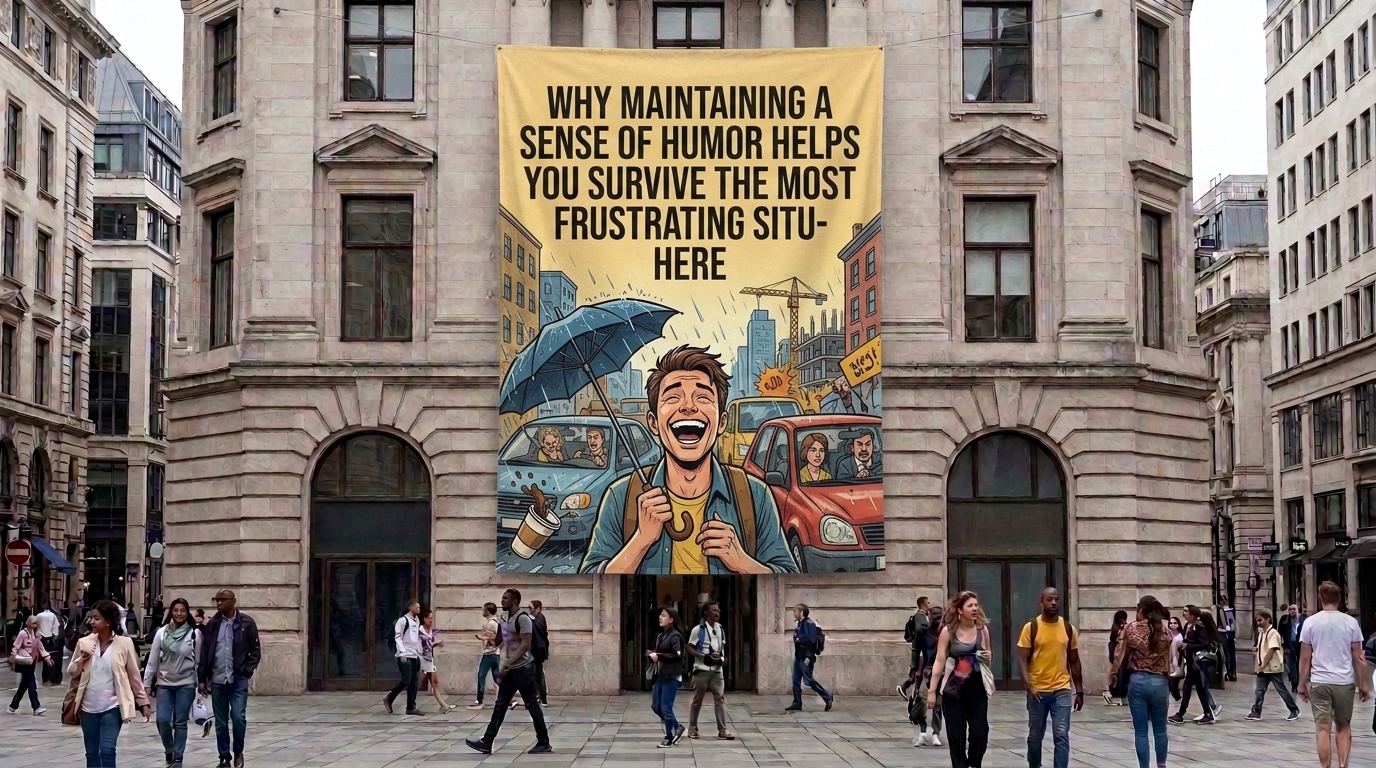
Why Maintaining a Sense of Humor Helps You Survive the Most Frustrating Situations Here
In modern, high-pressure environments—from the fast-moving financial sector of New York City and the tech ecosystems of San Francisco, Silicon Valley, and Seattle, Washington, to the sprawling business centers of California and Texas—frustration is an unavoidable reality.
Delays, sudden market shifts, technical failures, miscommunications, and unpredictable urban friction test emotional endurance daily.
When unexpected friction strikes, the default human response is often anger, anxiety, or helplessness. However, an essential psychological mechanism for surviving and thriving in these high-stakes environments is maintaining an active sense of humor.
Far from being a sign of levity or avoidance, cognitive humor is an advanced psychological defense mechanism. It allows you to reframe acute stress, preserve executive brain function, diffuse interpersonal tension, and maintain long-term resilience.
The Neuroscience and Psychology of Humor Under Stress
To understand why humor serves as an effective buffer against acute frustration, we must examine how laughter alters brain chemistry and cognitive processing during stressful events.
Acute Frustration / Environmental Stress ───► Amygdala High-Beta Threat Signal
                                                    │
                                  [Cognitive Reframing Through Humor]
                                                    │
                                                    ▼
                       Prefrontal Cortex Engagement & Neurotransmitter Shift
                                                    │
                                                    ▼
                         Cortisol Reduction & Restored Adaptive Problem-Solving
1. Neurochemical Down-Regulation of Stress
Humor alters the body’s neurochemical state. When faced with a frustrating situation, finding the absurdity or comedic angle triggers an immediate release of endorphins and dopamine while suppressing the production of cortisol and adrenaline. This shift calms the sympathetic nervous system and prevents long-term stress accumulation.
2. Cognitive Reframing and Psychological Distance
Psychologist George Vaillant classified mature humor as one of the highest-level psychological defense mechanisms. Humor works through cognitive reframing—shifting your perspective on a situation without denying its reality. By viewing a frustrating setback through a humorous lens, you create psychological distance between yourself and the stressor, changing it from a threat into an manageable event.
3. Preserving Executive Functioning
Under acute anger or frustration, the amygdala hijacks brain function, impairing logical reasoning and creative problem-solving. Injecting humor interrupts this threat signal, keeping the prefrontal cortex online so you can make rational decisions under pressure.
Frustration-Reactive Mindset vs. Humor-Resilient Mindset
Cultivating a sense of humor shifts how you process unexpected friction in high-demand settings:
| Life Dimension | Frustration-Reactive Mindset | Humor-Resilient Mindset |
| Initial Reaction | Anger, personal offense, sense of powerlessness | Amusement, curiosity, finding the situational absurdity |
| Brain Physiology | High cortisol, amygdala activation, narrowed focus | Endorphin release, prefrontal cortex engagement, broad perspective |
| Social Dynamics | Heightened tension, defensive posture, conflict escalation | Diffused conflict, shared camaraderie, collective relief |
| Long-Term Impact | Burnout, emotional exhaustion, chronic irritability | High resilience, cognitive flexibility, sustained composure |
5-Step Framework to Cultivate Humor During Frustrating Situations
To transform humor from a spontaneous reaction into a deliberate daily practice, follow this five-step framework:
1.Identify the ‘Absurdity Angle’:Pause before reacting to recognize the situational absurdity.
When hit with an unexpected frustration (e.g., a major train delay or cancelled meeting), take a breath and look for the objective absurdity in the situation. Ask yourself: “If this were a scene in a comedy show, what would make it funny?”
2.Adopt the ‘Third-Person Narrator’ Perspective:Reframe acute setbacks into future personal stories.
Mentally step back and narrate the frustrating event as an outside observer or storyteller. Recognize that today’s inconvenience often becomes tomorrow’s engaging narrative.
3.Lower Internal and External Stakes:Use gentle, self-deprecating humor to defuse tension.
Acknowledge mistakes or chaotic circumstances with lighthearted self-deprecation. Showing that you do not take yourself too seriously immediately reduces anxiety for both you and those around you.
4.Build a ‘Humor-First’ Support Network:Build relationships through shared lightheartedness.
Surround yourself with colleagues, friends, and peers who value lightheartedness over constant complaint. Shared laughter strengthens social bonds and turns individual friction into a unifying experience.
5.Separate Emotional Response from Problem-Solving:Balance lighthearted perspective with meaningful action.
Use humor to clear emotional frustration, then transition directly into practical problem-solving. Humor clears away anger so you can take constructive next steps.
Practical Tips for Applying Humor in Major Metropolitan Hubs
Navigating demanding career environments across New York, California, Texas, Washington, or San Francisco requires integrating humor into daily routines:
- Practice the “10-Year Rule”: When facing a frustrating delay or setback, ask yourself: “Will this matter in 10 years?” Recognizing the temporary nature of the problem makes it much easier to laugh off the immediate inconvenience.
- Find Humor in Commuting Hazards: Turn daily transit friction—such as traffic jams in Austin, delayed trains in New York, or parking hassles in San Francisco—into opportunities to listen to comedy podcasts or reflect on urban life’s quirks.
- Use Humorous Metaphors in Workplace Messaging: When communicating delays or technical issues to team members, use lighthearted, constructive framing to ease tension while keeping everyone aligned on solutions.
- Maintain a “Frustration Log”: Jot down the most ridiculous or absurd situations you encounter throughout the week. Reviewing them later highlights how quickly temporary frustrations pass.
Top 10 Frequently Asked Questions (FAQ)
1. Is using humor during a crisis a form of denial or avoiding problems?
No. Healthy humor acknowledges the reality of a difficult situation while altering your emotional reaction to it. It clears away panic and anger so you can address the problem effectively.
2. How do I use humor in professional settings without sounding unprofessional?
Focus humor on the situation, shared circumstances, or yourself—never punch down at clients, colleagues, or subordinates. Keep workplace humor inclusive, constructive, and warm.
3. What is the difference between healthy humor and destructive sarcasm?
Healthy humor brings people together, releases tension, and builds perspective. Destructive sarcasm or cynicism often vents bitterness, alienates others, and deepens frustration.
4. How can humor help prevent professional burnout?
Burnout is driven by chronic stress and feelings of helplessness. Humor lowers cortisol, restores a sense of agency, and provides emotional distance from daily work pressures.
5. Can a sense of humor be learned if I am naturally serious?
Yes. Humor is a cognitive habit. By practicing perspective shifts, consuming comedic content, and looking for absurdities in daily life, you can train your brain to spot lighthearted angles naturally.
6. How does shared humor strengthen team dynamics during tough projects?
Shared laughter releases oxytocin and endorphins, building trust, lowering defensive barriers, and fostering psychological safety within teams facing high-pressure deadlines.
7. Why do high-stress cities like New York and San Francisco rely so heavily on humor?
High-density urban hubs feature constant friction, high costs, and intense competition. In these environments, humor functions as a crucial social and psychological coping strategy.
8. How do I find humor when I am genuinely angry or overwhelmed?
Start with a physical reset—take three deep, slow breaths to break the immediate threat response. Once your heart rate slows, look for a small absurd detail in the situation to soften your perspective.
9. Can humor improve physical health alongside mental resilience?
Yes. Laughter improves cardiovascular circulation, boosts immune function, relieves muscle tension, and lowers overall blood pressure.
10. How does maintaining a sense of humor aid long-term career growth?
Professionals who maintain composure and humor under pressure are perceived as confident, resilient leaders. They navigate office politics and setbacks smoothly while maintaining strong workplace relationships.
Conclusion
Maintaining a sense of humor when facing unexpected friction is an essential strategy for emotional regulation, cognitive clarity, and long-term performance. By finding the absurdities in daily frustrations, you protect your nervous system from chronic stress, build stronger relationships, and preserve your problem-solving abilities. Whether navigating career moves, daily commutes, or life decisions across Texas, New York, California, Washington, or San Francisco, holding onto your sense of humor ensures you stay grounded, resilient, and ready for whatever comes next.