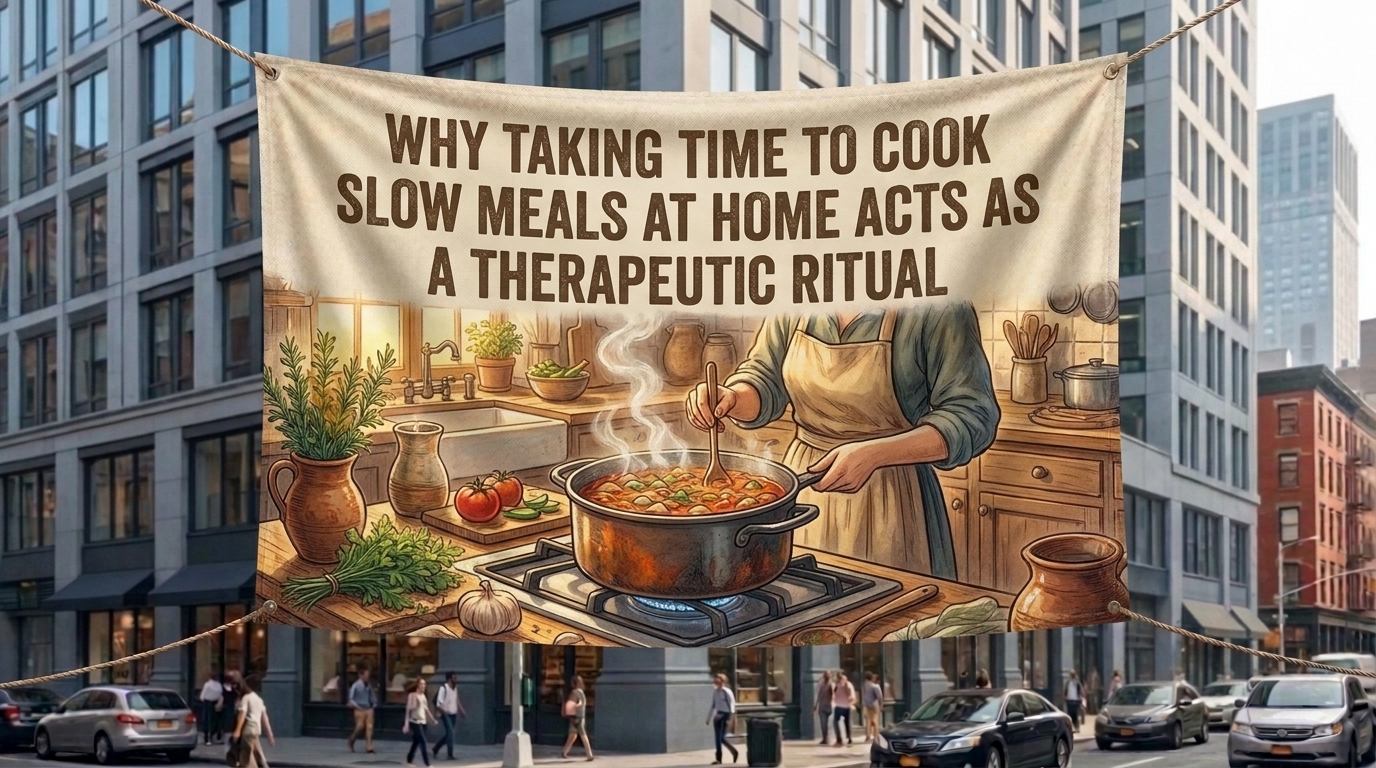
Why taking time to cook slow meals at home acts as a therapeutic ritual? In a culture governed by rapid delivery apps, instant microwave options, and high-speed urban rhythms, cooking has largely been reduced to a functional transaction: fuel in exchange for minimal effort. Yet across fast-paced hubs—from the bustling tech corridors of San Francisco and Seattle (Washington) to the relentless energy of New York City and the expansive urban sprawls of Texas and California—a quiet counter-movement is taking root.
Slowing down to cook at home—deliberately spending two or three hours braising, chopping, stirring, and seasoning—is no longer viewed merely as domestic labor. It has emerged as a high-impact, sensory-rich therapeutic ritual. By shifting perspective from “preparing dinner” to “practicing culinary mindfulness,” home cooking becomes a meditative anchor that relieves cognitive overload, restores emotional balance, and fosters deep personal connection.
Here is an in-depth exploration of the psychology, sensory science, regional expressions, and actionable steps to turn your kitchen into a sanctuary of slow living.
The Psychological Mechanics of Slow Cooking
Slow cooking engages cognitive pathways that modern digital work environments suppress. When you work at a computer, feedback loops are abstract, delayed, and often intangible. In contrast, cooking provides immediate physical feedback, grounding the mind through clear cause-and-effect relationships.
1. The Power of Tactile Grounding
Tactile engagement with raw materials—kneading dough, peeling root vegetables, crushing whole spices with a mortar and pestle—functions similarly to somatic grounding techniques used in mindfulness therapy.
- Rhythmic Motion: The repetitive act of dicing onions or julienning carrots lowers heart rate variance and provides a focal point for stray thoughts.
- Multisensory Stimulation: Engaging smell, sight, touch, and sound simultaneously forces the brain out of anxiety-inducing future projections and directly into the present moment.
2. Behavioral Activation and Dopamine
Depression and chronic fatigue often stem from feelings of powerlessness or low task-completion rates. Occupational therapists frequently utilize culinary activities because cooking yields a tangible, rewarding output from structured inputs within a short time frame.
┌─────────────────────────┐     ┌─────────────────────────┐     ┌─────────────────────────┐
│   Structured Inputs     │ ──► │  Sensory Processing     │ ──► │   Tangible Reward       │
│  • Chopping & Searing   │     │  • Aromas & Heat        │     │  • Nourishing Meal      │
│  • Low & Slow Heat      │     │  • Rhythmic Stirring    │     │  • Dopamine Release     │
└─────────────────────────┘     └─────────────────────────┘     └─────────────────────────┘
Regional Culinary Styles: Expressing Slow Food Across Key States
Slow cooking adapts uniquely to local cultures, ingredients, and lifestyles across the United States:
| Region / State | Signature Slow-Cooking Style | Core Mental Benefit | Key Local Ingredients |
| Texas | Low-and-Slow Pit Barbecue & Chili Simmers | Patience cultivation, community gathering | Oak/Pecan wood, brisket, dried chilies, cumin |
| New York | All-Day Sunday Sugo & Braised Short Ribs | Nostalgic comfort, contrast to city speed | San Marzano tomatoes, garlic, bone-in beef |
| California | Farm-to-Table Clay Pot Stews & Sourdough | Seasonality alignment, sensory freshness | Heirloom beans, wild mushrooms, fresh herbs |
| San Francisco | Slow Cioppino & Artisanal Fermentation | Creative focus, connection to coastal heritage | Fresh Dungeness crab, tomatoes, sourdough starter |
| Washington | Pacific Rim Cedar-Plank Braises & Broths | Quiet introspection, rainforest cozy warmth | Wild salmon, kombu, chanterelles, root crops |
Step-by-Step Guide: Establishing Your Kitchen Ritual
Transforming your cooking experience from a daily chore into a restorative practice requires intentional structural changes.
1.Establish a Tech-Free Cooking Zone:Remove digital clutter before touching ingredients.
Silence phones, turn off televisions, and remove work laptops from the kitchen counter. Play low-tempo acoustic music or embrace complete ambient quiet to allow sensory awareness to surface.
2.Practice Mis en Place (Everything in its Place):Reduce cognitive friction through preparation.
Wash, measure, and chop all ingredients before turning on any heat source. Organizing your workstation prevents panic, lowers cortisol levels, and establishes order.
3.Embrace Long-Duration Techniques:Choose processes that require time over active effort.
Select dishes that rely on time rather than fast-paced intervention—such as braising, stock reduction, or bread proofing. Let gentle heat perform the heavy lifting while you enjoy the surrounding atmosphere.
4.Engage in Sensory Check-Ins:Pause periodically to evaluate scent, texture, and taste.
Take explicit moments to smell the aromatic base (garlic, onion, celery), observe color transitions during caramelization, and adjust seasoning slowly with small additions of salt or acid.
Practical Tips to Maximize the Therapeutic Value of Cooking
- Invest in High-Touch Equipment: Use heavy-bottomed cast iron or enameled Dutch ovens. The weight and durability of quality cookware reinforce a sense of permanence and craft.
- Cook for the Next Day: Slow meals often taste better after resting overnight as flavors meld. Cooking large batches eliminates future midweek decision fatigue.
- Turn Cleanup into Part of the Meditation: Wash dishes mindfully as you go rather than letting them pile up. Warm water and rhythmic scrubbing can extend the soothing effects of the kitchen routine.
Top 10 Frequently Asked Questions (FAQ)
Q1: How can I slow-cook if I have a busy work schedule in high-intensity cities like NYC or SF?
A: Reserve slow cooking exclusively for weekend evenings or set up a slow cooker / Dutch oven during work-from-home days. Even spending 30 minutes on prep in the morning allows you to enjoy the therapeutic aromas all afternoon.
Q2: Is slow cooking expensive compared to quick meal options?
A: No. In fact, slow-cooking techniques like braising and stewing were created to make tougher, less expensive cuts of meat and humble root vegetables tender and flavor-rich.
Q3: What is the single best dish to start with for culinary therapy?
A: A long-simmered vegetable or bone broth, or a classic tomato sauce. These require low technical skills, offer rich olfactory rewards, and are forgiving with timing.
Q4: How does slow cooking compare to meditation apps?
A: While meditation apps rely on auditory cues, slow cooking provides active, physical grounding that engages all five senses, making it easier for fidgety or anxious individuals to drop into state of flow.
Q5: Can slow cooking help improve eating habits?
A: Yes. Research shows that when you invest time in preparing a meal from scratch, you eat more mindfully, savor smaller portions, and appreciate nutritional value more deeply.
Q6: What if I am not good at knife skills?
A: Speed is unnecessary for therapeutic cooking. Slower, deliberate cutting lowers injury risk and heightens tactile focus, turning knife work into a calming visual pattern.
Q7: Are electric slow cookers (like Instant Pots) as therapeutic as stove-top cooking?
A: While electric cookers offer convenience, traditional stove-top or oven braising provides greater sensory engagement—aromas filling the house, gentle bubbling sounds, and periodic visual checks.
Q8: How can I make cooking a social ritual with family or partners?
A: Divide prep tasks by sensory experience: one person handles chopping aromatics, another grinds spices or kneads dough, accompanied by ambient music and conversation without screens.
Q9: Why do aromas during slow cooking have such a strong emotional impact?
A: The olfactory bulb has direct neural connections to the amygdala and hippocampus—the brain regions responsible for processing emotion and memory—triggering deep feelings of nostalgia and safety.
Q10: How do I avoid feeling overwhelmed by dirty dishes afterwards?
A: Adopt the “clean-as-you-go” principle. Use long simmering periods (when the food needs no attention) to wash cutting boards and utensils, keeping your workspace serene.
Conclusion
Taking the time to cook slow meals at home is far more than a practical way to prepare food; it is a vital mental reset. In a world that constantly demands faster output and endless digital attention, your kitchen offers a space where time slows down, ingredients transform through heat and patience, and simple sensory actions restore balance. Whether you live in a fast-paced urban apartment or a quiet suburban neighborhood, stepping up to the stove with intention turns cooking into one of the most accessible and nourishing rituals available.