How to Dress Practically Yet Stylishly for Unpredictable Weather Changes in New York
Welcome to nyattitude.com, your definitive digital authority on metropolitan style, high-performance urban living, and unapologetic resilience. Whether you are navigating the microclimate wind tunnels of Manhattan skyscrapers, managing corporate culture across San Francisco and California, transitioning through sudden coastal shifts in Washington, or keeping pace with unpredictable weather fronts across Texas, one styling dilemma unites every city dweller: how to look impeccably put-together when the weather changes radically by the hour.
New York City is notorious for its meteorological mood swings. You might step out of your apartment at 8:00 AM into a brisk, 45-degree autumn chill, sweat through a sudden 70-degree humidity spike by lunchtime while sprinting between subway lines, and get caught in an unexpected flash downpour by the evening commute.
If your wardrobe strategy relies on static, all-or-nothing outfits, you will spend your day either freezing, overheating, or ruining your favorite garments. True urban style is not just about what looks good on a runway; it is about adaptability, smart textile choices, and tactical layering.
This comprehensive guide breaks down the science of transitional dressing, actionable style formulas for erratic city weather, footwear survival tips, a 10-point FAQ section, and a master blueprint to help you conquer the elements without ever sacrificing your personal aesthetic.
Part 1: The Meteorology of the Metropolis (Why NYC Weather is Brutal on Clothes)
Before building a functional wardrobe, you must understand why the city environment makes weather fluctuations so extreme.
1. The Urban Canyon Effect
Cities like New York, San Francisco, and Seattle are defined by tall architecture. Skyscrapers and high-rises create narrow concrete corridors that act as wind tunnels. A gentle 10 mph breeze blowing across the river can transform into a biting, chilling 30 mph gust the moment you walk down a Manhattan cross-street.
- The Style Impact: Wind-chill factors mean that the thermometer temperature is rarely what your body actually feels. Your outfits must account for wind deflection.
2. The Subterranean Temperature Trap
Urban commuting means cycling through wildly different microclimates within minutes: freezing outdoor platforms, boiling-hot subway cars or trains, heavily air-conditioned corporate offices, and overheated residential lobbies.
- The Style Impact: Dressing in a single thick sweater or a heavy monolithic coat is a rookie mistake. You will trap heat on the train, sweat through your clothes, and catch a chill the second you step back outside. The secret weapon is thermoregulation through modular layering.
Part 2: The Core Framework of Tactical Layering
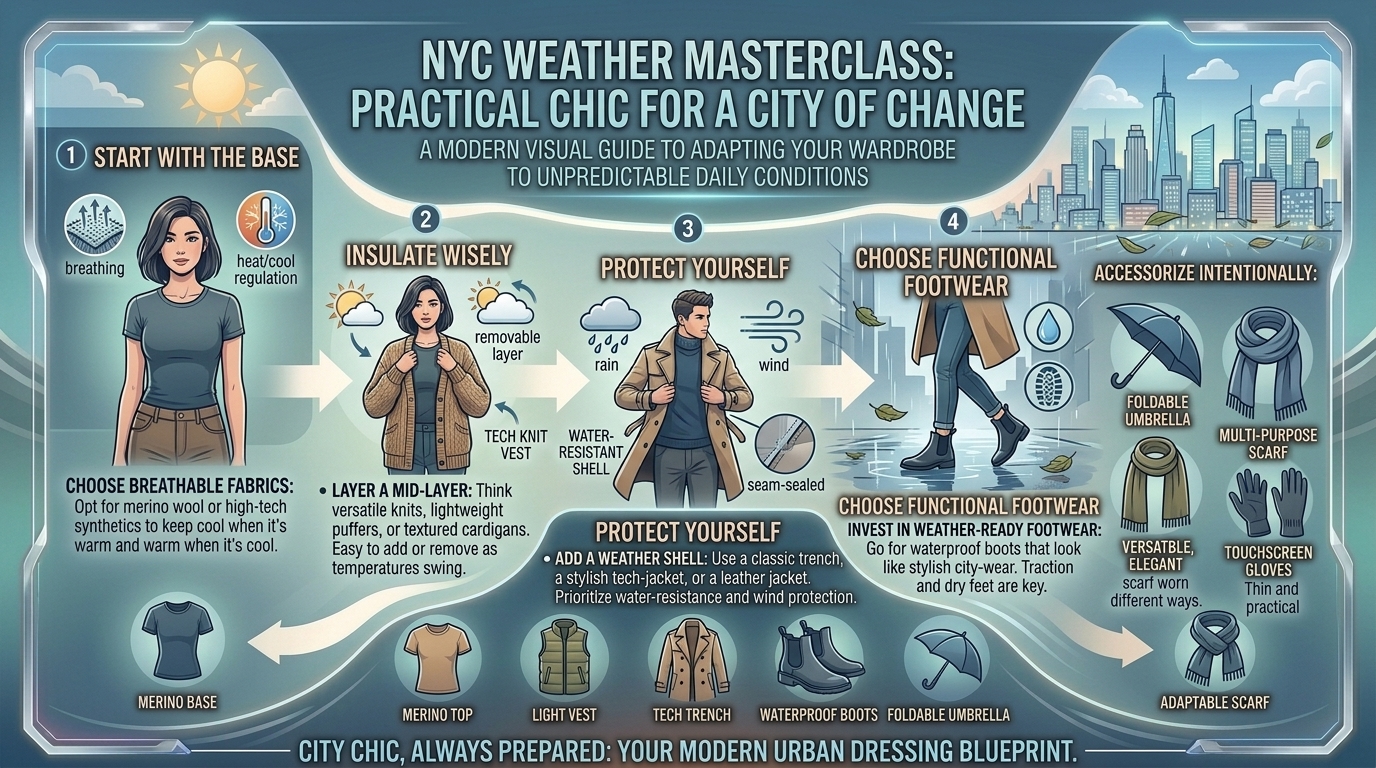
Layering in an urban environment is not just throwing random garments on top of each other; it is an engineered system composed of three distinct structural tiers.
1. Tier 1: The Breathable Base Layer
Your base layer rests directly against your skin. Because you will likely transition from cold streets to warm indoor offices, your base must manage moisture effectively.
- What to Wear: Opt for fine merino wool tees, lightweight organic cotton, or moisture-wicking synthetic blends. Avoid heavy, 100% thick cotton t-shirts if you are prone to sweating, as they retain moisture and cause chills when you step back outside.
- The Style Tip: Keep base layers clean, neutral, and fitted so that if you strip down to your shirtsleeves indoors, you still look sharp and professional.
2. Tier 2: The Adaptive Mid-Layer (Insulation)
Your mid-layer is the workhorse of temperature control. It traps body heat when it’s cold, but it can be easily unbuttoned, unzipped, or stripped off when the sun breaks through or you step indoors.
- What to Wear: Lightweight cashmere crewnecks, waffle-knit thermals, unstructured cardigans, tailored overshirts (“shackets”), or technical fleece vests.
- The Style Tip: Textural variety is your friend here. Pairing a crisp Oxford cotton base with a ribbed knit mid-layer instantly elevates your visual depth without adding bulk.
3. Tier 3: The Protective Outer Shell
Your outer layer shields you from wind, rain, and sudden drops in temperature. In New York, this piece must be as functional as it is fashionable.
- What to Wear: A classic trench coat with a wind-resistant lining, a water-repellant chore jacket, a lightweight packable shell, or a structured topcoat.
- The Style Tip: Invest in outerwear with deep, secure pockets and weather-treated fabrics (like waxed cotton or Gore-Tex lined wool) so you don’t have to carry an umbrella every single time clouds appear on the horizon.
Part 3: Footwear Survival Tactics for Erratic Skies
In a walking city like New York or San Francisco, your feet take the brunt of the weather. Puddles, slush, slick subway stairs, and miles of pavement demand intelligent footwear choices.
1. Never Trust “Fair Weather” Shoes in the City
Sleek leather-soled dress shoes or delicate suede sneakers will get destroyed within a month if exposed to sudden NYC rainstorms or winter slush.
- The Solution: Build a rotation of weather-resistant urban footwear. Look for rubber-lugged soles, treated pebble-grain leathers, or stylish waterproof Chelsea boots.
- The Office Commuter Hack: If your office requires formal dress shoes, wear rugged, weather-sealed commuter boots or sneakers during your transit walk, and keep a clean pair of professional shoes waiting under your desk.
2. The Sock Factor
Never underestimate the psychological misery of damp socks. During transitional wet seasons, swap out standard thin cotton dress socks for merino wool socks. Merino wool naturally regulates temperature, wicks moisture away from the skin, and keeps your feet warm even if a rogue puddle splashes over your shoe line.
Part 4: Step-by-Step Morning Routine for Unpredictable Forecasts
Stop guessing what to wear every morning. Use this 4-step checklist before stepping out your door:
- Step 1: Check the “RealFeel” and Wind, Not Just the Temperature: A 55-degree day with 25 mph wind gusts requires a completely different outfit than a calm 55-degree sunny afternoon. Always check the wind speed and humidity index.
- Step 2: Build from the Inside Out with Easy Shedding in Mind: Ensure every layer you put on can be unzipped or removed independently without disrupting your core outfit aesthetic.
- Step 3: Pack Smart Accessories: Toss a lightweight, windproof travel umbrella or a packable rain shell into your work bag if there is even a 30% chance of precipitation.
- Step 4: Choose Versatile Trousers: Avoid heavy flannel or delicate silk pants during volatile transitional seasons. Opt for mid-weight stretch chinos, technical commuter trousers, or structured denim that can handle temperature swings and minor moisture.
Part 5: Frequently Asked Questions (FAQ)
1. How do I keep from sweating through my clothes when commuting on the subway during warm spells?
Stick to the 3-tier layering rule. Wear a breathable base layer, and carry your jacket or mid-layer over your arm while navigating hot subway platforms and trains. Dressing in lighter base pieces prevents heat exhaustion underground.
2. Is a trench coat really practical for New York weather?
Absolutely. A classic, water-resistant trench coat with a removable lining is the ultimate three-season garment in NYC. It blocks the wind tunnel effect, handles light rain, and pairs effortlessly with both casual denim and formal tailoring.
3. How do I protect leather shoes and bags from sudden rain or snow?
Treat all leather goods with a quality waterproofing spray or wax balm before wearing them outside for the first time. This creates an invisible barrier against water spots, salt stains, and mud splashes.
4. What are the best fabrics for transitional weather clothing?
Merino wool, technical nylon blends, waxed cotton, medium-weight denim, and structured cotton-twill are the gold standard. They offer durability, wind resistance, and breathability.
5. Can I wear sneakers to the office in major metropolitan cities?
Yes. Clean, minimalist leather sneakers or premium athletic-lifestyle kicks are universally accepted in modern corporate, tech, and creative offices across New York, San Francisco, and Austin—provided they are kept pristine and paired with tailored trousers or smart casual wear.
6. How do I transition an outfit from a chilly morning to a warm afternoon without carrying a bulky jacket?
Opt for lightweight, compressible mid-layers like a packable down vest or a technical overshirt that can be easily folded down and stashed inside a standard tote bag or backpack.
7. What is the best way to store wet outerwear when arriving at a restaurant or office?
Shake off excess rain or snow before entering, and place your coat over the back of your chair or utilize a designated coat check. Avoid folding wet synthetic shells tightly inside bags, as this traps moisture and creates odors.
8. Are umbrellas worth carrying, or are rain shells better?
In heavy, wind-driven downpours typical of coastal cities like New York and Seattle, umbrellas frequently invert and break. A stylish waterproof rain shell with a deep hood offers superior protection during severe windstorms.
9. How do I dress stylishly during the awkward “in-between” weeks of early spring or late autumn?
Embrace rich textures and tonal layering. Pair a chunky knit cardigan or denim jacket over a lightweight button-down, anchored by dark denim or chinos, creating visual depth that feels intentional rather than haphazard.
10. What emergency items should every city commuter keep in their bag?
Keep a compact travel umbrella, a small pack of travel tissues (for unexpected rain splashes or wind-watered eyes), a spare hair tie, and a pair of blister bandages just in case weather shifts force extra walking.
Conclusion
Dressing practically yet stylishly for unpredictable weather changes in a fast-paced metropolis like New York is an art form rooted in preparation and intelligent layering. By mastering modular wardrobe systems, selecting weather-resistant footwear, and prioritizing technical, breathable fabrics, you can navigate erratic forecasts with total confidence. Own your style, outsmart the elements, and conquer the city no matter what the sky brings.