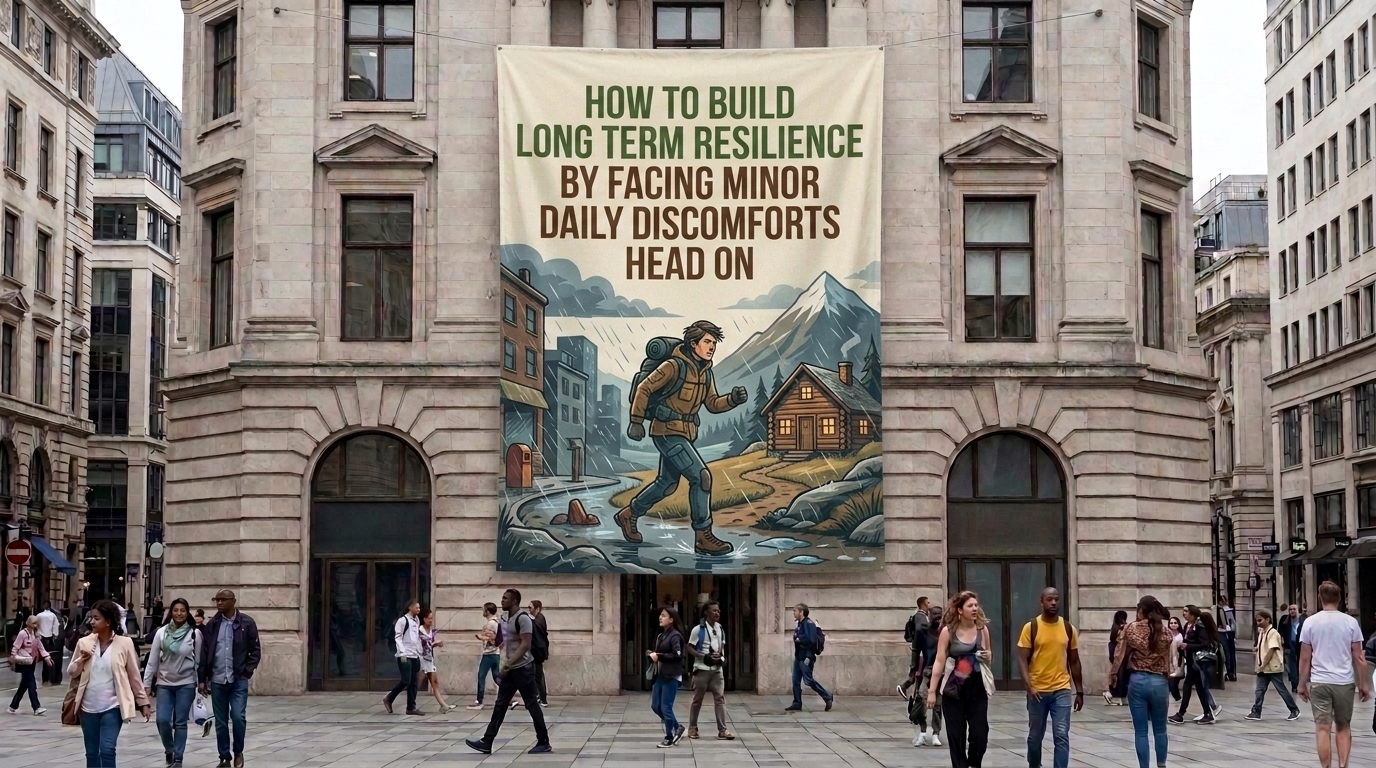
How to Build Long-Term Resilience by Facing Minor Daily Discomforts Head-On
In today’s modern, hyper-optimized professional landscape—from the fast-moving financial sector of New York and the tech ecosystems of San Francisco, Silicon Valley, and Seattle, Washington, to the expanding business hubs across California and Texas—convenience and friction-reduction are at an all-time high.
We control our indoor temperatures down to the degree, order meals with a single swipe, automate our daily schedules, and structure our lives to avoid physical, social, and emotional friction.
However, this constant pursuit of comfort carries a hidden cost: stress-response atrophy.
When we systematically eliminate minor stressors from our lives, our psychological and biological tolerance thresholds drop. As a result, when unavoidable high-stakes challenges arise—a sudden market shift, a critical presentation failure, or a complex interpersonal conflict—our nervous system misinterprets manageable friction as a existential crisis.
Building durable, long-term resilience does not require seeking out major traumatic hardships. Instead, it relies on a deliberate, daily protocol: facing minor daily discomforts head-on.
By voluntarily introducing small, controlled doses of physical, cognitive, and social friction into your daily routine, you condition your nervous system to remain calm, adaptable, and composed under real pressure.
The Biological Mechanism of Resilience: Stress Inoculation and Hormesis
Understanding how minor discomfort builds long-term psychological strength requires looking at biological adaptation principles.
Voluntary Minor Discomfort ───► Controlled Stress Signal (Hormesis) ───► Adaptive Upregulation
                                            │
                             [Somatic & Cognitive Reframe]
                                            │
                                            ▼
                    Prefrontal Cortical Control Over Amygdala
                                            │
                                            ▼
                     Expanded Stress Baseline & High Resilience
- Hormesis: Hormesis is a biological principle where low doses of a stressor trigger beneficial adaptive responses without causing damage. Just as weight resistance creates micro-tears in muscle tissue that rebuild stronger, voluntary exposure to minor psychological or physical discomfort expands your baseline stress capacity.
- Stress Inoculation Training (SIT): Pioneered by psychologist Donald Meichenbaum, SIT demonstrates that exposure to mild, manageable stress inoculates the nervous system against future acute stress. The brain learns that physiological arousal (elevated heart rate, minor anxiety) is manageable rather than catastrophic.
- Prefrontal Cortex Dominance: Unfamiliar or uncomfortable situations activate the amygdala’s threat signaling. Consciously leaning into minor discomfort engages the prefrontal cortex, reinforcing executive control over automatic, fear-driven impulses.
Comfort-Seeking Mindset vs. Inoculated Resilience Mindset
Developing daily resilience requires shifting from emotional avoidance to deliberate stress adaptation:
| Life Dimension | Comfort-Seeking Mindset | Inoculated Resilience Mindset |
| Response to Friction | Avoidance, irritation, immediate path of least resistance | Engagement, curiosity, viewing friction as conditioning |
| Nervous System State | Fragile; minor inconveniences cause acute anxiety spikes | Regulated; high tolerance for physiological and mental arousal |
| Decision-Making | Short-term comfort optimization at the cost of long-term growth | Strategic endurance; willing to trade short-term friction for long-term capability |
| Adaptability | Low; struggles when familiar environments or plans collapse | Exceptional; thrives in changing, ambiguous, or demanding conditions |
5-Step Framework to Build Resilience Through Daily Discomfort
To turn minor friction into a practical conditioning routine, implement this structured five-step framework:
1.Audit Your Daily Comfort Leaks:Identify where comfort-seeking behavior limits your growth.
Map out where you habitually avoid minor discomfort—such as postponing difficult conversations, skipping physical exertion, relying on instant digital fixes, or shying away from social friction.
2.Introduce Voluntary Physical Micro-Friction:Select low-stakes, controlled stressors to build tolerance.
Incorporate small physical challenges into your daily routine: end showers with 30 seconds of cold water, take the stairs, walk during poor weather, or practice intentional fasting windows.
3.Engage in Controlled Social Discomfort:Lean into social and communication awkwardness deliberately.
Practice micro-social risks: speak up first in a meeting, offer a constructive opinion without over-explaining, or initiate a conversation with an unfamiliar peer in your industry hub.
4.Practice Deliberate Mental Friction:Sustain focus during difficult cognitive tasks without switching.
When working through a complex document, bug, or strategic model, resist the urge to open a secondary tab or check your phone the moment you experience cognitive frustration. Sit with the problem for an extra 10 minutes.
5.Perform Real-Time Cognitive Re-Appraisal:Reframe physiological arousal as proof of adaptation.
When experiencing minor discomfort or stress, internalize the phrase: “This discomfort is expanding my baseline capacity.” Reframing physical arousal turns a threat signal into a positive adaptation process.
Practical Tips for Busy Professionals in Demanding Ecosystems
Integrating stress inoculation into busy lives across Texas, New York, California, Washington, or San Francisco requires simple, low-friction habits:
- Adopt the “One Uncomfortable Task First” Rule: Complete your most challenging or awkward task (e.g., delivering tough feedback, reviewing complex metrics) first thing in the morning before comfortable tasks tempt you away.
- Embrace “Intentionally Delayed Gratification”: When feeling the urge for instant comfort—checking a notification, buying a treat, or skipping a workout—delay the action by 15 minutes to strengthen impulse control.
- Practice Cold/Heat Exposure: Utilize cold showers, ice baths, or saunas as structured physical training environments to practice deliberate breathing under physiological stress.
- Normalize Uncomfortable Feedback: Actively seek out direct critique on your projects or leadership performance from respected peers rather than waiting for formal reviews.
Top 10 Frequently Asked Questions (FAQ)
1. What is the difference between healthy discomfort and harmful chronic stress?
Healthy discomfort is voluntary, controlled, low-dose, and followed by adequate recovery (hormesis). Harmful chronic stress is involuntary, overwhelming, continuous, and lacks sufficient recovery time, leading to exhaustion and burnout.
2. How long does it take to see noticeable improvements in mental resilience?
Consistent daily practice of minor stress exposure typically yields noticeable shifts in emotional regulation, frustration tolerance, and composure within 3 to 6 weeks.
3. Can physical discomfort (like cold exposure or intense workouts) really improve mental resilience?
Yes. The nervous system processes physiological stress using shared neural pathways (such as the insula and anterior cingulate cortex). Building composure during physical discomfort directly translates to emotional composure under mental pressure.
4. How do I stop quitting when an uncomfortable task gets too intense?
Lower the initial bar. Commit to enduring the discomfort for just 60 seconds longer before stepping back. Gradually scaling your endurance threshold prevents overwhelm while building consistency.
5. How does facing minor daily discomfort protect against professional burnout?
Burnout often stems from feeling overwhelmed and helpless when faced with ongoing demands. Stress inoculation builds self-efficacy—the deep internal confidence that you can handle friction, uncertainty, and pressure effectively.
6. Is it safe to practice daily discomfort protocols if I already have a high-stress job?
Yes, provided the voluntary stressors are brief, controlled, and low-intensity. The key is choosing minor, predictable challenges that build confidence rather than adding heavy, uncontrolled burdens to your day.
7. How can I apply discomfort training to improve my public speaking confidence?
Start small: speak up without a script in minor team standups, ask questions at local seminars, or record yourself delivering presentations. Gradual exposure desensitizes the brain’s social threat response.
8. Why do modern conveniences make us psychologically more fragile?
Continuous convenience trains the brain to expect instant resolution and frictionless environments. When reality fails to meet these expectations, minor inconveniences trigger disproportionate stress responses.
9. Can practicing micro-discomforts help with clinical anxiety or panic?
While stress inoculation builds general resilience, individuals managing clinical anxiety or panic disorders should work with a licensed mental health professional using structured clinical protocols like Cognitive Behavioral Therapy (CBT) or Exposure Therapy.
10. Why is building resilience particularly critical in major hubs like NY, SF, Seattle, or Austin?
High-density market centers feature intense competition, rapid industry shifts, and elevated baseline expectations. Having a high capacity for daily discomfort ensures you remain composed, adaptable, and focused amid market volatility.
Conclusion
Resilience is not an innate trait reserved for a select few; it is a trainable skill built through daily choices. By voluntarily leaning into minor discomforts—whether physical, mental, or social—you expand your stress capacity, quiet automatic threat responses, and build unshakeable confidence. Whether navigating career choices and life decisions across Texas, New York, California, Washington, or San Francisco, mastering the art of facing daily friction head-on ensures you remain grounded, capable, and victorious when high-stakes challenges arise.