The Unspoken Etiquette of Riding the Subway During Peak Commuting Hours Safely
Welcome to nyattitude.com, your definitive digital guide for mastering the high-stakes, fast-paced rhythms of America’s most dynamic metropolitan regions. Whether you are navigating the subterranean arteries of the New York City subway, catching a transit connection in downtown San Francisco, managing corporate commutes across Washington D.C., or adjusting to dense urban transit networks in California and Texas, one constant governs morning and evening rush hours: mass transit is the lifeblood of the city.
During peak commuting hours—roughly 7:30 AM to 9:30 AM and 5:00 PM to 7:00 PM—millions of tired, stressed, and tightly scheduled professionals descend underground. The air hums with electric tension, trains arrive packed to capacity, and seconds matter. In this high-pressure environment, a single misstep in transit etiquette can instantly derail commutes, trigger public friction, or compromise personal safety.
Mastering the unspoken social code of peak-hour subway riding isn’t just about being polite; it is about ensuring efficiency, maintaining your sanity, and protecting your personal safety. This comprehensive, highly informative guide explores the unwritten rules of rush-hour transit, psychological safety protocols, step-by-step boarding blueprints, a 10-point FAQ section, and a concluding masterclass to help you navigate the rails like a seasoned local.
Part 1: The Psychology of the Rush-Hour Commute
To understand why peak-hour subway etiquette matters so much, you have to look at the psychological landscape of the underground transit system.
1. The Compressed Sanctuary
During rush hour, subway cars transform from simple modes of transportation into compressed human ecosystems. Riders are exhausted from the day or bracing themselves for heavy workloads ahead. Because personal space shrinks to near-zero, people rely heavily on non-verbal cues, predictability, and shared cooperation to keep the environment calm. When someone violates an unspoken norm—such as playing music out loud, blocking a doorway, or taking up two seats—it shatters the fragile social harmony and spikes collective anxiety.
2. The Danger of the “Empty Car” Anomaly
One of the cardinal rules seasoned urban commuters live by is simple: if a subway car is completely empty during rush hour while every other car is packed to the gills, do not board it.
- There is always a reason. It usually means broken air conditioning, a biohazard, severe delays, or an unruly passenger.
- Trust the collective intelligence of the crowd. If everyone is avoiding a specific car, find your place inside a populated, lively carriage where safety in numbers prevails.
Part 2: Platform Etiquette Before the Train Arrives
Your safety and efficiency begin long before you step foot onto the train car. The platform is where the high-pressure bottleneck starts.
1. The OMNY or MetroCard Ready Rule
Fumbling for your contactless payment device, phone, or transit card at the turnstile while an angry line of thirty professional commuters builds up behind you is a quick way to earn universal resentment.
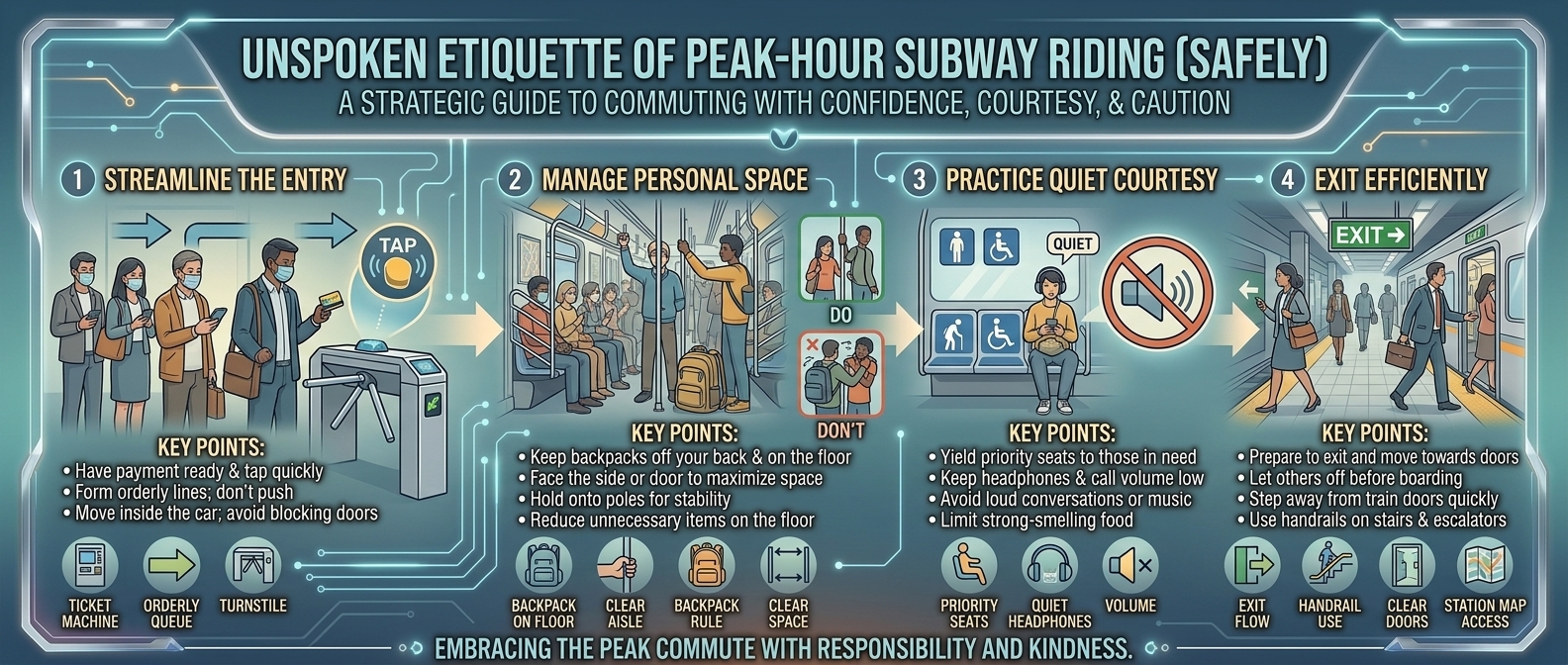
- Have your OMNY card, smartphone digital wallet, or transit pass out and ready before you reach the turnstile barrier.
2. Stand Behind the Yellow Safety Line
Platform edges are high-risk zones, especially during peak crowds when people are surging forward or distracted by phones. Always stay firmly behind the tactile yellow safety strip until the train comes to a complete, dead stop. Never stand near the platform edge while staring down at your phone screen.
3. Form Loose Lanes, Not Solid Walls
When waiting for the doors to open, do not form an impenetrable wall directly in front of where the doors will align. Instead, step slightly to the sides to create a clear central channel. This allows passengers exiting the train to step off smoothly without colliding with incoming bodies.
Part 3: On-Board Rules for Seamless Movement
Once the doors slide open, the physics of mass transit take over. Every second counts.
1. The Iron Rule: Let People Exit First
This is the most sacred rule of urban mass transit: let exiting passengers fully clear the threshold before you attempt to board.
- Trying to force your way onto a packed train while people are trying to get off creates an immediate gridlock that delays the train’s departure, frustrates the conductor, and triggers public call-outs.
2. Strip Off Your Backpack
If you are wearing a bulky backpack, gym duffel, or messenger bag, take it off your shoulders the moment you enter a crowded station or train car. Hold it low in your hands or tuck it between your feet. Wearing a large backpack on a packed rush-hour train takes up the valuable space of an extra human being and inadvertently smacks seated passengers every time you turn around.
3. Move All the Way Into the Center
Do not hover right inside the doorway like a cork blocking a bottle. Even if the car feels full, step deep into the center aisle and make room for the wave of commuters lined up behind you. Efficiency depends on maximizing every square inch of interior space.
Part 4: Personal Safety and Situational Awareness
Navigating a dense urban transit system requires a balance of confidence and caution. Protect yourself with these core safety principles:
1. Stay Aware, Not Afraid
Keep your head up and maintain baseline awareness of your surroundings. Avoid wearing over-ear noise-canceling headphones at maximum volume where you cannot hear station announcements or environmental changes. If you listen to music or podcasts, keep one earbud loose or low enough to remain alert.
2. Protect Your Valuables
Pickpocketing and phone-snatching thrive in high-density crowd surges. Keep your smartphone securely zipped in an inner pocket or bag rather than loose in your hand or back pocket. When the doors open at major transfer hubs, keep a firm grip on your electronics.
3. Trust Your Instincts
If someone makes you uncomfortable, behave erratically, or creates an unsafe environment, do not hesitate to act. Move to a different car at the next station stop, stand near the conductor’s window or emergency intercom, or step out onto a well-populated platform to wait for the next train.
Part 5: Frequently Asked Questions (FAQ)
1. Is it ever acceptable to hold subway doors open for someone running late?
No. Holding subway doors open with your foot, hand, or bag during peak hours is a cardinal sin. It delays the train schedule for thousands of riders trailing behind you, triggers automated alarms, and immediately turns an entire car of commuters against you.
2. What should I do if I am offered a priority seat and don’t need it?
Priority seats near doors are legally and ethically designated for senior citizens, pregnant riders, individuals with disabilities, and injured commuters. If you are sitting in one and someone who needs it boards, immediately stand up and offer the seat without hesitation.
3. How do I handle accidental body contact on an overcrowded train?
Accidental bumping, brushing shoulders, and crowding are inevitable facts of peak-hour transit. Maintain a calm, neutral demeanor. Avoid dramatic sighing, aggressive glaring, or hostile body language. A simple, polite “Excuse me” goes a long way.
4. Is eating or drinking allowed during the morning commute?
While grabbing a quick coffee in a travel mug is common, consuming messy, hot, or strong-smelling foods (like fast-food burgers, greasy pastries, or aromatic takeout) inside a crowded, unventilated subway car is widely considered rude and unsanitary. Save breakfast for when you arrive at your office.
5. What should I do if I drop my phone or keys onto the subway tracks?
Never, under any circumstances, jump down onto the tracks to retrieve dropped items. The third rail carries lethal high-voltage electricity, and trains can arrive without warning. Instead, immediately notify a station agent or MTA employee, who will coordinate safe retrieval protocols.
6. Why do New Yorkers avoid eye contact on the subway?
Staring directly at strangers in an enclosed, high-density space is considered a breach of personal privacy and social boundaries. The classic “subway stare”—looking down, reading a book, or zoning out—is a psychological defense mechanism designed to maintain comfortable personal boundaries in public.
7. What is the safest car to ride in during off-peak or late-night hours?
During late-night hours or off-peak times when crowds thin out, ride in the middle car where the train conductor’s booth is located, or choose a car populated with multiple alert passengers. Avoid isolated or empty cars at the far ends of the train.
8. How can I safely navigate train transfers during massive rush-hour delays?
Stay calm, listen closely to automated audio announcements and conductor updates, and check live transit apps like Citymapper or the official MTA app. If a line is severely jammed, look for alternative local routes or bus connections rather than forcing your way into a dangerous bottleneck.
9. Can I bring a bicycle onto the subway during peak commuting hours?
In most major metropolitan transit systems, bringing standard bicycles on trains during peak rush hours (typically 7:00–10:00 AM and 4:00–7:00 PM) is heavily restricted or prohibited because they take up massive amounts of floor space. Always check local transit authority guidelines before bringing bulky gear onboard.
10. How do I politely signal that I need to exit at the next crowded stop?
Begin making your way toward the doors well before your station arrives. Use a calm, clear voice to say “Excuse me, coming through” or “Mind if I squeeze past?” while weaving gently through the crowd, rather than shoving aggressively.
Conclusion
Riding the subway during peak commuting hours safely and efficiently is an art form. By respecting personal space, letting passengers exit first, removing backpacks, keeping your valuables secure, and maintaining situational awareness, you transform a potentially stressful ride into a smooth, predictable routine. Master the unspoken rules of the rails, protect your peace of mind, and navigate the city with absolute confidence.
Mastering NYC Subway Etiquette and Safety During Rush Hour
Watch this insightful video walkthrough breaking down essential rush-hour subway etiquette, safety tips, and unwritten rules for navigating metropolitan transit systems like a pro.