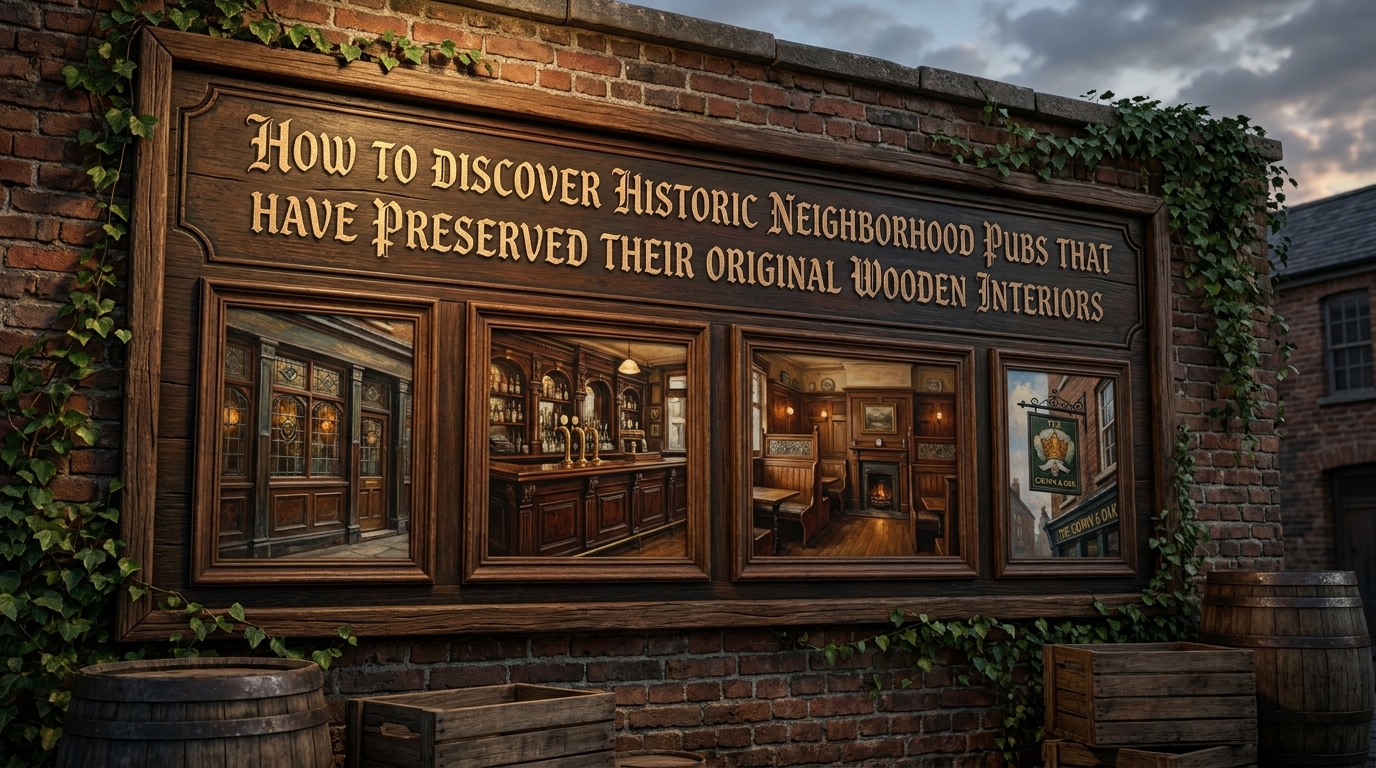
There is a distinct, grounding alchemy that occurs the moment you push open the heavy door of a truly historic pub. The clamor of modern traffic fades away, replaced by the soft murmur of conversation, the low hum of history, and an enveloping aroma composed of aged oak, polished brass, spilled malt, and decades of shared stories. In an era dominated by sleek, minimalist hospitality spaces built from polished concrete, clean-lined steel, and uniform LED lighting, historic neighborhood pubs featuring their original wooden interiors stand as sanctuaries of authenticity.
Whether you are navigating the historic brownstone-lined corridors of New York, exploring the Victorian and maritime relics tucked into San Francisco, tracing early pioneer roots across Texas, uncovering century-old timber spaces in Washington, or roaming the diverse architectural enclaves of California, tracking down these timeless drinking dens offers an unmatched journey into local culture and craftsmanship.
This comprehensive, highly informative guide will teach you everything you need to know to locate, appreciate, and respect historic pubs that have successfully preserved their original wood architecture.
1. The Architectural Appeal: Why Original Wood Interiors Matter
Wood is a living, breathing material that records time. When a pub preserves its original 19th- or early 20th-century wooden interiors—ranging from hand-carved mahogany back-bars and tongue-and-groove wainscoting to exposed cedar ceiling beams and reclaimed floorboards—it provides a sensory connection to the past that no modern reproduction can replicate.
- Patina and Craftsmanship: Centuries of hands resting on wooden bartops create a smooth, luminous patina known as polisher’s gloss. Master carpenters from bygone eras utilized dense hardwoods like old-growth white oak, cherry, and Honduran mahogany, constructing architectural details designed to endure for generations.
- Acoustic and Thermal Comfort: Unlike modern glass and concrete rooms that bounce sound and feel clinical, wood naturally absorbs sound waves, creating a warm, cozy acoustic environment that invites intimate conversation.
2. Where to Look: Decoding Regional History and Urban Growth
Historic preservation varies wildly depending on regional development patterns. Knowing where to look for preserved timber architecture saves you time and leads you straight to the oldest watering holes.
- New York: Focus your search on lower Manhattan, the historic waterfront blocks of Brooklyn, and old immigrant enclaves where 19th-century alehouses and neighborhood taprooms still nestle beneath residential tenements, featuring floor-to-ceiling mahogany and pressed-tin ceilings.
- San Francisco: Look toward the historic neighborhoods that survived the 1906 earthquake and fire, such as North Beach, the Mission District, and the old Barbary Coast corridors. Many Victorian-era saloons here boast magnificent, intricately carved back-bars shipped around Cape Horn during the Gold Rush.
- Texas: Venture into historic preservation districts in older Texas towns, former cattle-drive hubs, and historic German settlement corridors where early saloons utilized native Texas cedar, mesquite, and cypress.
- Washington & California: In Washington, explore historic timber towns and older downtown quarters near maritime ports. In California, look for Gold Rush-era brick-and-timber buildings that house century-old bars featuring imported European hardwoods.
3. Digital Sleuthing: Insider Search Strategies to Find Timber Hideaways
The best historic pubs are rarely marketed with flashy neon signs or targeted social media ads. They rely on local loyalty, heritage preservation societies, and word-of-mouth. Use these digital methods to unearth them:
- Keyword Precision: Instead of searching for “bars near me,” use hyper-specific search strings like “historic wooden bar interior,” “century-old Victorian saloon,” “heritage timber pub,” or “historic tavern original mahogany bar.”
- Historical and Architectural Societies: Municipal landmark preservation commissions, local historical societies, and historic registry databases often publish walking guides or architectural surveys that explicitly list buildings with intact interior historic fabric.
- Local Blogger and Historian Deep Dives: Search for regional food and architecture blogs that specialize in documenting vintage neighborhood spots. These writers are often the only ones recording the history of a pub’s 120-year-old wooden back-bar.
4. Reading the Room: How to Spot Authentic Historic Interiors
As you step inside, it is helpful to know how to distinguish genuine antique woodwork from modern “pub-style” theme decor installed by a restaurant chain last month.
- The Back-Bar and Mirror Frame: Authentic historic back-bars are frequently towering, floor-to-ceiling structural masterpieces featuring beveled glass mirrors, hand-turned corbels, and intricate crown molding integrated directly into the building’s walls.
- Floorboards and Wear Patterns: Look down. Authentic historic pubs feature wide-plank hardwood floors with visible warping, knot holes, and natural depressions worn smooth by millions of footsteps over generations.
- Hardware and Fasteners: Inspect the fixtures. Original brass foot rails, slot-head screws (rather than modern Phillips-head screws), and vintage hand-forged door hinges are dead giveaways of genuine historical construction.
5. Etiquette and Appreciation: Being a Respectful Patron of History
Historic pubs are fragile living museums. Treating them with reverence ensures they remain standing for future generations of patrons.
- Support the Pour: Historic venues often operate on razor-thin margins compared to high-volume modern cocktail lounges. Order a classic pint, a local draft, or a traditional house pour rather than demanding complex, labor-intensive mixology.
- Respect the Regulars: These pubs are community living rooms. Be mindful of established seating habits, keep noise levels conversational, and engage the bartender or long-time patrons with curiosity rather than treating the space purely as an Instagram backdrop.
- Leave No Trace: Never carve your initials into antique wooden booths or place wet glasses directly on unprotected historic surfaces without a coaster.
10 Frequently Asked Questions (FAQs)
1. How can I tell if a pub’s wooden interior is genuinely historic or recently manufactured?
Look for signs of natural wear, such as beveled glass mirrors in the back-bar, uneven floorboards, hand-turned decorative woodwork, and vintage hardware like slot-head screws rather than modern fasteners.
2. Are historic pubs usually more expensive than modern bars?
Not necessarily. Historic neighborhood pubs often maintain very reasonable, unpretentious pricing because their business model is built on community loyalty rather than luxury markup.
3. Do historic wooden pubs have strict dress codes?
Most historic neighborhood pubs are relaxed and unpretentious. Smart-casual attire is universally accepted, though avoiding athletic wear or beach clothing is always polite.
4. Why are so many historic bars built with mahogany or oak?
19th- and early 20th-century builders favored dense hardwoods like mahogany, white oak, and walnut because they resisted moisture, endured heavy daily physical impacts, and could be polished to a rich, dark luster.
5. Can I take photographs inside historic pubs?
Generally, yes, but always use discretion. Avoid using flash photography, do not disrupt other patrons, and check if the pub has a policy against filming commercial content.
6. What cities in the U.S. have the oldest surviving pub interiors?
East Coast hubs like New York and Boston, along with West Coast cities like San Francisco, boast some of the oldest continuous-operation tavern interiors dating back to the mid-to-late 19th century.
7. How do historic pubs preserve their wood against fire and water damage?
Many historic pubs operate under strict municipal landmark preservation guidelines, utilizing specialized fire-retardant coatings, careful humidity control, and expert artisanal wood restorers.
8. Are families and children allowed in historic neighborhood pubs?
During daytime and early evening hours, many historic pubs operate primarily as restaurants and welcome families, but they often transition to 21-plus environments later in the evening.
9. How can I find historic preservation registers for local bars?
You can consult state historic preservation office (SHPO) databases, local landmark commission maps, or national register of historic places listings for commercial downtown districts.
10. What is the best drink to order in a classic historic timber pub?
Traditional house lagers, classic stouts, local ales, or straightforward highballs are standard staples that match the heritage and unpretentious atmosphere of traditional pubs.
Conclusion
Discovering and patronizing historic neighborhood pubs with preserved original wooden interiors is far more than a simple night out—it is an immersive act of cultural preservation. By seeking out these timber-lined sanctuaries across dynamic landscapes like New York, San Francisco, Texas, Washington, and California, you step outside the relentless pace of the modern world and connect with the craftsmanship and community spirit of decades past. The next time you seek a place to unwind, skip the sterile modern lounge and let the creak of old floorboards and the warm glow of mahogany guide you.
What is the oldest or most atmospheric historic wooden pub or tavern you have ever visited during your travels?