How to Find Inner Peace and Stillness Amidst the Chaotic Noise of Urban Life
Introduction
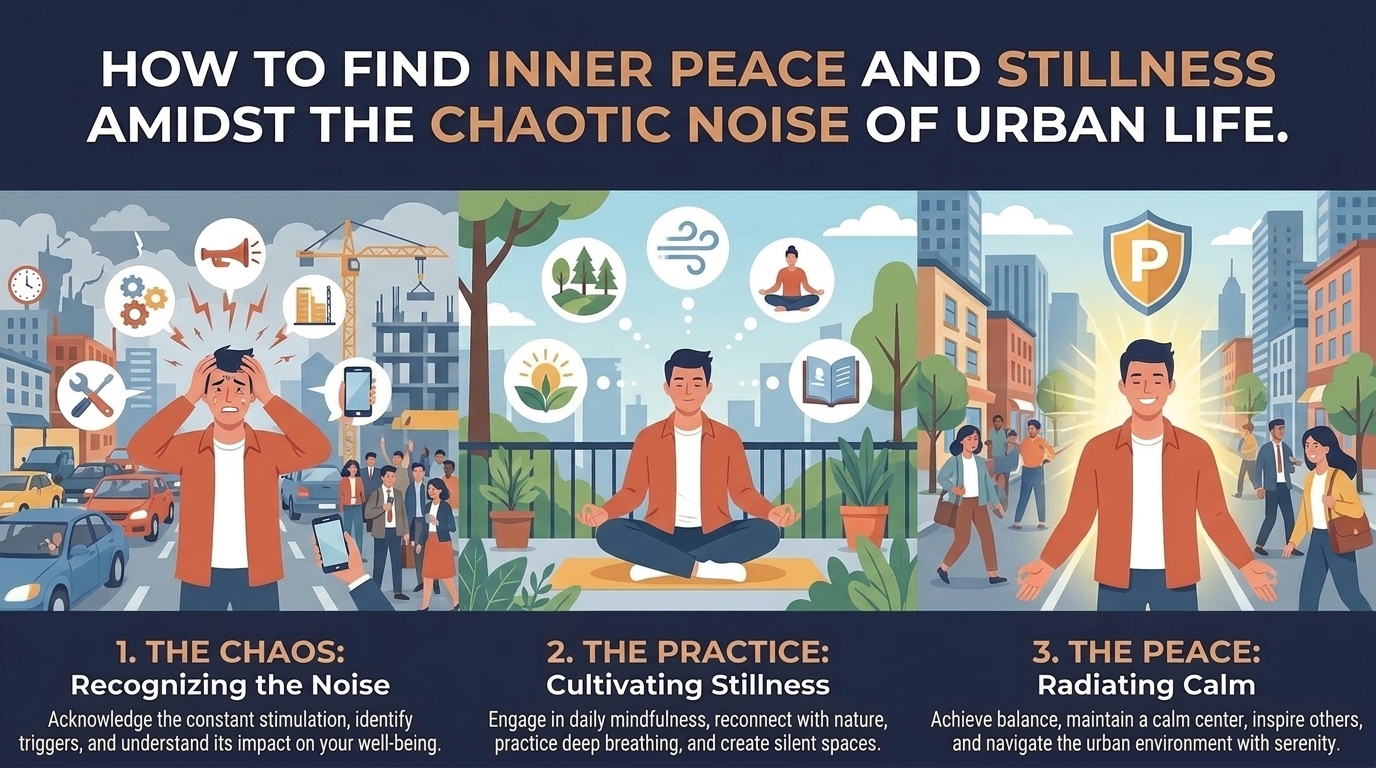
In the modern urban experience, sensory overload is not an occasional inconvenience—it is the baseline atmosphere. From the moment you wake up to the blare of a transit alarm, step onto crowded subway platforms, or navigate a sea of digital pings, notifications, and sirens, your nervous system is subjected to a relentless barrage of stimuli.
Nowhere is this hyper-stimulated reality more pronounced than in America’s most high-octane metropolitan centers. Whether you are navigating the high-decibel financial canyons of New York, dodging micro-mobility traffic in the fast-paced tech hubs of San Francisco, balancing the sprawling energy of California, tracking complex institutional momentum in Washington, or riding the booming, high-growth waves across Texas, city life offers immense opportunity alongside an exhausting, relentless roar.
When the external world is constantly screaming for your attention, finding a moment of internal quiet feels like trying to meditate inside a hurricane. Yet, cultivating inner peace and stillness amidst urban chaos is not a mystical luxury reserved for monks in mountain retreats; it is an absolute biological and psychological necessity for long-term survival, mental clarity, and deep personal fulfillment.
This comprehensive guide explores the neuroscience of urban sensory fatigue, why external noise disrupts internal peace, and a battle-tested blueprint to help you carve out sanctuaries of stillness right in the heart of the concrete jungle.
1. The Neuroscience of Urban Noise: Why the City Drains Your Soul
To protect your inner peace, you must first understand what living in a dense, high-pressure urban environment does to your neurochemistry.
- The Amygdala and Chronic Hypervigilance: Evolutionary biology designed our brains to register sudden loud noises, flashing lights, and crowded spaces as potential threats. In a major city, your amygdala (the brain’s alarm system) remains in a low-grade, chronic state of fight-or-flight activation, flooding your bloodstream with cortisol and adrenaline.
- Sensory Overload and Cognitive Fatigue: The human brain has a finite capacity for filtering out irrelevant stimuli—car horns, construction jackhammers, sirens, electronic billboards, and overlapping conversations. By mid-afternoon, this constant sensory filtration exhausts your prefrontal cortex, leading to brain fog, irritability, and emotional reactivity.
- The Illusion of Connection: Urban environments surround us with millions of people while simultaneously fostering profound loneliness and alienation. This paradox keeps the nervous system locked in a state of restless isolation, searching for quiet while drowning in noise.
2. Regional Sanctuaries: Finding Stillness Coast-to-Coast
Different metropolitan regions present unique urban soundscapes and spatial dynamics, requiring localized strategies to locate peace and mental stillness:
New York and San Francisco: Concrete Canyons and Micro-Sanctuaries
- New York: Finding peace in NYC requires mastering the art of the micro-sanctuary. It is stepping off the bustling pavement of Manhattan into the quiet reading room of the New York Public Library, finding a secluded bench in Central Park’s Ramble, or utilizing noise-canceling headphones as an invisible force field against the subway roar.
- San Francisco: In the Bay Area, urban stillness is often found at the edge where the concrete meets the Pacific. Escaping to the wind-swept trails of the Presidio, Lands End, or Golden Gate Park allows SF professionals to wash away tech-induced cognitive fatigue with expansive ocean views and natural silence.
Texas, California, and Washington: Open Skies, Green Spaces, and Institutional Calm
- California: Across broader California, maintaining inner peace involves leveraging natural landscapes—whether hiking the coastal cliffs of Big Sur, finding shade under ancient redwoods, or enjoying a quiet morning before the sun heats up the valley.
- Texas: In booming Texas hubs like Austin, Dallas, and Houston, urban growth is rapid, but peaceful refuges abound if sought intentionally. Paddleboarding on Lady Bird Lake in Austin, walking shaded neighborhood trails in Dallas, or finding quiet indoor atriums provides immediate relief from high-energy commercial environments.
- Washington: In the Pacific Northwest, urban stillness is naturally complemented by the moody, mist-shrouded evergreens and waterfronts of Seattle, where deep nature is never more than a short drive away from the downtown core.
3. The Core Pillars of Urban Stillness
Cultivating inner peace in a loud city does not require moving to a remote cabin in the woods. You can build an internal fortress of calm by implementing these four core pillars:
| Stillness Pillar | Tactical Execution | Psychological Benefit |
| Acoustic Hygiene | Invest in high-end active noise-canceling headphones and use ambient soundscapes (brown noise or binaural beats) during deep work. | Shields your auditory cortex from erratic urban decibels, drastically lowering baseline cortisol levels. |
| Digital Fasting | Designate specific tech-free zones and hours (e.g., no phones during the first and last hour of your day). | Breaks the cycle of dopamine addiction and silences the mental chatter driven by algorithmic feeds. |
| Spatial Minimalism | Keep your immediate home and workspace clean, uncluttered, and visually calming with soft lighting and natural elements. | Prevents external visual clutter from translating into internal cognitive overwhelm and anxiety. |
| The Daily Pause | Schedule a non-negotiable 10-minute daily window of absolute silence—no reading, no music, no screens, just breathing. | Trains your nervous system to self-soothe and transitions your brain out of chronic reactivity. |
4. Step-by-Step Blueprint: Designing Your Urban Zen Routine
Bringing peace into a chaotic city requires deliberate structural design. Use this four-step blueprint to weave moments of profound stillness into your daily routine:
- The Morning Silence Buffer: Before touching your phone or exposing yourself to news, emails, or social media, spend 15 minutes in absolute quiet. Sip your coffee or tea, stretch gently, or meditate. Win the morning stillness before the city demands your energy.
- The Commute Transformation: Reframe your daily transit—whether driving through Texas traffic or riding the subway in New York—from a stressful chore into a moving meditation. Use the time to practice rhythmic breathing, listen to an enriching audiobook, or simply observe your thoughts without judgment.
- The Workspace Boundary: If you work in a high-density office or remote setup, establish visual and acoustic boundaries. Use desktop plants, soft lighting, and scheduled micro-breaks where you step away from screens to gaze out a window or stretch.
- The Evening Decompression Ritual: Create a firm transition ritual when wrapping up your day. Dim your lights, put your phone in another room, and engage in a calming analog activity (reading physical books, journaling, or taking a warm shower) to signal to your nervous system that the urban battle is over for the day.
5. Ten Frequently Asked Questions (FAQ)
1. Is it really possible to find genuine inner peace while living in a bustling metropolis?
Yes. Inner peace is an internal state of regulation, not an external absence of noise. While a quiet environment helps, true stillness is built by training your nervous system to remain centered regardless of what is happening around you.
2. How can I meditate when sirens, traffic, and city noises are constantly outside my window?
Stop treating city noises as enemies to be eliminated and instead view them as ambient background elements, much like ocean waves or wind. Acknowledge the sound, let it pass through your awareness, and return your focus to your breath.
3. What is “sensory overload” and how do I know if I am suffering from it?
Sensory overload occurs when your brain receives more input than it can comfortably process. Symptoms include sudden irritability, brain fog, fatigue, hypersensitivity to sounds or lights, and an inability to focus on simple tasks.
4. How long do I need to practice stillness each day to notice a mental shift?
Even as little as 10 to 15 minutes of dedicated daily silence or mindfulness practice can produce measurable reductions in stress hormones and noticeable improvements in emotional regulation over a few weeks.
5. Why do I feel more anxious when I finally try to sit in silence?
When you stop running and finally sit in silence, your brain stops masking underlying stress with distractions, temporarily bringing repressed fatigue, worries, to the surface. This is a normal detox phase; persist through the discomfort.
6. What role does physical exercise play in finding urban stillness?
Rigorous physical activity—running, weightlifting, yoga, or swimming—burns off excess cortisol and adrenaline accumulated from urban stress, clearing the physical pathway necessary for mental calm.
7. How do I set boundaries with friends and colleagues who expect me to be constantly available?
Communicate your availability clearly. Let people know that during certain evening or weekend hours, you unplug to recharge. True friends and professional colleagues will respect your need for recovery.
8. Can listening to music help drown out urban chaos?
Yes, instrumental music, ambient soundscapes, or classical compositions without lyrics can effectively mask jarring urban sounds and help your brain enter focused, calm alpha-wave states.
9. Why are high-density cities so notorious for draining our mental energy?
The combination of visual clutter, constant auditory stimulation, social density, and competitive pressure keeps the human nervous system in a state of hyper-alertness, burning through mental glucose rapidly.
10. Where can I find more resources on mental wellness, urban lifestyle success, and personal growth?
Keep exploring specialized lifestyle, career, and culture hubs like nyattitude.com, where we provide actionable insights, local strategies, and expert guides to help you thrive sustainably across America’s greatest cities.
Conclusion
Finding inner peace and stillness amidst the chaotic noise of urban life is not about escaping the city; it is about mastering your inner response to it. Whether you are navigating the high-speed concrete towers of New York, the tech-driven velocity of San Francisco, the sunlit expanses of California, the institutional pace of Washington, or the booming energy of Texas, your mind can remain an unshakeable sanctuary of calm. By building acoustic boundaries, embracing digital fasts, and carving out daily pockets of deliberate silence, you transform the overwhelming roar of the city into the background music of a balanced, purposeful life.
Ready to master your mindset, protect your peace, and elevate your urban lifestyle? Continue browsing nyattitude.com to inspire your growth journey forward!