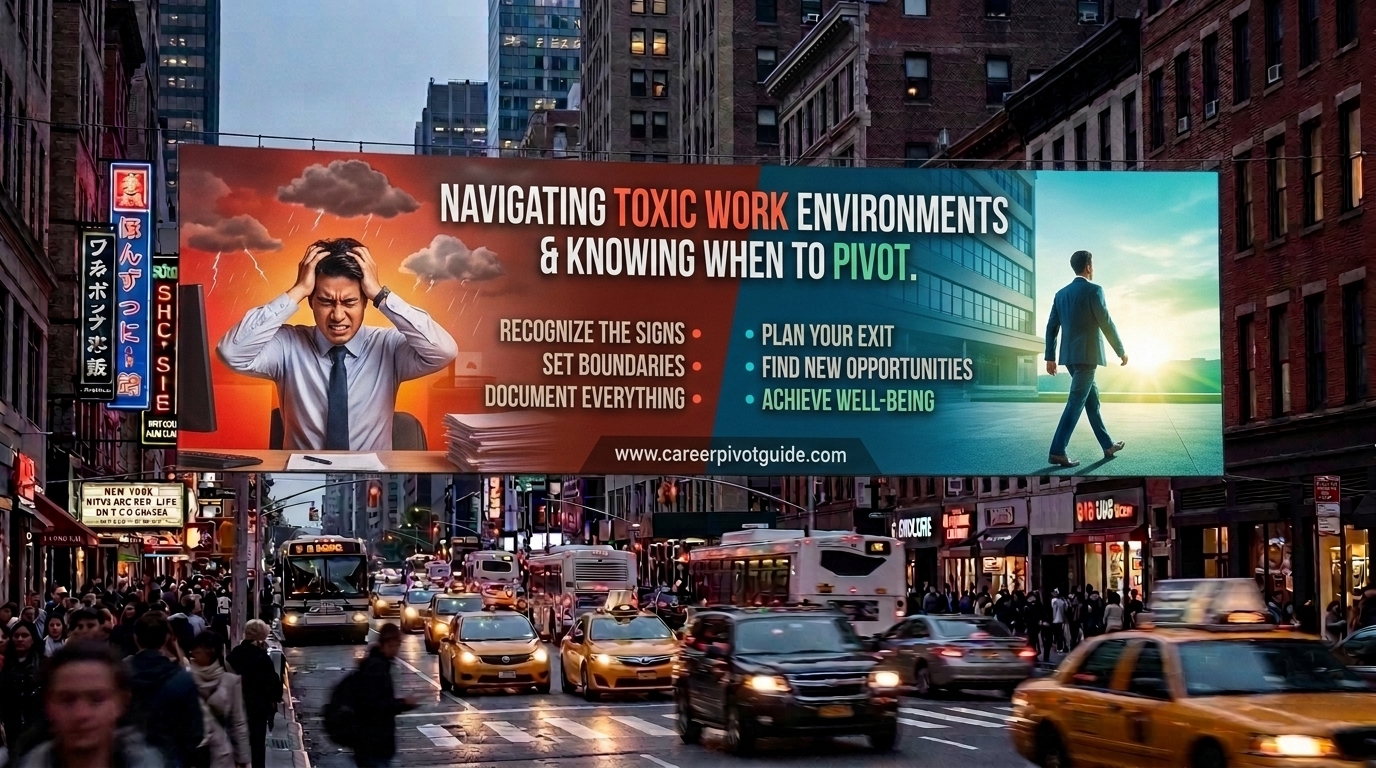
How to Handle Toxic Work Environments and Know When It Is Time to Pivot
Navigating a high-stress career in competitive markets like New York, San Francisco, Texas, Washington, or across California requires immense drive. However, there is a distinct difference between a high-performance workplace that stretches your capabilities and a toxic work environment that actively erodes your mental health, professional confidence, and physical well-being.
When dysfunction becomes systemic, professional resilience ceases to be an asset—it becomes a liability that keeps you trapped in an unsustainable situation. Recognizing the warning signs of a toxic culture, implementing tactical boundaries to safeguard your well-being, and executing a strategic pivot are essential skills for long-term career success.
Defining Workplace Toxicity: High Pressure vs. Systemic Dysfunction
Not all demanding environments are toxic. Understanding the distinction is critical for evaluating whether your situation requires boundary management or an exit strategy.
                  ┌──────────────────────────────────────────┐
                  │          Workplace Environment           │
                  └────────────────────┬─────────────────────┘
                                       │
                      ┌────────────────┴────────────────┐
                      ▼                                 ▼
         ┌─────────────────────────┐       ┌─────────────────────────┐
         │ High-Performance Culture │       │ Toxic Work Environment  │
         └────────────┬────────────┘       └────────────┬────────────┘
                      │                                 │
  ┌───────────────────┴───────────────────┐ ┌───────────┴───────────────────┐
  │ • Clear objectives & expectations     │ │ • Unrealistic, shifting targets │
  │ • Psychological safety & transparency │ │ • Blame culture & fear-mongering│
  │ • Performance-driven pressure         │ │ • Chronic burnout as a badge    │
  │ • Growth-oriented feedback            │ │ • Gaslighting & personal attacks│
  └───────────────────────────────────────┘ └─────────────────────────────────┘
Key Indicators of a Toxic Work Culture
Systemic toxicity rarely manifests overnight. It develops through patterns of unaddressed behavior that become normalized within an organization’s operational culture.
| Operational Area | High-Performance Indicator | Toxic Culture Warning Sign |
| Communication | Direct, constructive, and transparent | Passive-aggressive, secretive, or manipulative |
| Leadership Style | Decisive, supportive, and accountable | Micromanaging, punitive, or credit-stealing |
| Workload & Hours | Demanding with strategic downtime | Expected 24/7 availability with chronic burnout |
| Conflict Resolution | Process-oriented and focused on solutions | Personal attacks, scapegoating, and retaliation |
| Turnover Rate | Organic, growth-driven attrition | High voluntary turnover and constant churn |
Common Signs of Workplace Toxicity
- Psychological Insecurity: Employees hesitate to ask questions, report errors, or offer alternative viewpoints due to fear of public embarrassment or retaliation.
- Moving Goalposts: Performance metrics change arbitrarily without notice, making success impossible and keeping staff in a perpetual state of anxiety.
- Normalizing Overwork: Working through vacations, answering late-night messages, and neglecting personal obligations are celebrated as prerequisites for loyalty.
- Communication Silos and Gossip: Information is hoard as currency, and informal whisper networks replace direct organizational communication.
The Physical and Cognitive Cost of Prolonged Stress
Operating in a toxic environment forces your nervous system into a chronic fight-or-flight state. Over time, elevated cortisol levels and continuous stress lead to noticeable physiological and cognitive strain:
- Executive Dysfunction: Chronic stress impairs the prefrontal cortex, reducing your ability to solve complex problems, focus deeply, and make strategic career decisions.
- Decision Fatigue: Constant hyper-vigilance drains cognitive resources, making simple tasks feel overwhelming.
- Physical Manifestations: Insomnia, digestive issues, tension headaches, and weakened immune function are frequent physical signs of sustained workplace stress.
- Emotional Contagion: Prolonged exposure to toxic dynamics often bleeds into personal relationships, causing irritability, withdrawal, and persistent anxiety.
Tactical Framework for Managing a Toxic Environment
If leaving immediately is not financially or strategically feasible, you must implement protective measures to safeguard your well-being while preparing your next move.
1.Detach Emotionally and Reframe Your Role:Establish clear boundaries around communication and mental bandwidth.
Shift your perspective from personal investment to professional detachment. Treat your daily responsibilities as an objective transaction: deliver your work competently without tying your self-worth to the organization’s dysfunction or leadership approval.
2.Document Everything Systematically:Protect yourself with thorough written trails.
Maintain a detailed, off-site log of key conversations, project handoffs, performance reviews, and instances of unprofessional behavior. Always confirm verbal agreements via email (e.g., “Per our discussion earlier today, here are the finalized expectations…”).
3.Institute Firm Boundary Markers:Protect non-negotiable personal time.
Define strict boundaries around non-working hours. Set clear expectations regarding response times after hours, stop checking communications past a specific time, and preserve your weekends for personal recovery and job searching.
4.Build an External Validation Network:Protect your confidence from internal erosion.
Seek perspective outside your company. Connect with mentors, former colleagues, or industry peers in markets like San Francisco, Texas, New York, or Seattle to ground your understanding of healthy workplace norms and validate your professional value.
5.Quietly Execute a Career Pivot Strategy:Turn your focus toward future steps.
Redirect the energy previously spent attempting to fix broken organizational processes into updating your resume, refining your digital presence, expanding your network, and applying for new roles.
Knowing When It Is Time to Pivot
Staying too long in a toxic environment can derail your long-term career trajectory and erode your professional confidence. It is time to execute an immediate exit plan when:
- Your Health Is Compromised: Physical symptoms, severe sleep disruption, or persistent anxiety persist despite attempting to set boundaries.
- Ethical Boundaries Are Crossed: You are asked to compromise your integrity, falsify data, or participate in deceptive practices.
- Your Professional Reputation Is at Risk: The organization’s dysfunction begins negatively impacting your industry standing or professional credibility.
- Growth Has Completely Stalled: There are no paths for skill acquisition, advancement, or meaningful mentorship, leaving you professionally stagnant.
- You Experience Chronic Dread: The thought of starting the work week causes severe emotional distress or panic.
Actionable Steps for Executing a Clean Career Pivot
Transitioning out of a toxic job requires a calm, methodical approach to ensure financial security and long-term career momentum.
- Conduct a Financial Audit: Calculate your liquid savings and determine your baseline runway. Having 3 to 6 months of living expenses provides the leverage needed to negotiate or exit comfortably.
- Update Your Professional Assets: Refresh your portfolio, resume, and profile. Focus on quantifiable achievements rather than title-based responsibilities.
- Re-Engage Your Network Privately: Reach out to trusted contacts across your target geographic hubs (such as California, Washington, Texas, or New York). Focus on exploratory conversations rather than expressing frustration about your current employer.
- Prepare an Objective Exit Narrative: Frame your reason for leaving around future-focused growth, changing priorities, or seeking new technical challenges. Never speak negatively about a previous employer during interviews.
Top 10 Frequently Asked Questions (FAQ)
1. Should I quit my job before having another offer lined up?
In most cases, it is safer to secure an offer before leaving. However, if staying poses an immediate threat to your mental or physical health, or forces ethical compromises, stepping down after evaluating your financial runway may be necessary.
2. How do I explain leaving a toxic workplace during an interview?
Keep your explanation professional and forward-focused. Use phrases like, “I am seeking an environment that offers greater alignment with long-term growth,” or “I am looking for a collaborative team structure where I can scale my impact.”
3. What is the difference between burnout and working in a toxic workplace?
Burnout stems from chronic overwork or lack of rest, which can happen even in supportive environments. Toxicity is systemic organizational dysfunction—such as bullying, gaslighting, or poor leadership—that persists regardless of your workload.
4. How can I spot toxic workplace signs during the interview process?
Watch for high turnover rates in the role, vague answers about team culture, overly rushed hiring processes, or interviewers who speak negatively about previous team members.
5. Should I report a toxic manager or environment to HR?
HR exists primarily to protect the organization from liability. Only report issues if you have clear, written documentation of policy violations or illegal activity, and understand the potential risks involved.
6. How do I regain my confidence after leaving a toxic role?
Focus on small, achievable wins. Reconnect with peers who value your skills, audit your past accomplishments, and consider working with a professional coach to recalibrate your expectations.
7. Is “quiet quitting” an effective long-term solution for toxic environments?
Quiet quitting—doing the bare minimum to protect your energy—is a short-term survival tactic, not a long-term strategy. Use the reclaimed time and mental bandwidth to actively search for your next role.
8. Can a toxic workplace culture ever be fixed from within?
Cultural change requires buy-in and leadership from top executives. Individual contributors or mid-level managers rarely have the structural authority to fix systemic toxicity on their own.
9. How do I set firm boundaries without getting fired?
Frame your boundaries around productivity and output rather than refusal. For example: “To deliver the highest quality on Project A by Friday, I will focus on that priority during core work hours rather than taking on non-essential tasks today.”
10. How can I avoid joining another toxic company in my next role?
Conduct thorough due diligence before accepting an offer. Request to speak with current team members, review company feedback platforms, and ask targeted questions during interviews about decision-making processes and conflict resolution styles.
Conclusion
Recognizing and navigating a toxic work environment is one of the most critical skills you can develop for long-term career sustainability. High-demand professionals across major hubs like New York, San Francisco, Texas, Washington, and California often fall into the trap of believing that enduring chronic dysfunction is required for success. In reality, true professional growth requires knowing when to hold your ground and when to pivot toward environments that respect your well-being, foster your talents, and support your long-term potential.