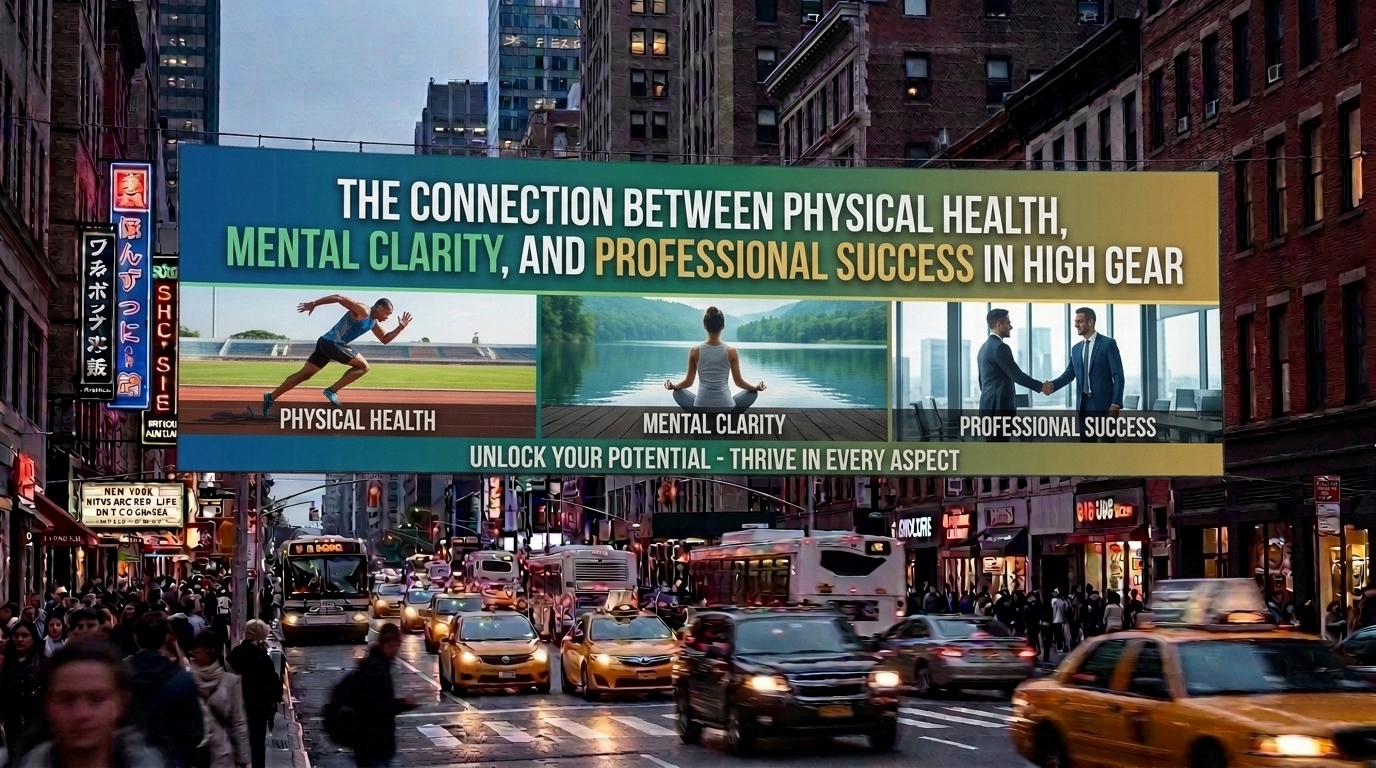
The Connection Between Physical Health, Mental Clarity, and Professional Success in High Gear
In the high-stakes, fast-paced commercial hubs of the modern economy—from Wall Street and Silicon Valley to the bustling business sectors of Texas, Washington, New York, and California—the traditional paradigm of professional success is undergoing a fundamental shift. For decades, the dominant corporate playbook demanded grinding through 80-hour workweeks, sacrificing sleep, and treating physical well-being as a secondary luxury.
Today, top performers, founders, and executives recognize that model for what it is: an unsustainable path toward burnout and diminished cognitive output.
Operating in “high gear” without maintaining physical health is like driving a high-performance vehicle at top speed without changing the oil or checking the engine. Eventually, the system breaks down. Sustainable elite performance requires an integrated approach where physical health, mental clarity, and professional execution reinforce one another.
       ┌────────────────────────────────────────────────────────┐
       │                Physical Optimization                   │
       │     (Sleep, Nutrition, Movement, Recovery)             │
       └───────────────────────────┬────────────────────────────┘
                                   │
                                   ▼
       ┌────────────────────────────────────────────────────────┐
       │                 Mental Clarity & EQ                    │
       │   (Executive Function, Focus, Emotional Regulation)    │
       └───────────────────────────┬────────────────────────────┘
                                   │
                                   ▼
       ┌────────────────────────────────────────────────────────┐
       │                Professional Success                    │
       │    (High-Stakes Decision-Making, Endurance, ROI)       │
       └────────────────────────────────────────────────────────┘
The Biological Engine of Cognitive Performance
Your brain does not exist in isolation; it is deeply integrated with your physiological systems. Every strategic decision, risk assessment, and creative solution produced in high-demand environments relies directly on underlying biological processes.
1. Neuroplasticity and Exercise
Aerobic exercise and resistance training stimulate the release of Brain-Derived Neurotrophic Factor (BDNF), often referred to as “miracle-gro for the brain.” BDNF accelerates neuroplasticity—the brain’s ability to form new neural connections, adapt to novel challenges, and process complex information quickly.
2. Sleep Hygiene and Cognitive Offloading
During slow-wave and REM sleep, the brain’s glymphatic system clears metabolic waste products, including beta-amyloid proteins that accumulate during waking hours. Skimping on sleep leads to immediate cognitive deficits:
- Reduced Executive Control: Impaired risk management and increased impulsivity.
- Slower Processing Speed: Delayed response times during critical negotiations.
- Emotional Instability: Heightened amygdala reactivity, leading to stress responses during routine meetings.
3. Glucose Regulation and Sustained Focus
Frequent glucose spikes and crashes caused by poor dietary choices result in rapid fluctuations in attention, brain fog, and energy slumps during peak work hours. Stable blood sugar management supports consistent cognitive energy throughout the day.
Triad of High Performance: Health, Clarity, and Execution
| Performance Metric | Unoptimized Physiology | Optimized Biological Triad |
| Decision-Making | Reactive, risk-averse, or impulsive due to exhaustion | Strategic, calm under pressure, long-term oriented |
| Stress Tolerance | Chronic high cortisol, frequent emotional reactivity | High Heart Rate Variability (HRV), controlled stress response |
| Working Memory | Memory gaps, mental clutter, slow processing | Sharp recall, fast synthesis of complex data streams |
| Daily Energy | Relies on stimulants; sharp afternoon slumps | Consistent, stable energy output across 10-12 hour spans |
Actionable Framework for Optimizing Energy and Focus
To build an operating model that supports long-term professional execution, high-performing individuals rely on structured daily routines:
1.Prioritize Morning Light and Targeted Movement:Set circadian rhythms early in the day.
Expose your eyes to natural sunlight within 30 minutes of waking to anchor your circadian rhythm and trigger a natural cortisol release for alertness. Follow this with 20-30 minutes of zone 2 cardio or strength work to boost BDNF production.
2.Implement Strategic Nutrition and Hydration:Prevent energy dips and maintain steady focus.
Delay caffeine intake for 90-120 minutes post-waking to avoid an afternoon crash. Consume high-protein, nutrient-dense meals that maintain stable glucose levels, and stay adequately hydrated throughout the workday.
3.Structure Work Around Ultradian Rhythms:Organize tasks according to cognitive capacity.
Work in focused, distraction-free 90-minute blocks (ultradian cycles) followed by 10-15 minutes of non-screen recovery. Reserve high-capacity brainpower for complex strategic tasks early in the shift.
4.Incorporate Active Stress Down-Regulation:Transition effectively from work mode to recovery.
Utilize short breathwork protocols (such as double-inhale physiological sighs) or 10-minute walks during mid-day transitions to reset your nervous system and prevent cumulative cognitive strain.
5.Maintain Strict Evening Shutdown Protocols:Protect sleep quality for overnight recovery.
Establish a firm work shutdown routine 2-3 hours before sleep. Dim ambient lighting, eliminate screens near bedtime, and keep your sleeping environment cool (around 65°F/18°C) to maximize deep restorative sleep.
Practical Tips for Sustaining High Gear Across Competitive Markets
Operating effectively in major markets like New York, San Francisco, Seattle, or Dallas requires managing lifestyle factors that can undermine health and focus:
- Schedule Workouts as Non-Negotiable Meetings: Treat your physical training with the same gravity as an executive board meeting or client presentation.
- Batch Communication Windows: Avoid checking email or messaging channels every few minutes. Continuous context-switching fragments focus and elevates baseline anxiety.
- Audit Your Recovery Metrics: Use wearable metrics like Heart Rate Variability (HRV) and resting heart rate to monitor recovery levels and adjust training intensity objectively.
- Leverage the 80/20 Rule in Diet: Focus on whole foods, clean lean proteins, and complex carbohydrates 80% of the time to maintain metabolic flexibility without adding unnecessary stress around meal prep.
Top 10 Frequently Asked Questions (FAQ)
1. How does physical fitness directly impact salary and professional advancement?
Fitness improves energy capacity, stress resilience, emotional regulation, and cognitive clarity. Professionals who consistently operate with mental sharpness make better decisions, handle higher workloads without burning out, and project leadership presence—key drivers of rapid career growth.
2. How many hours of exercise per week are required for cognitive benefits?
Research indicates that 150 minutes of moderate aerobic exercise (or 75 minutes of vigorous activity) combined with 2 days of strength training per week provides substantial cognitive and cardiovascular benefits.
3. What is Heart Rate Variability (HRV) and why should professionals care?
HRV measures the variation in time between consecutive heartbeats. Higher HRV indicates a well-recovered nervous system capable of adapting to stress. Lower HRV signals fatigue, illness, or chronic overwork, warning you to adjust your workload.
4. Can proper nutrition replace the need for mid-day coffee or stimulants?
While caffeine enhances alertness, relying on it to compensate for poor sleep or high-sugar diets creates dependency cycles. Stabilizing blood sugar through protein, fiber, and healthy fats delivers steady intrinsic energy without crash cycles.
5. How do I maintain health routines while working 60+ hours a week?
Focus on micro-habits and high-yield activities: 20-minute high-intensity strength sessions, meal prepping on weekends, walking during phone calls, and maintaining strict sleep consistency.
6. What is the impact of alcohol on executive function?
Even moderate alcohol consumption before bed disrupts REM and deep sleep architectures, suppressing neuroplasticity and impairing emotional regulation and decision-making speed the following day.
7. How can I manage acute stress before a high-stakes presentation?
Practice physiological sighs (two quick inhales through the nose, followed by a long, slow exhale through the mouth) for 1 to 2 minutes. This rapidly lowers heart rate and activates the parasympathetic nervous system.
8. Is morning exercise better than evening exercise for productivity?
Morning exercise is generally ideal because it establishes early circadian alignment, boosts BDNF before the workday starts, and eliminates the risk of late-day schedule conflicts disrupting your routine.
9. How does posture affect mental clarity and confidence?
Upright posture improves respiratory capacity, delivering more oxygen to the brain. Biomechanically, good posture also reduces physical fatigue and reinforces feeling capable and composed under stress.
10. What is the fastest way to recover from mental fatigue during the workday?
Step away from all screens and take a 10-to-15-minute outdoor walk, or practice Non-Sleep Deep Rest (NSDR)/Yoga Nidra. These techniques lower nervous system arousal and restore cognitive bandwidth.
Conclusion
Professional success in high-gear markets like Texas, New York, California, Washington, and San Francisco is a marathon executed in series of sprints. Treating your body as an afterthought is an outdated strategy that caps your professional upside and shortens your career longevity. By optimizing physical health, protecting mental clarity, and establishing sustainable recovery routines, you build a foundation for long-term career growth, high-level impact, and enduring personal resilience.