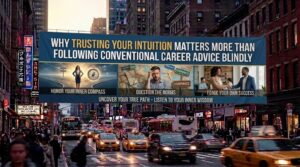
How to Stay Focused on Your Personal Vision Despite External Distractions and Pressures
In today’s hyper-connected, fast-paced world, staying committed to a personal vision is one of the most significant challenges professionals face. Across major economic and creative centers—from the relentless corporate drive of New York and the innovation ecosystems of San Francisco, Seattle, and California to the expanding business landscapes of Texas—external noise is at an all-time high.
We are constantly inundated with societal expectations, corporate demands, social media comparison, market shifts, and the opinions of well-meaning peers. Left unchecked, these external pressures act as cognitive friction. They dilute your focus, trigger imposter syndrome, and pull you away from your long-term vision into short-term reactivity.
Maintaining focus on your personal vision is not about ignoring external reality; it is about building a robust internal operating system. By combining cognitive boundaries, structured daily habits, and strategic clarity, you can navigate high-pressure environments without losing sight of where you are going.
The Neuroscience of Focus and Attention Hijacking
To protect your vision from external pressures, you must first understand how attention operates under stress and stimulation.
External Demands & Notifications ───► Cortisol / Dopamine Spikes ───► Reactive State (Attentional Drift)
                                           │
                             [Intentional Anchor Protocol]
                                           │
                                           ▼
                   Prefrontal Cortex (Executive Focus Engaged)
                                           │
                                           ▼
                    Sustained Execution on Personal Vision
- Attentional Residue: Every time you switch tasks—such as pausing deep work to check an alert or respond to an urgent request—a portion of your attention remains attached to the previous task. Over the course of a day, this creates heavy cognitive load, making it nearly impossible to focus on complex, vision-oriented goals.
- The Dopamine Loop of Distraction: Algorithms, news streams, and workplace channels are engineered to trigger micro-dopamine hits. When your personal vision requires sustained effort without immediate rewards, your brain naturally seeks out low-effort, high-reward distractions.
- Social Comparison and the Amygdala: Seeing peers celebrate rapid milestones on professional networks activates threat and status pathways in the brain. This triggers anxiety, tempting you to abandon your long-term plan to chase immediate, visible wins.
Internal Vision vs. External Noise: The Contrast Framework
Distinguishing between constructive feedback and distracting noise is essential for preserving your mental energy.
| Characteristic | External Pressure & Distraction | Personal Vision & Strategic Focus |
| Origin | Societal expectations, algorithms, short-term trends | Core values, long-term goals, internal strengths |
| Pacing | Urgent, chaotic, demands immediate reaction | Steady, deliberate, focused on compounding growth |
| Emotional State | Anxiety, fear of missing out (FOMO), reactivity | Clarity, composure, grounded determination |
| Outcome | Fragmented progress, burnout, alignment loss | Mastery, sustainable achievement, long-term fulfillment |
5-Step Framework for Safeguarding Your Personal Vision
To shield your long-term objectives from daily distractions and market noise, implement this actionable framework:
1.Define Your Vision with Operational Precision:Translate abstract dreams into clear, non-negotiable metrics.
Vague goals like “build a successful business” or “achieve career freedom” are vulnerable to external distraction. Define your vision in precise, measurable terms: what you are building, the values you hold, and the exact trade-offs you are willing to make.
2.Establish an Internal ‘Decision Filter’:Filter incoming demands through your core priorities.
Before accepting new projects, commitments, or strategic shifts, pass them through a simple filter: “Does this action directly support my core 3-year vision, or does it serve someone else’s agenda?” If it doesn’t align, decline or delegate it.
3.Build High-Friction Digital Boundaries:Block out distraction-free time for deep execution.
Protect your attention by turning off non-essential notifications, using website blockers during deep work blocks, and setting clear communication boundaries with colleagues and clients.
4.Institute an Intentional Morning Protocol:Anchor your morning to internal priorities before checking external feeds.
Avoid opening email, news, or social media for the first 60 minutes of your day. Dedicate this time to deep work, strategic planning, or physical health to anchor your mind to your vision before external demands take over.
5.Conduct Weekly Alignment Audits:Review progress and adjust tactics regularly.
Every week, audit your calendar and time usage. Calculate how many hours went toward executing your personal vision versus reacting to external emergencies, and recalibrate your schedule accordingly.
Practical Tips to Maintain Focus in Competitive Hubs
Operating in high-demand environments—such as New York, San Francisco, Texas, Washington, or anywhere in California—requires daily practices to preserve focus:
- Practice ‘Strategic Ignorance’: You do not need an opinion on every headline, industry trend, or social debate. Intentionally tune out non-essential information to preserve cognitive capacity for your core goals.
- Normalize Saying ‘No’ Early: Protecting your vision requires declining good opportunities to preserve energy for extraordinary ones. Make clear, polite refusal your default response to misaligned requests.
- Curate Your Core Circle: Connect with mentors and peers who value long-term depth over short-term hype. Surrounding yourself with grounded individuals reinforces your resolve against superficial distractions.
- Use Visual Anchors: Keep a physical document, vision map, or list of core non-negotiable values visible at your desk. Seeing your long-term goals daily keeps them top-of-mind during stressful moments.
Top 10 Frequently Asked Questions (FAQ)
1. How do I know if I’m being stubbornly persistent or just ignoring valuable feedback?
Valuable feedback addresses tactics and execution—helping you achieve your goals more effectively. External noise tries to redefine your values, direction, or personal worth. Adjust your methods based on constructive data, but protect your underlying vision.
2. What if my family or close friends don’t support my long-term vision?
People close to you often project their own risk aversion or fears onto your path. Communicate your goals with calm conviction, but avoid seeking validation from those who do not share your risk tolerance or perspective.
3. How can I stay focused on a long-term goal when I’m burned out from my current job?
Break your vision into micro-habits. Dedicate 30 to 45 minutes every morning to your personal goals before starting your job. This ensures your vision moves forward daily without requiring energy you don’t have at night.
4. How do I deal with FOMO when peers achieve rapid, visible success in trendy areas?
Remind yourself that fast, trendy success often lacks foundation depth. Benchmark your growth against your own multi-year plan rather than someone else’s public highlights.
5. What is the best way to handle unexpected life disruptions that derail focus?
Pause without guilt. Adapt your timeline without abandoning your destination. Treat life disruptions as temporary pauses, and resume your core habits as soon as stability returns.
6. Can digital detoxes help restore long-term focus?
Yes. Taking 24 to 48 hours away from all screens and notifications allows your dopamine receptors to reset, calms your nervous system, and provides the mental clarity needed for long-term strategic thinking.
7. How do I balance maintaining a personal vision with needing financial security?
Use a phased approach. Secure your financial baseline through your career or primary income source, and build your long-term vision systematically during protected personal hours until it gains enough traction to sustain you.
8. How many long-term goals should I focus on at one time?
Focus on no more than 1 to 2 major long-term objectives at a time. Spreading your cognitive capacity across too many goals dilutes effort and invites distraction.
9. How do I stay motivated when progress on my vision feels invisible for months?
Focus on process metrics rather than immediate outcome metrics. Track daily execution, hours invested, and skills acquired. Trust that compounding progress will yield visible results over time.
10. Why is focus particularly difficult to maintain in major metro areas like NY, SF, or Austin?
Major hubs feature high density, high ambition, and high cost of living. This creates intense social competition and constant pressure to conform to industry trends, making intentional focus even more critical.
Conclusion
Staying focused on your personal vision in a world filled with constant noise and external pressure is a deliberate choice. It requires protecting your attention, establishing firm boundaries, and placing long-term compounding progress over immediate validation. Whether navigating opportunities across Texas, New York, California, Washington, or San Francisco, your ability to tune out distractions and execute your plan is your ultimate competitive advantage. Define your vision clearly, guard your attention fiercely, and trust the process of daily execution.