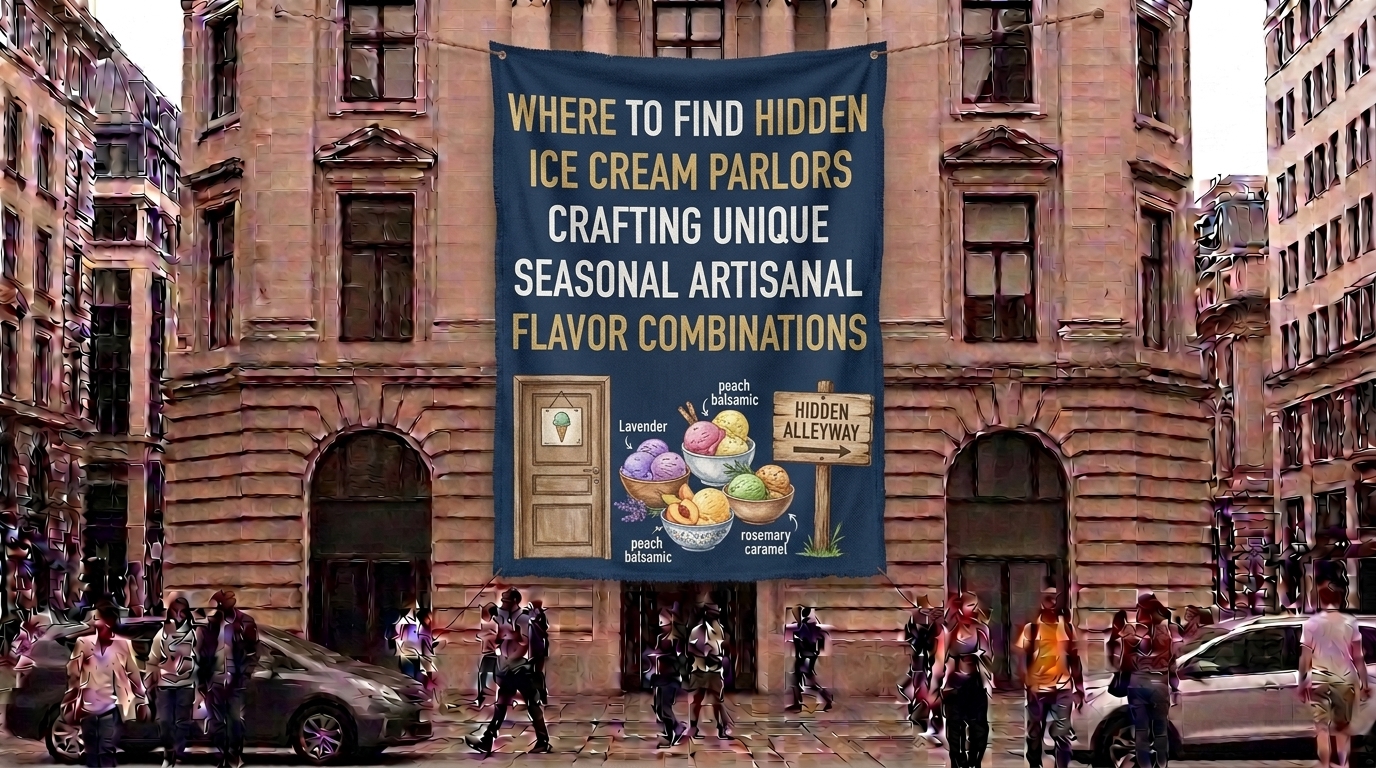
Where to Find Hidden Ice Cream Parlors Crafting Unique Seasonal Artisanal Flavor Combinations
There is a moment of pure culinary magic when a single scoop of ice cream stops you in your tracks. It isn’t just about cold sweetness; it is about the unexpected burst of fresh garden herbs, the complex depth of single-origin dark chocolate blended with smoked sea salt, or the bright, aromatic bite of tree-ripened local stone fruit folded into rich, grass-fed dairy cream.
While commercial, factory-made ice cream relies on artificial flavorings, high-fructose corn syrup, and excessive air aeration (overrun), independent artisanal ice cream parlors treat frozen desserts as a serious culinary canvas. Across food-forward regions like Texas, New York, California, Washington, and San Francisco, a new wave of master micro-creamery chefs is redefining what frozen treats can be.
Tucked away down cobblestone alleys, inside quiet neighborhood enclaves, or operating out of unmarked storefronts, these hidden parlors craft small-batch ice creams using local farm dairy, seasonal produce, exotic spices, and unexpected savory ingredients. This ultimate guide breaks down where to find these hidden artisanal gems, how master creameries construct complex flavor profiles, and how to spot authentic small-batch parlors near you.
The Anatomy of Small-Batch Artisanal Ice Cream
Understanding why artisanal ice cream tastes fundamentally superior to mass-produced options comes down to science, ingredient sourcing, and process.
                      [ INDUSTRIAL VS. ARTISANAL ICE CREAM MATRIX ]
                                           |
         +---------------------------------+---------------------------------+
         |                                                                   |
[ MASS-PRODUCED COMMERCIAL ]                                    [ MICRO-CREAMERY ARTISANAL ]
- High overrun (up to 100% added air)                           - Low overrun (15%–30% air = dense, rich texture)
- Artificial extracts & corn syrups                             - Organic whole cane sugar & real botanicals
- Ultra-pasteurized mix stored for months                       - Fresh, grass-fed local milk & cream
- Static, artificial year-round flavors                         - Hyper-seasonal, rotating farm-to-cone menus
- Chemically stabilized with emulsifiers                        - Natural stabilization (egg yolks or tapioca starch)
Key Elements of Flavor Construction
- Low Overrun (Density): Overrun refers to the percentage of air whipped into the cream during churning. Industrial brands churn up to 100% air into their tubs (doubling the volume cheaply). Artisanal creameries keep overrun low (under 30%), yielding a silky, slow-melting, deeply flavorful scoop.
- High Butterfat Balance: Craft creameries typically use dairy with 14% to 18% butterfat from grass-fed cows. Fat coats the palate, allowing flavor notes—such as toasted cardamom, lavender, or olive oil—to unfold gradually as the ice cream warms in your mouth.
- Hyper-Local Botanical Sourcing: Instead of commercial flavor pastes, master churners steep whole botanicals directly into warm milk, roast fresh local orchard fruit, and brew single-origin espresso shots into their bases.
Regional Map: Hidden Artisanal Creameries Across Key States
Each region brings its unique agricultural harvests, culinary identity, and micro-climate produce into the churn room:
| State / Metro Region | Regional Botanical & Flavor Focus | Signature Exotic Flavor Combinations |
| San Francisco & Bay Area (CA) | Organic dairy, floral botanicals, wild-foraged herbs, sourdough infusions | Olive oil & sea salt, lavender honey, roasted black sesame, sourdough toast & jam. |
| New York City (NY) | Multi-cultural spices, tea infusions, bakery mashups, savory accents | Sweet corn & blackberry, malted cereal milk, saffron orange blossom, goat cheese & fig. |
| Washington (Seattle/Puget Sound) | Pacific Northwest berries, local coffee roasts, wood-smoked sea salts | Marionberry habanero, roasted hazelnut espresso, smoked cedar pine, rhubarb cardamom. |
| Texas (Austin, Houston, Dallas) | Cross-border spices, pecans, citrus, pit-smoke caramel, tropical fruits | Ancho chili dark chocolate, Texas sweet corn & peach, Horchata cajeta, bourbon pecan. |
| Southern California (LA/San Diego) | Avocado bases, Mexican vanilla, tropical fruit sorbets, botanical floral teas | Avocado lime, Mexican hot chocolate, hibiscus guava sorbet, matcha green tea coconut. |
How Master Creameries Craft Unique Seasonal Flavor Combinations
The secret to a memorable artisanal flavor lies in balancing sweet, savory, fat, acid, and texture. Master churners use four classic pairing principles:
1. The Sweet & Savory Balance
Pairing rich dairy cream with savory elements cuts through heavy sweetness. Combining extra virgin olive oil with sea salt, sweet corn with black pepper, or goat cheese with roasted figs creates a sophisticated taste profile that keeps diners coming back for another scoop.
2. Herb & Fruit Infusions
Freshly picked garden herbs elevate natural fruit sugars. Combinations like strawberry basil, lemon thyme, blueberry rosemary, or peach tarragon highlight the natural aromatic top notes of seasonal harvests.
3. Spice & Heat Integration
Adding subtle warm spices or mild chili heat creates an intriguing contrast against cold dairy. Dark chocolate infused with Mexican chili peppers, marionberry folded with habanero, or ginger steeped with turmeric warms the palate as the ice cream melts.
4. Textural Crunch & Ribbon Swirls
A great scoop engages multiple senses. Craft creameries fold in hand-baked inclusions—such as house-made honeycomb candy, roasted candied pecans, buttered shortbread crumbs, or slow-cooked jam ribbons—to provide satisfying contrast.
Step-by-Step: How to Locate Hidden Artisanal Ice Cream Spots Near You
Finding authentic, hidden micro-creameries requires looking beyond high-rent tourist strips:
1.Look for Key Artisanal Keywords:Search for hyper-local culinary indicators online.
Search for terms like “small-batch micro-creamery,” “grass-fed dairy ice cream,” “scratch-made inclusions,” or “rotating seasonal flavor menu” rather than standard “ice cream shop.”
2.Explore Farmers Markets and Artisan Food Halls:Farmers markets often host startup micro-churners.
Many independent churners start as small market stalls or pop-ups inside local food halls before opening brick-and-mortar locations.
3.Track Seasonal Menu Drops on Social Media:Follow local chefs and pastry artists on social media.
Micro-creameries change their menus weekly based on what local farmers bring to their kitchen doors. Following these makers online reveals surprise pop-up drops and hidden flavor launches.
4.Check for In-House Manufacturing:Look for transparent sourcing and ingredient lists.
Authentic parlors display their churning equipment or clearly list their farm partners, house-made inclusions, and dairy sources on their menu boards.
Frequently Asked Questions (FAQ)
1. What is the difference between gelato and artisanal ice cream?
Gelato is churned at a slower speed (resulting in even lower overrun) and contains less milkfat (usually 4%–9%) than American artisanal ice cream (14%–18%). Gelato is also served at a slightly warmer temperature, making its flavors hit the palate instantly.
2. Why do seasonal ice cream flavors change so frequently at craft creameries?
Because authentic micro-creameries rely on fresh, local agricultural harvests (like summer stone fruits, spring berries, or autumn squash). When the farmer’s crop harvest ends, the creamery rotates to the next seasonal harvest.
3. What does “overrun” mean in ice cream production, and why does it matter?
Overrun is the percentage of air whipped into the ice cream during churning. Low overrun (15%–30%) creates a dense, creamy, high-quality dessert, while high overrun (up to 100%) produces light, airy, cheap ice cream.
4. Are vegan or dairy-free artisanal ice creams as creamy as traditional dairy?
Yes! Modern craft churners use rich, natural plant fat bases—such as full-fat coconut cream, house-made oat milk, or cashew milk—blended with cocoa butter or organic oils to replicate the luxurious mouthfeel of dairy cream.
5. How can I tell if an ice cream shop uses natural ingredients versus artificial flavor pastes?
Look at the color and texture! Pistachio ice cream should be natural pale brownish-green, not neon fluorescent green. Mint ice cream should be off-white or light green from real steeped mint leaves, not electric green from artificial dye.
6. Why is artisanal small-batch ice cream more expensive than grocery store tubs?
You are paying for high butterfat grass-fed milk, expensive single-origin spices, real fresh fruit, scratch-baked inclusions, fair wages, and slow, handcrafted small-batch production.
7. How should I store high-quality artisanal ice cream at home to prevent freezer burn?
Press a piece of parchment paper or plastic wrap directly onto the exposed surface of the ice cream before tightly sealing the lid, and store it in the deepest part of your freezer—never on the door.
8. What are some of the most unexpected savory ingredients used in modern craft ice cream?
Master churners frequently use extra virgin olive oil, goat cheese, blue cheese, miso paste, sweet corn, black garlic, sea salt, rosemary, and cracked black pepper.
9. Can I visit ice cream parlors during winter months?
Absolutely! Winter is often when creameries release their most creative, comforting warm-spiced flavors, like spiced eggnog, dark chocolate peppermint, bourbon butterscotch, and roasted chestnut.
10. What is a “flight” of ice cream, and why should I order one?
An ice cream flight consists of 4 to 6 miniature scoops served on a paddle. It allows you to taste a wide variety of experimental and seasonal flavor combinations without committing to a single full scoop.
Conclusion: The Adventure of the Next Great Scoop
Seeking out hidden artisanal ice cream parlors transforms a simple dessert run into an exciting culinary discovery. By supporting local micro-creameries across Texas, New York, California, Washington, and San Francisco that prioritize fresh farm sourcing, creative flavor pairings, and slow small-batch churning, you honor true culinary artistry—one delicious, unforgettable scoop at a time.