Moving to New York City is an exhilarating leap. Whether you packed up a truck in Texas, left behind the coastal calm of California, transitioned from the Pacific Northwest forests of Washington, or traded the tech hills of San Francisco for the concrete canyons of Manhattan, you arrived with a head full of ambition and a heart full of hope.
Yet, once the initial dust settles, the reality of the big city sets in. Walking down crowded sidewalks packed with millions of people can paradoxically feel like the loneliest experience on earth. Everyone looks like they have somewhere important to be, an established social circle, and a packed calendar. If you find yourself staring at your apartment ceiling on a Friday night wondering how adults actually forge deep, authentic friendships in this metropolis, take a deep breath. You are far from alone.
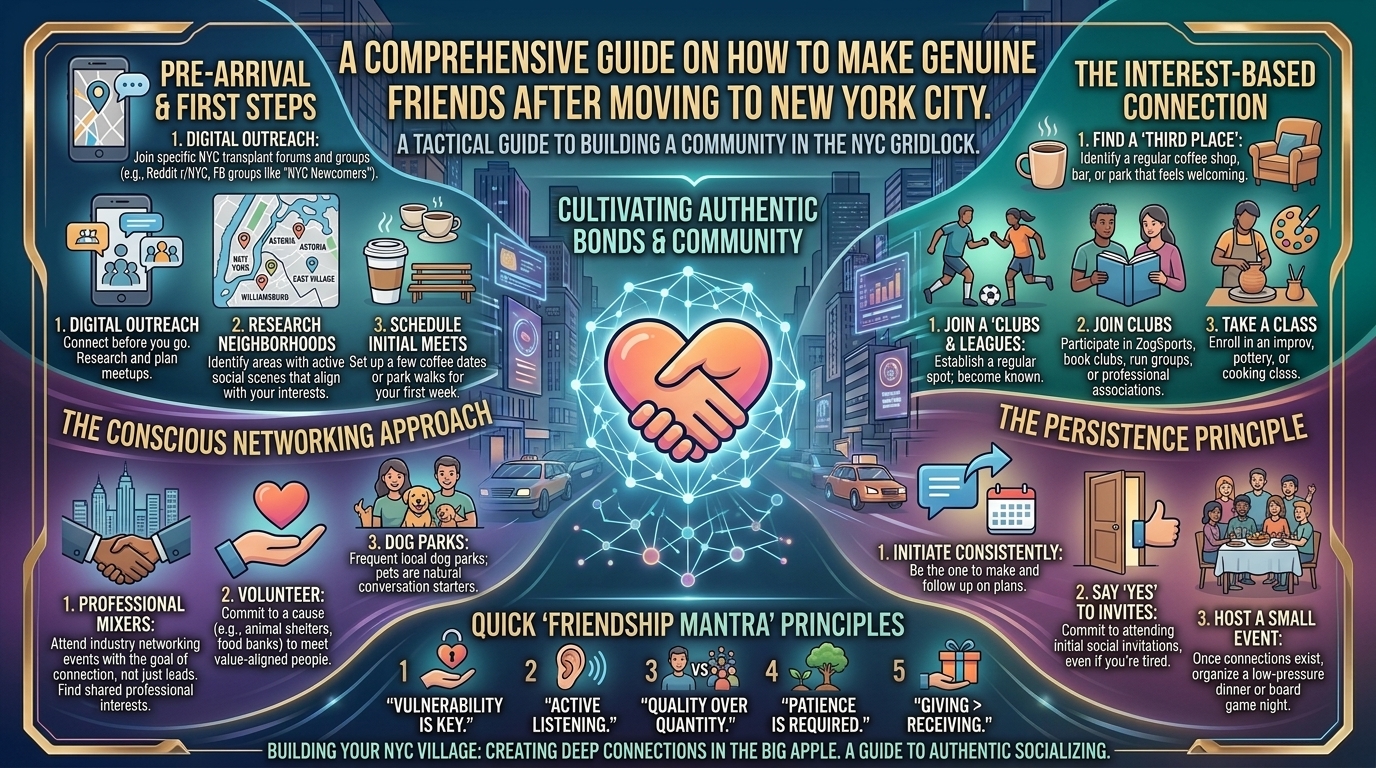
Making genuine friends in New York City is entirely possible, but it requires strategy, vulnerability, consistency, and a shift away from passive waiting toward active community building. This comprehensive guide details everything you need to know to transition from isolated newcomer to deeply connected insider.
The Psychology of NYC Friendship: Why It’s Harder (and Different) Than Anywhere Else
Before diving into tactics, it is crucial to understand the unique social ecosystem of New York. Friendships here operate under rules very different from suburban towns or smaller cities.
1. The Scarcity of Time and Space
In many parts of the country, hanging out means inviting people over to a spacious living room or hanging out in a large backyard. In New York, apartments are tiny, schedules are compressed by career demands, and commutes are long. People protect their downtime fiercely. If a New Yorker cancels plans, it is rarely personal; it is usually an energy-conservation mechanism.
2. The Abundance Paradox
New York offers infinite optionality. Because there are thousands of events, bars, galleries, and meetups happening every single night, people can fall into the trap of looking for the “next best thing” instead of investing deeply in the person sitting right in front of them. Overcoming this requires choosing to show up consistently for the same people.
Step 1: Shift Your Mindset From Networking to Connection
Many transplants approach socializing in New York like a corporate networking event—handing out digital contact info, collecting LinkedIn connections, and talking exclusively about career milestones. While professional ambition is part of the city’s DNA, transactional networking rarely yields genuine friendship.
- Seek Shared Vulnerability: People bond over mutual struggles and shared experiences, not polished resumes. Talk about how exhausting the apartment hunt was, or laugh together about getting lost in the subway maze.
- Embrace the Awkwardness of Being the “Asker”: In NYC, everyone is waiting for someone else to make the first move. If you meet someone cool at a coffee shop, a run club, or a co-working space, be the bold one who says: “Hey, I’m new in town and trying to build my community. Can I grab your Instagram or number? Let’s grab coffee next week.” Most people will be flattered and relieved.
Step 2: Leverage Location-Based and Niche Communities
New York is a patchwork of hyper-specific micro-neighborhoods and subcultures. Finding your tribe means plugging into groups centered around specific hobbies rather than broad mixers.
The Power of Micro-Communities
- Run Clubs and Fitness Collectives: Running clubs have exploded across Brooklyn and Manhattan as the ultimate social vehicle. They combine low-stakes physical activity with post-run social hangs.
- Creative and Artisan Workshops: Take a pottery class, a writing workshop, or an improv comedy night. Sharing a creative struggle breaks down social barriers faster than small talk at a bar.
- Neighborhood Immersive Spots: Become a regular. Frequenting the same independent bookstore, local dog park, or neighborhood coffee shop at the same time each week naturally introduces you to the other regulars and baristas who call your block home.
Step 3: Master the Art of the Follow-Up (The 72-Hour Rule)
The biggest pitfall for new transplants is collecting a dozen phone numbers or Instagram handles during a fun weekend night out, only to let them sit untouched in a digital address book.
- The Follow-Up Window: Reach out within 48 to 72 hours. Keep the initial text low-pressure and specific: “Hey Sarah! So great meeting you at the ceramics class on Tuesday. There’s a cool little coffee shop down the street from me, let’s grab a matcha next week if you’re free!”
- The Rule of Three: Building a friendship requires consistency. Commit to seeing or talking to the same person at least three times within a structured window to transition from casual acquaintance to genuine friend.
10 Frequently Asked Questions (FAQs)
1. Why do New Yorkers seem so unfriendly or closed off to new people?
New Yorkers aren’t necessarily unfriendly; they are simply filtering out sensory overload and protecting their limited time. What looks like coldness is usually just urban privacy boundaries. Once you break the ice respectfully, you will often find people are remarkably warm and loyal.
2. What are the best apps or platforms for making friends in NYC?
Apps like Bumble BFF, Meetup, and localized Facebook groups or subreddits (like r/nycmeetups) are fantastic tools. Additionally, niche interest apps like Strava (for runners/cyclists) or event-based platforms like Partiful can plug you directly into local happenings.
3. How do I transition an acquaintance into a close, genuine friend?
Move interactions outside of the original context where you met. If you met at a fitness class, invite them to dinner, a museum visit, or a casual weekend stroll through Central Park. Sharing a meal or exploring the city together deepens the bond.
4. Is it normal to feel intensely lonely during my first six months in New York?
Completely normal. Almost every transplant—regardless of whether they moved from Texas, California, or abroad—goes through an initial adjustment phase where the city’s energy feels isolating rather than exciting. Give yourself grace and time.
5. How much money do I need to spend to maintain a social life in NYC?
You don’t need to break the bank at high-end cocktail bars. Propose budget-friendly or free activities: walking the High Line, visiting museums on their pay-what-you-wish days, hosting a cheap BYOB night at your apartment, or grabbing slices of dollar-slice pizza in the park.
6. How do I avoid superficial friendships that only revolve around drinking or partying?
Be proactive about suggesting daytime, activity-based hangouts. Instead of meeting at a crowded bar on a Friday night at 10 PM, invite someone to a Saturday morning farmers market, an art gallery opening, or a weekend hike up the Hudson.
7. What should I do if someone ghosts or flakes on our plans?
Do not take it personally. Flaking is an unfortunate cultural byproduct of NYC burnout and calendar overload. If someone flakes twice without offering an alternative date, gracefully step back and invest your energy in people who match your enthusiasm.
8. How do I meet people if I work remotely and don’t have a traditional office?
Remote workers can escape isolation by utilizing co-working spaces, working from quiet neighborhood cafes, joining local professional affinity groups, or setting up a desk routine at the New York Public Library branches.
9. Are neighborhood bars still a good place to strike up conversations?
Yes, neighborhood pubs or small wine bars with seating at the actual bar counter are much more conducive to casual conversation than massive clubs. Sitting at a bar solo with a book or notebook often invites friendly hellos from locals.
10. How long does it realistically take to build a solid core friend group in NYC?
Most long-term residents agree that it takes anywhere from 12 to 18 months to find your core “ride-or-die” community. Building deep roots takes time, so view friendship building as a marathon, not a sprint.
Conclusion
Moving to New York City and building a social circle from scratch is an ambitious undertaking, but it is also one of the most rewarding growth experiences of a lifetime. By letting go of transactional networking, diving headfirst into micro-communities aligned with your true passions, and showing up with consistency and vulnerability, you will transform the anonymous city crowd into a rich tapestry of lifelong friends.
Keep putting yourself out there, embrace the adventures along the way, and find more city guides, lifestyle tips, and urban survival inspiration right here at nyattitude.com to help you make New York truly feel like home!