There is a universal rhythm to life near the water. Whether you have moved across the country from the wide, dry expanse of Texas, the sun-kissed cliffs of California, the pine-draped inlets of Washington, or the steep, fog-wrapped bay edges of San Francisco, the human soul naturally gravitates toward the shoreline. Water offers a horizon—a psychological break from the dense geometry, vertical concrete, and ceaseless velocity of metropolitan life.
In major global cities like New York and San Francisco, millions of people flock to famous waterfront destinations on any given weekend. They crowd onto the paths of Brooklyn Bridge Park, line up for overpriced snacks near Fisherman’s Wharf, or struggle to find square footage on heavily touristed lawns.
Yet, hidden just around the bend from these heavy tourist arteries lie quiet, lesser-known public parks, industrial-reclaimed piers, and pocket wetlands. These under-the-radar green spaces offer the soothing sound of lapping waves and expansive skyline views without the elbow-to-elbow crowds.
This comprehensive guide details how to uncover secret waterfront green spaces, highlights brilliant examples across major urban regions, and provides actionable tips for maximizing your next quiet escape to the edge.
The Urban Waterfront Renaissance: From Industry to Ecology
To understand why some of the best waterfront parks remain hidden, you have to understand urban history. For centuries, cities like New York and San Francisco treated their waterfronts purely as working industrial zones—freight piers, shipyards, automated cranes, coal yards, and municipal waste facilities.
Over the past few decades, a massive urban planning revolution transformed these abandoned industrial scars into ecological parks. While planners made famous showpieces out of central waterfronts, many smaller, neighborhood-specific pocket parks were tucked quietly behind residential blocks, remaining invisible to casual visitors who stick strictly to mainstream tourist guidebooks.
Regional Highlights: Secret Waterfront Gems to Explore
When you know where to look, every major coastal or river city holds quiet patches of shoreline nature.
1. New York City: Beyond the Mainstream Esplanades
- WNYC Transmitter Park (Greenpoint, Brooklyn): Tucked away at the edge of Greenpoint on the East River, this 1.6-acre gem occupies a former radio transmission site. It features a magnificent wooden pier jutting out over the water, an open lawn, and restored wetland zones that offer striking, unobstructed views of the Midtown Manhattan skyline with a fraction of the crowds found in Williamsburg.
- Barretto Point Park (Hunts Point, The Bronx): A brilliant hidden waterfront park featuring a unique floating seasonal pool on the East River, a small sandy beach, native plantings, and sweeping views of the historic North Brother Island.
2. San Francisco & The Bay: Quiet Coastal Pockets
- Francisco Park (Russian Hill, San Francisco): Sitting atop a historic reservoir site near Aquatic Park, this 4.5-acre terraced urban park is a relative newcomer that offers jaw-dropping, uncrowded views of the San Francisco Bay, Alcatraz, and the Golden Gate Bridge alongside lush community gardens and modern green infrastructure.
- Heron’s Head Park (Bayview, San Francisco): A 24-acre ecological park built on a reclaimed landfill jutting out into the bay. It features restored salt marshes, miles of quiet walking trails, incredible bird-watching opportunities, and an entirely off-the-grid environmental education center.
Step-by-Step Strategy: How to Find Secret Waterfront Parks
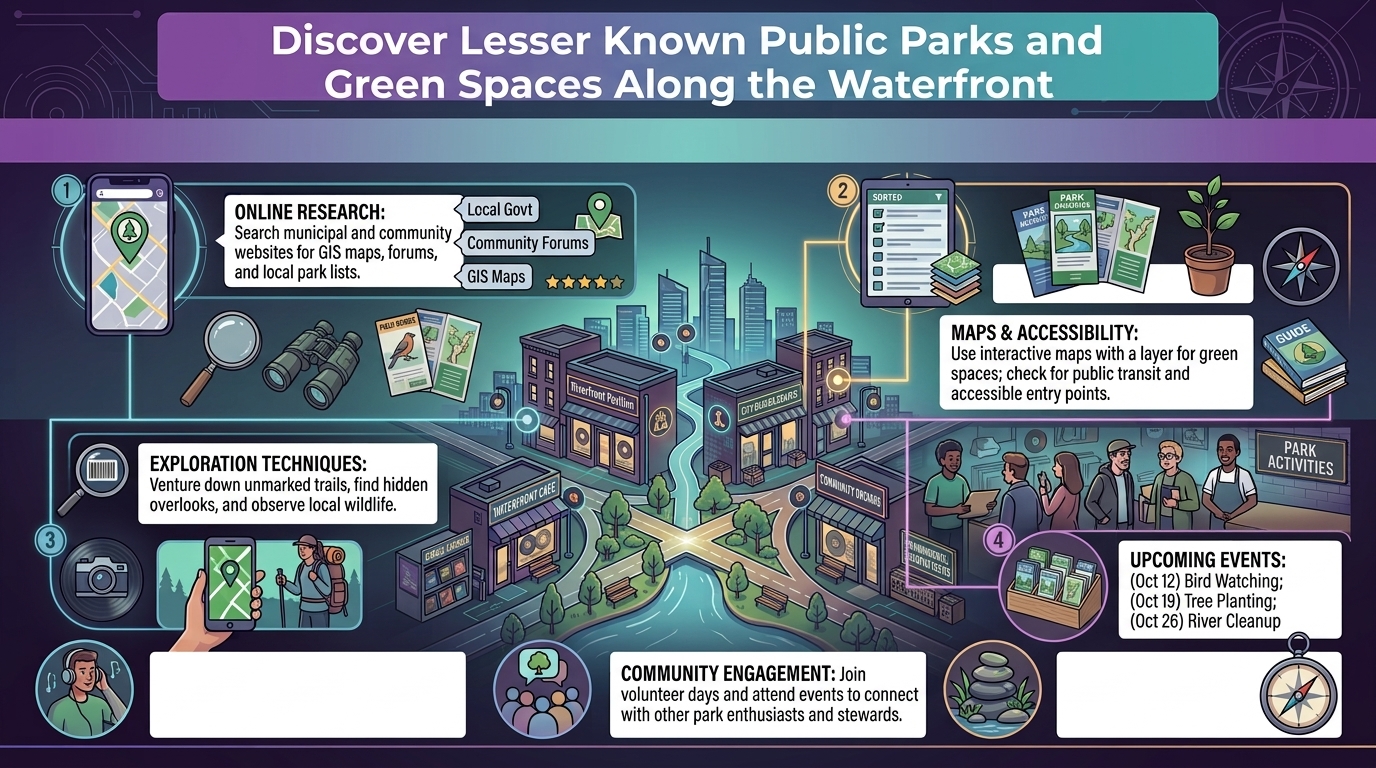
Finding micro-parks that aren’t plastered across social media feeds requires shifting your mapping and exploration habits:
1. Read Satellite Maps Like an Urban Archeologist
Open up digital satellite maps and zoom in closely on the perimeter where land meets water. Look for unexpected strips of green wedged between residential warehouses, old industrial slips, or transit bridges. If you see grass, walking paths, or wooden piers hidden away from major arterial roads, you have likely located a public pocket park.
2. Follow the Public Access Mandates
In states like California and New York, municipal zoning laws often require commercial developments and luxury residential conversions to build and maintain public waterfront access easements. These hidden boardwalks, rooftop river terraces, and small shoreline pocket parks are legally required to be open to the general public, even if they are tucked behind private architectural structures.
10 Frequently Asked Questions (FAQs)
1. Are lesser-known waterfront parks completely free to enter?
Yes! All public municipal, state, and national park service waterfront green spaces are 100% free for public use, requiring no admission fees or reservations.
2. How can I verify if a hidden waterfront park is legally open to the public?
Check municipal parks department websites (such as NYC Parks or SF Rec and Park) or look for official park signage at the entrance indicating public access hours and rules.
3. Are these quiet waterfront parks safe to visit during early morning or dusk?
Yes, but standard urban awareness applies. Parks tucked inside residential neighborhoods are generally very peaceful and safe during daytime and early evening hours. Always check local park closing times (many close at dusk).
4. Can I fish from these minor waterfront parks?
In many coastal and river parks, recreational fishing is permitted, provided you possess a valid state fishing license and follow local catch-and-release or consumption advisory guidelines.
5. Are dogs allowed in these lesser-known shoreline parks?
Policies vary by location. While some ecological restoration parks restrict dogs to protect nesting shorebirds, many neighborhood waterfront parks feature designated paths or nearby dog-friendly zones. Always check local signage.
6. Why are some waterfront parks less crowded than others?
They are typically hidden behind residential side streets, lack massive commercial tourist attractions (like amusement piers or food halls), or require a short walk or transit transfer to reach.
7. Do these parks offer good wildlife viewing opportunities?
Incredible ones! Because quiet waterfront parks often feature restored wetlands, marshes, and rocky coves, they serve as vital rest stops for migratory birds, herons, egrets, and marine life.
8. Can I ride my bicycle through these parks?
Most waterfront parks feature dedicated paved or boardwalk paths that welcome cyclists, though crowded pedestrian zones or fragile ecological wetland loops may require you to walk your bike.
9. What should I pack for an afternoon at a quiet waterfront park?
Pack a windbreaker or light jacket (waterfront breezes can drop temperatures quickly), a reusable water bottle, binoculars for bird-watching, a portable blanket, and a good book.
10. Why is exploring secret green spaces important for city dwellers?
Finding quiet corners of nature along the water provides essential mental restoration, reduces urban cortisol levels, and deepens your personal connection to the natural ecology of your city.
Conclusion
Discovering lesser-known public parks and green spaces along the waterfront changes the entire way you experience a major metropolis. By stepping away from the overcrowded tourist traps and hunting down hidden piers, restored wetlands, and quiet neighborhood shorelines, you reclaim the peace and natural beauty of the urban edge.
Pack a bag, trace the shoreline, and discover more urban exploration guides, hidden city sanctuaries, and lifestyle inspiration right here at nyattitude.com to help you master life in the greatest cities on earth!