There is a distinct, visceral electricity that takes over the air when the sun goes down across the East River. For music lovers, creatives, and independent spirits who have relocated from the sprawling live-music avenues of Texas, the coastal creative hubs of California, the evergreen indie-rock nurseries of Washington State, or the foggy cultural enclaves of San Francisco, discovering Brooklyn’s underground music scene feels like unearthing a secret universe.
When mainstream culture looks at New York music history, it often focuses on legendary corporate arenas, Midtown jazz supper clubs, or historic Broadway theaters. But if you want to witness the raw, bleeding-edge future of global music, you have to venture deep into the industrial warehouses, unmarked brick basements, loft spaces, and DIY performance venues of Brooklyn.
From Bushwick and Williamsburg to Greenpoint and Bed-Stuy, Brooklyn houses the most dynamic, boundary-pushing independent music ecosystem on planet Earth. This comprehensive guide details everything you need to know to navigate, respect, and experience the vibrant underground music scene in Brooklyn like an absolute insider.
The Genesis of Brooklyn DIY: From Industrial Lofts to Soundscapes
To truly understand modern Brooklyn underground music, you must understand its physical and economic roots.
Throughout the late 1990s and 2000s, as skyrocketing Manhattan real estate forced artists, musicians, and audio engineers across the river, they found cheap, abandoned manufacturing warehouses, textile factories, and maritime storefronts in North and Central Brooklyn.
Musicians didn’t just rent apartments; they converted cavernous basements into subterranean recording studios, installed soundproofing blankets, wired mixing consoles, and hosted illicit weekend loft shows. Even as neighborhood real estate has gentrified, the DIY (Do-It-Yourself) ethos remains fiercely protected. The Brooklyn underground is not defined by corporate sponsorships or major label backing; it is fueled by community curation, raw experimentation, and mutual aid.
Step 1: Decoding the Geography of Brooklyn Sound
Brooklyn is a massive borough, and its underground music genres tend to cluster in specific pockets based on architectural history and community demographics.
1. Bushwick: The Capital of Experimental Noise, Punk, and Electronic Immersive Art
Centered around industrial blocks near the L and M subway lines, Bushwick is the epicenter of the current underground warehouse circuit.
- The Vibe: Converted manufacturing spaces, nondescript garage doors with bouncers checking wristbands, and multi-room art collectives where a harsh noise band might play in one room while an ambient modular synthesizer collective performs in another.
2. Greenpoint and Williamsburg: Indie Rock, Post-Punk, and Intimate Listening Rooms
While parts of Williamsburg have undergone luxury commercialization, its industrial fringe and neighboring Greenpoint maintain legendary underground venues, cassette-label storefronts, and intimate back-alley performance spaces.
Step 2: The Insider’s Playbook (How to Navigate the Scene)
Attending an underground show in Brooklyn is vastly different from buying a ticket to a stadium concert through a corporate ticketing monopoly. It requires understanding unwritten etiquette and subcultural mechanics.
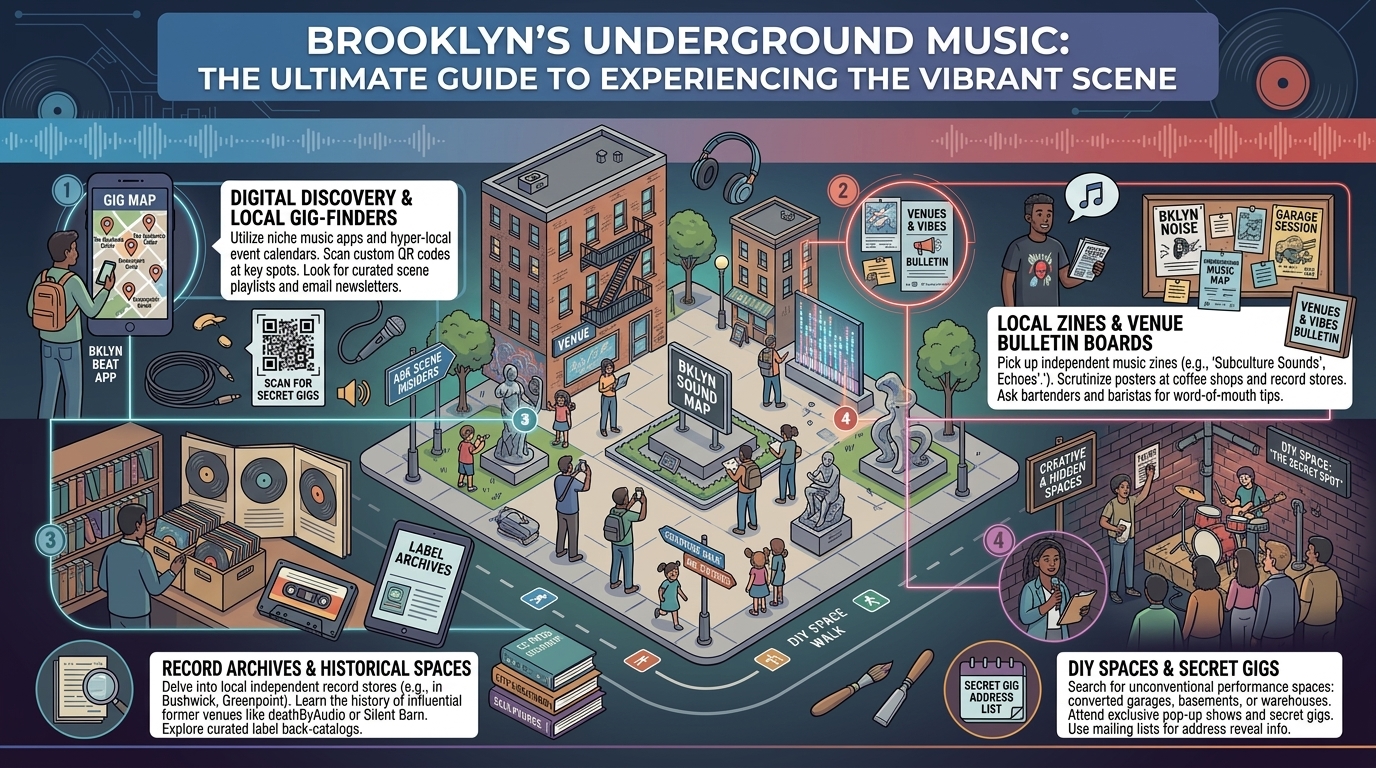
1. How to Find the Shows
Underground venues rarely advertise on massive billboard campaigns or mainstream tourist websites.
- Word of Mouth and Zines: The scene operates through private mailing lists, independent record store flyers, neighborhood bulletin boards, and underground community Instagram accounts.
- The “Address Release” Secret: For true DIY loft shows, the exact street address is frequently withheld until the morning of the event, sent exclusively to ticket buyers or community members via direct message or email blast to protect against municipal code crackdowns.
2. Mastering Underground Etiquette
- Respect the Space: DIY spaces are often run by collectives of artists who pour their own money and labor into keeping rent paid and equipment maintained. Clean up after yourself, respect venue property, and never litter.
- Support the Touring Acts: Underground ticket prices are usually extremely affordable ($10 to $20 cash at the door), but remember that 100% of that door money goes directly to compensating the touring bands and local musicians. Always tip the sound engineer and merch table.
- No Flash Photography: Unless explicitly stated otherwise, avoid flashing bright camera lights directly into performers’ faces in cramped, dark basement venues.
10 Frequently Asked Questions (FAQs)
1. Are underground music venues in Brooklyn safe to attend solo?
Yes, the vast majority of underground spaces are community-driven, highly protective, and populated by welcoming regulars. However, because these venues are often located on industrial or semi-isolated blocks late at night, standard urban situational awareness and traveling with trusted friends or rideshare apps is always advised.
2. How do I find secret warehouse or loft shows if I don’t know anyone in the scene?
Start by visiting independent record stores in Bushwick and Greenpoint (like Human Head Records), pick up local underground music zines, check community bulletin boards, and follow independent local booking collectives on social media.
3. Do underground venues accept credit cards at the door?
Many DIY loft spaces and basement venues are cash-only at the door for entry and merch purchases. Always carry physical cash with you!
4. What genres of music dominate the Brooklyn underground scene?
You will find an extraordinary diversity of sound, including post-punk, experimental electronic, indie rock, darkwave, ambient noise, avant-garde jazz, hyperpop, and underground techno.
5. What time do underground shows actually start and end?
Unlike mainstream clubs with rigid corporate schedules, underground shows operate on “flexible” DIY timing. Doors might open at 8:00 PM, but the first band rarely plays before 9:00 PM or 9:30 PM, and late-night electronic sets often run well into the early morning hours.
6. Are underground shows strictly 21+?
It depends entirely on the venue. Legally licensed small bars have strict 21+ policies, whereas non-profit DIY community spaces and art lofts are frequently all-ages, fostering younger creative crowds. Always check event flyers for age restrictions.
7. Can I bring my own drinks to DIY loft spaces?
Policies vary. Some underground spaces operate as BYOB (Bring Your Own Beverage), while others rely on selling cheap canned beer and water at the door to fund the space. Always check the event posting guidelines.
8. How has gentrification impacted the Brooklyn underground music scene?
Rising commercial rents have forced many legendary DIY spaces in Williamsburg and Bushwick to close over the decades, pushing creative communities further east and south, while fueling resilient, mobile, pop-up warehouse collectives.
9. Why do musicians from all over the world move to Brooklyn to play underground shows?
Because Brooklyn offers an intensely dense, highly appreciative, and critical audience of fellow musicians, critics, and creative peers who treat underground music as an essential high art form.
10. Why is experiencing the underground scene better than going to a major stadium concert?
Because underground shows offer raw, intimate human connection. You are standing inches away from the artists, experiencing uncompromised creative expression without corporate VIP barricades or $150 ticket fees.
Conclusion
Experiencing the vibrant underground music scene in Brooklyn is one of the most culturally thrilling adventures you can undertake in modern America. By stepping away from corporate arenas, hunting down hidden warehouse doors in Bushwick, supporting independent touring bands, and embracing the raw energy of DIY spaces, you plug directly into the beating, bleeding-edge heart of contemporary music history.
Keep your ears open, respect the community, and discover more urban culture guides, neighborhood secrets, and lifestyle inspiration right here at nyattitude.com to help you master life in the greatest cities on earth!