There is a distinct, melancholic magic to a rainy afternoon. As gray clouds roll over the skyline—whether you are watching the mist blanket the skyscrapers of New York, slicking the tech-heavy asphalt of San Francisco, washing over the dense evergreens of Washington, dampening the sprawling highways of California, or rolling across the vast plains and historic town squares of Texas—the modern world tends to rush indoors.
While many default to crowded coffee shops or commercial shopping malls, urban explorers and history buffs know that the absolute best sanctuary for a stormy day is a historic public library or municipal archive. These monumental structures are far more than mere repositories of books; they are architectural masterpieces, civic cathedrals, and living time capsules of local heritage.
If you are looking to elevate your next gray afternoon, here is your definitive, highly informative masterclass on how to explore historic indoor public libraries and archives like a seasoned cultural anthropologist.
1. Why Historic Libraries and Archives Make the Ultimate Rainy Day Destination
Before diving into the tactical how-to, it helps to understand why these spaces offer an unmatched experience during inclement weather:
- Acoustic Architecture: High vaulted ceilings, marble corridors, and quiet reading rooms naturally mute the chaos of the outside world, creating a meditative environment.
- Architectural Preservation: Many of these institutions were built during the Gilded Age, the WPA era, or the mid-century civic boom, featuring breathtaking murals, stained glass, and handcrafted woodwork.
- Free Cultural Access: Unlike museums or private galleries, public libraries and archives are entirely free to enter, welcoming all members of the public to engage with history.
2. Pre-Trip Preparation: How to Plan Your Archival Adventure
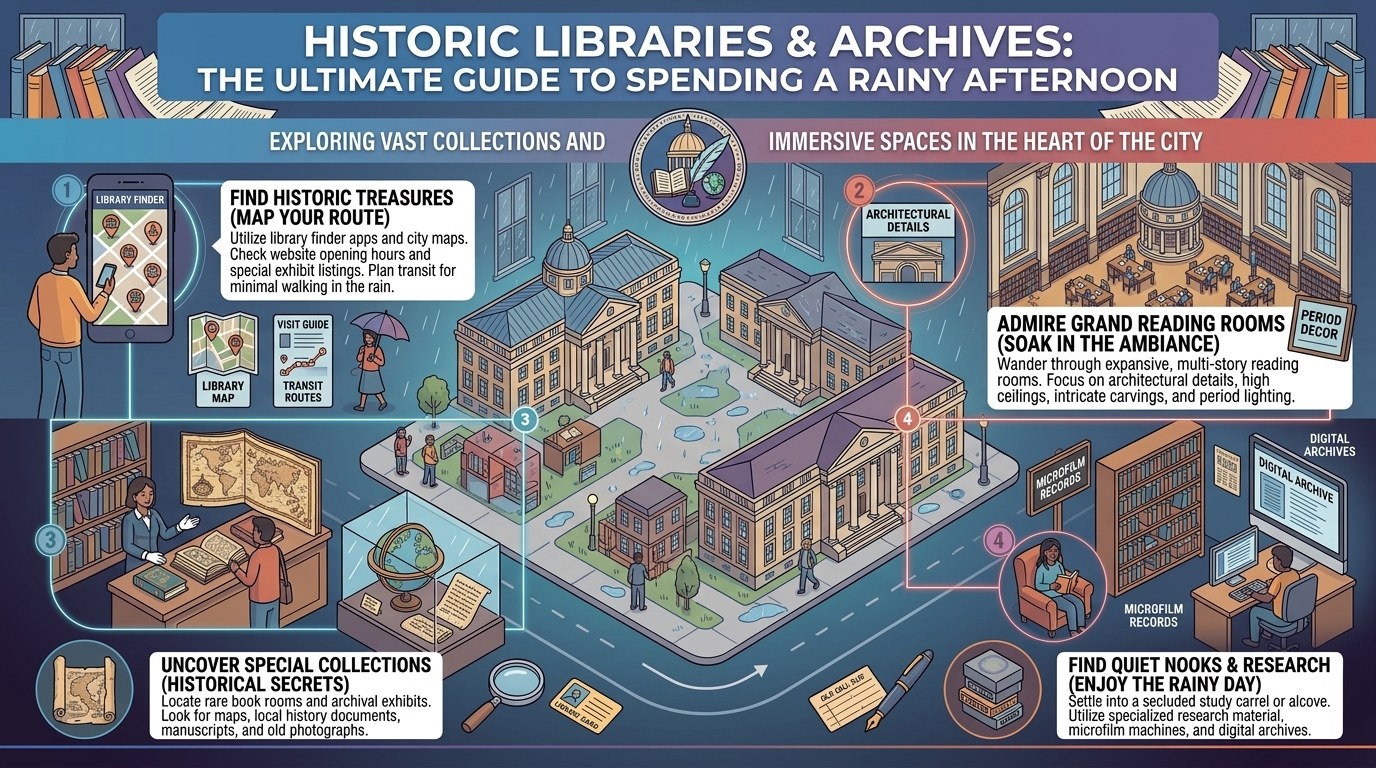
Walking into a major metropolitan library or regional archive without a game plan can be overwhelming. To make the most of your rainy afternoon, follow these steps:
Check Special Exhibition Schedules
Many historic libraries house permanent local history wings alongside rotating, highly curated exhibits featuring rare manuscripts, vintage photography, and localized artifacts. Check their calendar online before heading out.
Understand the Difference Between “Library” and “Archive”
- The Library: Focused on public lending, general reading rooms, open-shelf history collections, and architectural grandeur.
- The Archive: Often located in the basement or a dedicated wing, archives require handling rare documents, scheduling appointments for specialized collections, and wearing white cotton gloves to touch century-old maps, ledgers, and photographs.
Pack Smart
Leave heavy coats and large bags at home or in designated lockers. Most archives have strict security protocols to protect fragile paper artifacts, meaning you will want to bring a small notebook, a pencil (pens are almost universally banned around rare documents), and your curiosity.
3. What to Look For: Spotting Hidden Details in Historic Reading Rooms
Once you step through the grand bronze doors, train your eye to look past the contemporary computer labs and toward the building’s historic core.
- The Ceiling Frescos and Murals: Libraries built in the late 19th and early 20th centuries often commissioned legendary artists to paint allegorical scenes of education, progress, and local industry on the ceilings and walls. Take time to look upward.
- Card Catalogs and Historic Furniture: Even though technology has digitized catalogs, many historic institutions preserve original oak card catalog cabinets, heavy mahogany study tables, and original brass reading lamps.
- The Local History Room: Ask the front desk or reference librarian for the “Local History & Genealogy” floor. This is where you will find old city directories, historical Sanborn fire insurance maps (which show how neighborhoods evolved street by street), and high school yearbooks dating back over a century.
4. Regional Highlights: Where to Explore Across the Country
Different regions offer wildly different architectural styles and historical collections depending on their unique settlement patterns:
- New York: Home to monumental Beaux-Arts architecture, grand research rooms with towering windows, and extensive neighborhood photograph collections that show what your exact street looked like in 1895.
- San Francisco & California: Blending Victorian-era grandeur with earthquake-resilient early 20th-century rebuilding efforts, California libraries often feature rich collections detailing the Gold Rush, maritime history, and the evolution of the West Coast.
- Washington State: Reflecting Pacific Northwest logging and maritime history, libraries here often incorporate massive timber beams, indigenous art influences, and expansive views of rainy, moody natural landscapes.
- Texas: Texas archives and historic libraries celebrate a unique blend of Spanish colonial history, pioneer expansion, oil boom eras, and rich architectural diversity across major hubs like Austin, Dallas, Houston, and San Antonio.
10 Frequently Asked Questions (FAQs)
1. Do I need a library card to visit historic archives or reading rooms?
No. Anyone can walk into public reading rooms and view general historical displays. However, if you want to check out books or access restricted digital databases from home, local residency is usually required.
2. Can anyone access special archives, or is it just for academic researchers?
Most municipal archives are open to the general public. While some rare manuscript rooms require an advance appointment or a quick registration form, everyday curious citizens are warmly welcomed.
3. Why are pens forbidden in archives?
Accidental ink spills can permanently destroy irreplaceable, centuries-old documents. Pencils are mandated to ensure absolute safety for historical materials.
4. Are photographs allowed inside historic libraries?
It depends on the institution. General architecture photography without a flash is usually permitted in public reading rooms, but photography of rare, copyrighted archival documents is often restricted. Always ask a staff member.
5. How can I find out what my neighborhood looked like 100 years ago?
Ask the archivist for historical maps, local newspaper archives on microfilm or digital databases, and photographic collections categorized by street name.
6. Are guided architectural tours available?
Many historic metropolitan libraries offer scheduled or self-guided audio tours of their most famous reading rooms and art installations. Check their official website before your visit.
7. What should I do if I want to research my own family tree during my visit?
Head straight to the genealogy desk. Most large public libraries provide free, on-site access to premium ancestry databases, historical census records, and immigration manifests.
8. Are these historic buildings accessible for visitors with mobility needs?
Most major historic libraries have undergone extensive modern renovations to install ramps, elevators, and accessible restrooms while preserving their historic aesthetic.
9. Can I buy books or souvenirs at these libraries?
Many historic institutions feature wonderful “Friends of the Library” bookstores stocked with vintage art books, local history titles, and literary-themed gifts.
10. Where can I find more inspiring city guides and weekend itineraries?
Explore our dedicated city culture and lifestyle guides right here on nyattitude.com for more creative ways to experience your city.
Conclusion
A rainy afternoon does not have to be a day lost to indoor boredom or scrolling on a screen. By stepping into the quiet, echoing halls of historic public libraries and municipal archives, you plug directly into the memory of the city. You get to trace the maps of previous generations, admire timeless architecture, and find peace in a space designed entirely for the pursuit of knowledge. The next time the skies open up and the weather turns gray, skip the crowded cafe and let history shelter you.