How to Explore Botanical Gardens That Offer a Peaceful Escape from Urban Noise
Introduction: Finding Serenity Amidst the Concrete Jungle
For residents and travelers navigating the high-octane energy of metropolitan hubs like New York, San Francisco, Los Angeles, Seattle, and Austin, modern city life is an endless symphony of sirens, subway screeches, construction jackhammers, and constant digital notifications. While urban centers offer unmatched professional and cultural vitality, they also exact a heavy toll on our cognitive bandwidth and mental peace.
When the sensory overload of city living reaches a boiling point, where do you turn? While urban concrete parks offer patches of grass, they are often crowded, noisy, and framed by towering skyscrapers. The ultimate antidote to urban exhaustion is a visit to a world-class botanical garden.
At nyattitude.com, we believe that cultivating personal peace and aesthetic mindfulness is essential to thriving in style. This comprehensive masterclass explores how to locate, experience, and deeply benefit from botanical gardens designed to shelter you from urban chaos, featuring standout sanctuaries across major American landscapes.
Part 1: The Science of Green Silence – Why Botanical Gardens Heal the Mind
Escaping to a botanical garden is far more than a pleasant weekend stroll; it is a scientifically proven therapeutic intervention.
+-----------------------------------+-----------------------------------+
| Urban Sensory Overload            | Botanical Garden Restoration      |
+-----------------------------------+-----------------------------------+
| Directed attention fatigue        | Effortless "soft fascination"     |
| High ambient noise (dB > 75)      | Natural white noise (leaves, birds)|
| Cortisol-spiking visual clutter   | Fractal geometry & organic curves |
| Rapid, frantic temporal pacing    | Slow, seasonal time perception    |
+-----------------------------------+-----------------------------------+
1. Soft Fascination vs. Directed Attention
Psychologists distinguish between directed attention (required to navigate traffic, answer emails, and work in a city) and soft fascination (invoked when observing natural patterns like rustling leaves, flowing water, or blooming petals). Botanical gardens engage soft fascination, allowing your prefrontal cortex to rest, recover, and clear mental fatigue.
2. Acoustic Masking
True botanical gardens are masterclasses in landscape architecture. Berms, dense groves of evergreens, bamboo walls, and cascading water features act as natural sound barriers, dropping decibel levels dramatically and replacing urban clatter with the sound of wind and wildlife.
Part 2: Iconic Urban Escapes Across the United States
Every major metropolis boasts hidden horticultural paradises engineered to transport you miles away from city stress. Here are premier destinations tailored to urban explorers:
1. New York & The Northeast: The New York Botanical Garden & Brooklyn Botanic Garden
- The Experience: Nestled in the Bronx, the New York Botanical Garden (NYBG) spans a massive 250 acres and houses the Thain Family Forest—an untouched, never-logged old-growth forest that stood before the city was built. Walking beneath its canopy feels like stepping back into pre-colonial America. Meanwhile, the Brooklyn Botanic Garden offers an intimate urban retreat featuring its world-famous Japanese Hill-and-Pond Garden.
2. San Francisco & Northern California: San Francisco Botanical Garden & Filoli
- The Experience: Located right inside Golden Gate Park, the San Francisco Botanical Garden spans 55 serene acres filled with over 8,000 plant varieties from across the globe. Its misty cloud forest collection and silent succulent gardens offer a cool, quiet microclimate that shields visitors from city winds. Just south in Woodside, Filoli Historic House & Garden provides exquisite English Renaissance-style terraces and tranquil orchard walks.
3. Southern California & Los Angeles: The Huntington Botanical Gardens
- The Experience: Spanning 207 acres in San Marino, The Huntington is an expansive wonderland. Its themed landscapes—including the tranquil Japanese Garden, Chinese Garden (Liu Fang Yuan), and the sprawling Desert Garden—allow visitors to wander for hours without encountering urban noise.
4. Washington & The Pacific Northwest: Washington Park Arboretum
- The Experience: Situated along the shores of Lake Washington in Seattle, the Washington Park Arboretum immerses visitors in Pacific Northwest greenery. Its quiet azalea ways, winding woodland paths, and towering conifers provide a moisture-rich, deeply peaceful sanctuary from tech-hub hustle.
5. Texas: The Dallas Arboretum & Lady Bird Johnson Wildflower Center
- The Experience: In Texas, spaces like the Dallas Arboretum (overlooking White Rock Lake) and Austin’s Lady Bird Johnson Wildflower Center celebrate native regional flora. Limestone architecture, quiet shade arbors, and native prairie grass meadows invite deep contemplation and slow living under open southern skies.
Part 3: Tactical Tips for Maximizing Your Botanical Escape
To ensure your visit yields genuine mental restoration rather than feeling like another rushed tourist checklist item, follow these core rules:
+-------+-----------------------------------+-----------------------------------+
| Tip   | Action Strategy                   | Purpose                           |
+-------+-----------------------------------+-----------------------------------+
| 1     | Go During Off-Peak Hours          | Avoid weekend crowds and school groups|
| 2     | Implement a Digital Fast          | Leave headphones at home; listen to nature|
| 3     | Practice Slow Observation         | Spend 10 minutes studying a single flower|
| 4     | Dress for Sensory Comfort         | Wear comfortable walking shoes and layers|
+-------+-----------------------------------+-----------------------------------+
1. Time Your Visit Strategically
Weekday mornings right at opening time offer the absolute peak of tranquility. Dew still glistens on the leaves, pathways are empty, and the local wildlife (birds and pollinators) is most active before afternoon foot traffic arrives.
2. Leave the Digital World Behind
Resist the urge to broadcast your visit live on social media while walking. Put your smartphone on “Do Not Disturb,” pack it away in a bag, and allow yourself to be entirely untethered from email notifications for two hours.
3. Engage All Five Senses
True mindfulness involves multisensory immersion:
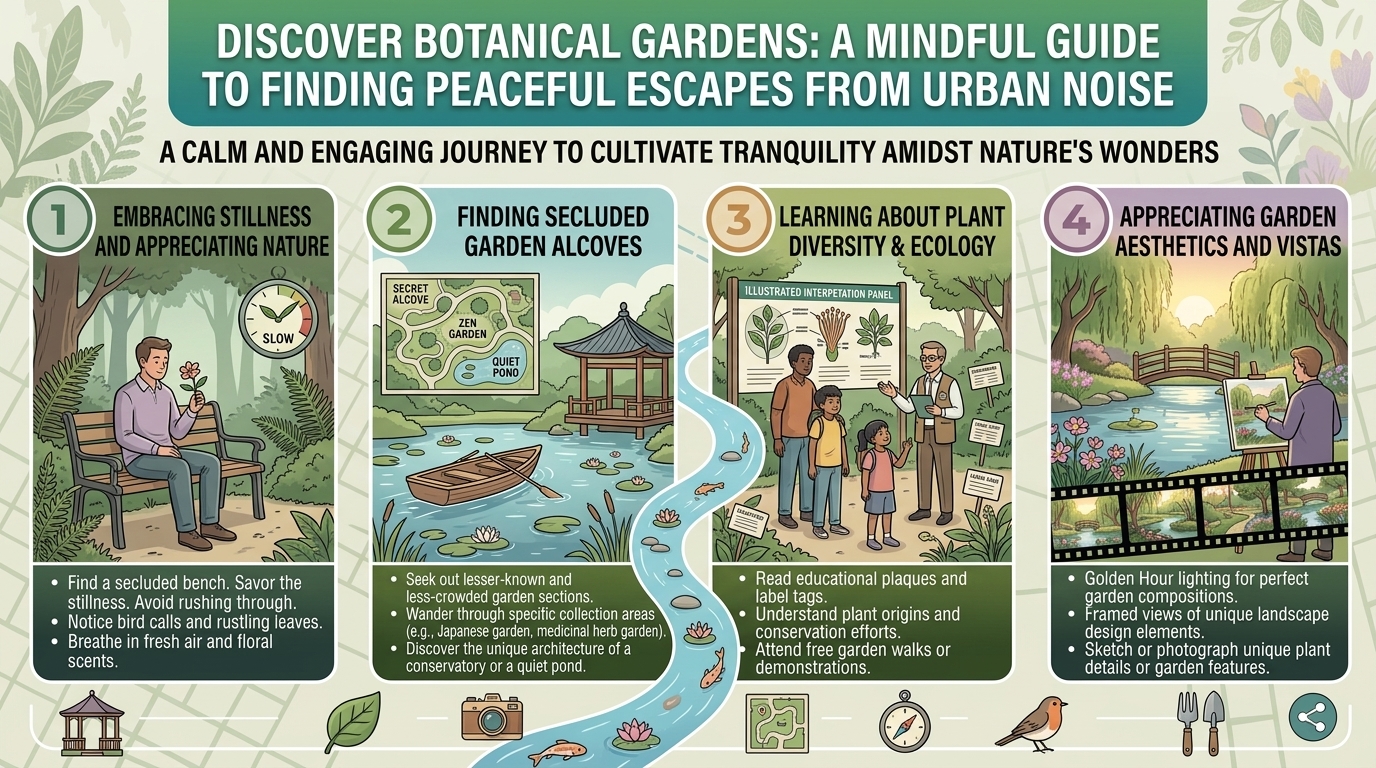
- Sight: Notice the fractal patterns in fern fronds or the subtle color gradients of a rose petal.
- Sound: Listen closely to the wind passing through bamboo stalks or water rippling in a koi pond.
- Smell: Inhale the rich, grounding aroma of damp earth, pine resin, and blooming jasmine.
- Touch: Feel the cool, smooth bark of a crepe myrtle or the velvety texture of a succulent leaf.
Frequently Asked Questions (FAQ)
1. What is the best time of year to visit a botanical garden for peace and quiet?
While spring brings dazzling blooms, it also attracts the largest crowds. For true quiet and solitude, late autumn or early weekday mornings offer mild weather, changing foliage, and near-empty pathways.
2. Can I bring food or have a picnic in most botanical gardens?
Policies vary by institution. Many gardens feature designated picnic lawns or cafes where you can eat, while others strictly prohibit outside food to protect delicate plant ecosystems from pests and litter. Always check the garden’s guidelines before packing a basket.
3. Are botanical gardens accessible for visitors with mobility needs?
Most major botanical gardens (such as NYBG, San Francisco Botanical Garden, and The Huntington) feature wide, paved, ADA-compliant pathways, smooth boardwalks, and complimentary wheelchair or electric cart rentals for visitors with mobility concerns.
4. Do botanical gardens charge admission fees?
Many world-class gardens charge ticket fees to fund ongoing conservation, research, and horticultural maintenance. However, many offer free admission days once a month or discounted rates for students, seniors, and local residents.
5. Can I bring my pet dog into a botanical garden?
Generally, no. With very few exceptions (such as designated dog-friendly hours at specific community arboretums), pets are banned from botanical gardens to protect fragile plant collections, wildlife habitats, and ensure guest comfort.
6. How do botanical gardens differ from regular city parks?
Regular city parks are designed primarily for active recreation (sports, playgrounds, dog walking). Botanical gardens are accredited living museums dedicated to plant conservation, scientific research, and horticultural education, requiring a more respectful, contemplative visitor etiquette.
7. What should I wear when visiting a botanical garden?
Dress in comfortable layers with supportive walking shoes, as you may easily log several miles exploring diverse microclimates, glass conservatories, and wooded trails. A hat, sunglasses, and sunscreen are also essential for outdoor garden paths.
8. Are photography and sketching permitted?
Yes! Casual smartphone and DSLR photography for personal use is widely encouraged. However, commercial shoots, wedding photography, or setting up large tripods often require special permits and prior arrangements.
9. What is a conservatory, and why should I visit it?
A conservatory is a large, climate-controlled glass structure used to cultivate exotic tropical, desert, or aquatic plants that cannot survive outdoors in local regional climates. Stepping inside a rainforest conservatory offers an immersive, humid sensory escape.
10. Where can I find more wellness and lifestyle guides in major cities?
For continuous inspiration on urban wellness, lifestyle culture, and curated local escapes, keep your browser locked right here to nyattitude.com!
Conclusion
Escaping the relentless noise of urban life is not a luxury; it is a mental health necessity. Botanical gardens serve as living, breathing sanctuaries right in our backyards, offering a restorative bridge back to nature when city stress runs high. Whether you are wandering beneath old-growth redwoods in San Francisco, exploring historic glasshouses in New York, or finding shade in a desert garden in the Southwest, these green havens remind us to slow down, breathe deeply, and reconnect.
At nyattitude.com, we empower you to balance fast city living with moments of intentional grace. Plan your next garden escape, leave the noise behind, and rediscover your inner peace today!