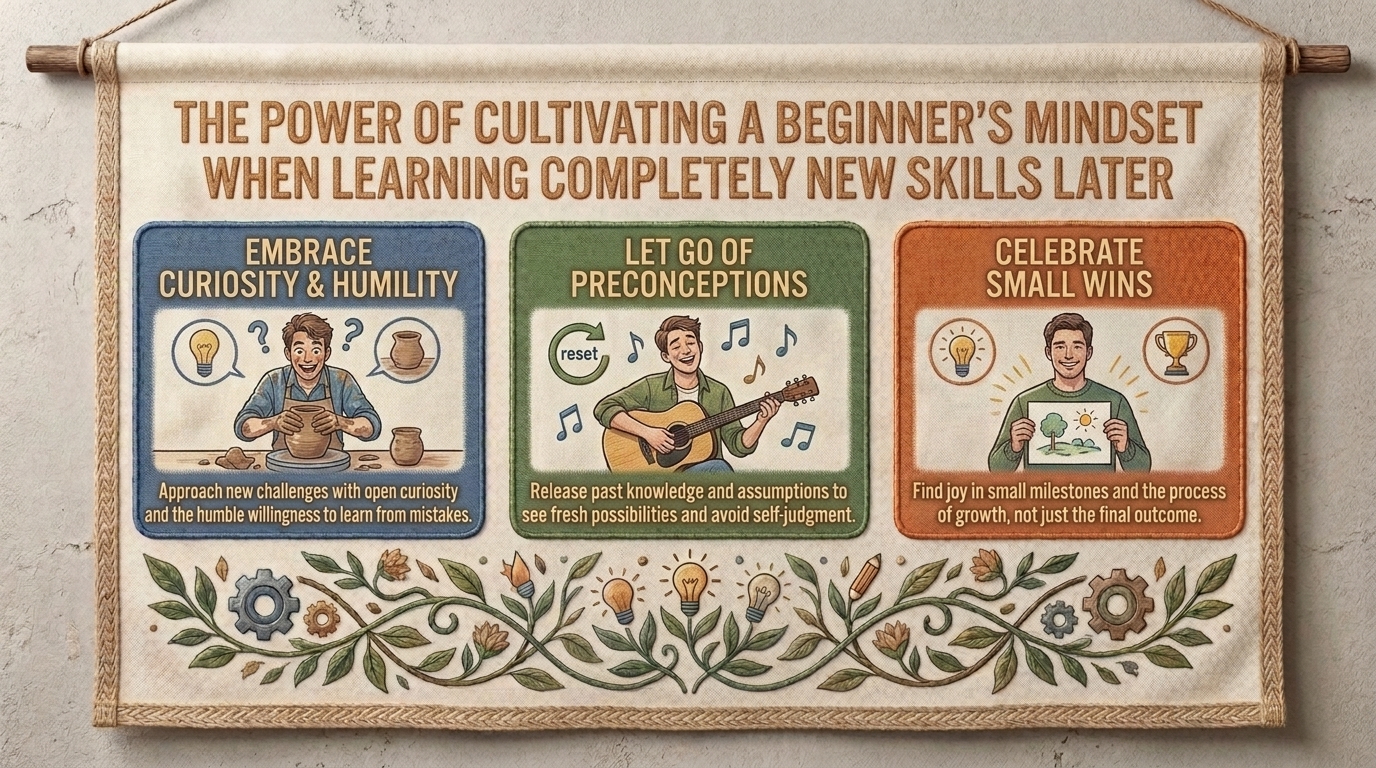
The Power of Cultivating a Beginner’s Mindset When Learning Completely New Skills Later
Introduction
In a professional and personal landscape that worships peak mastery, established expertise, and unyielding authority, admitting that you know nothing is often treated as a professional liability. Whether you are scaling an enterprise in Texas, leading a corporate legal team in New York, pioneering software innovation in San Francisco, shaping public policy in Washington, or driving creative media throughout California, the pressure to project absolute competence at all times is suffocating.
We climb our respective ladders, secure our titles, and build deep domains of specialized knowledge. Yet, this very specialization can quietly harden into a rigid cognitive trap. We become so accustomed to being the smartest person in the room, the strategist with all the answers, or the veteran executive who has seen it all, that we completely lose our ability to learn anything genuinely new.
Enter the Zen concept of Shoshin—the beginner’s mind. Coined by Zen Buddhist master Shunryu Suzuki, the beginner’s mind is an attitude of openness, eagerness, and lack of preconceptions when studying a subject, even when studying at an advanced level.
Reclaiming this childlike curiosity later in life—whether you are picking up coding at forty, learning a musical instrument at fifty, or mastering a brand-new industry framework at sixty—is not just a fun hobby; it is a vital neurological fountain of youth.
For forward-thinking innovators, lifelong learners, and modern professionals engaging with platforms like nyattitude.com, cultivating a beginner’s mind is the ultimate secret weapon for enduring adaptability and continuous growth. This comprehensive guide explores the neuroscience of adult learning, the cognitive dangers of the expert trap, step-by-step frameworks for embracing vulnerability, regional navigation across major U.S. hubs, actionable daily tips, and answers to the most frequently asked questions.
1. The Neuroscience of Adult Learning: Rewiring the Plastic Brain
To understand why embracing a beginner’s mindset is so transformative later in life, we must look at how the adult brain processes new skill acquisition.
The Myth of the Fixed Adult Brain
For decades, conventional neurological dogma claimed that human brains stopped growing after adolescence, locking our cognitive architecture into a fixed state. Modern neuroscience has completely shattered this myth through the discovery of lifelong neuroplasticity—the brain’s remarkable ability to reorganize itself by forming new neural connections throughout life, even into old age.
- The Effort Threshold: When you learn something completely foreign—such as speaking a new language, learning a complex instrument, or studying data science later in life—you experience deliberate friction. This friction forces your brain to create entirely new neural pathways rather than lazily sliding down existing cognitive highways.
Dopamine and Novelty
When you approach a skill as an absolute beginner, your brain experiences a surge of dopamine triggered by novelty. This neurochemical reward enhances memory retention, sharpens focus, and makes learning intrinsically joyful. By shutting down our ego and allowing ourselves to be clumsy beginners, we reactivate the childlike curiosity that modern adulthood often beats out of us.
2. The Expert Trap: Why Mastery Can Be a Cognitive Cage
While expertise is essential for professional execution, it carries a hidden psychological danger known as the Expert Trap or Curse of Knowledge.
The Danger of Preconceptions
As experts, we view the world through a heavily filtered lens of past successes. When faced with a new problem, our brains instinctively scan our historical data banks to find a pre-existing template that fits.
- The Blind Spot: While this saves energy, it blinds us to novel innovations, creative workarounds, and paradigm shifts. A true beginner, by contrast, has no preconceived notions, no ego to protect, and no rigid templates to follow. They ask “naive” questions that often cut straight to the core of a problem, exposing blind spots that veteran specialists miss entirely.
3. Regional Perspectives: Lifelong Learning Across Major U.S. Hubs
The pursuit of reinvention and beginner-level skill acquisition takes on unique cultural expressions across the diverse landscapes connected to nyattitude.com:
- New York: Amidst the high-velocity corporate and creative financial ecosystems of New York, executives and founders frequently reinvent themselves across multiple industries. Adopting a beginner’s mind allows seasoned Wall Street veterans and media moguls to successfully pivot into emerging digital and tech sectors without being weighed down by legacy ego.
- San Francisco: At the epicenter of the tech startup world, rapid iteration and continuous learning are survival traits. Professionals in San Francisco embrace the “perpetual beta” mindset, treating their skills and businesses as works in progress that require constant, humble relearning.
- Texas: Spanning booming innovation hubs like Austin, Dallas, and Houston, Texas combines deep-rooted industry heritage (such as energy and real estate) with massive high-tech and entrepreneurial expansion. Local leaders use beginner curiosity to cross-pollinate traditional industries with cutting-edge digital infrastructure.
- Washington: Anchored by policy, law, and federal institutions, Washington professionals often need to master complex regulatory frameworks from scratch. Approaching these dense policy shifts with a beginner’s analytical clarity ensures unbiased, highly effective governance and strategic lobbying.
- California (Southern & Broader): Balancing wellness, entertainment, and creative reinvention, Southern California culture encourages lifelong personal evolution, artistic exploration, and holistic self-discovery at any stage of life.
4. Step-by-Step Framework: How to Cultivate a Beginner’s Mindset
Embracing the vulnerability of being a beginner requires a deliberate, structured psychological shift. Follow these five steps to reactivate your beginner’s mind:
Step 1: Strip Away Your Title and Status
The greatest barrier to learning is your ego. Before stepping into a beginner learning environment—whether it’s a pottery class, a coding boot camp, or a martial arts dojo—consciously strip away your professional title, accolades, and accomplishments. In this new space, you are simply a student of the craft.
Step 2: Fall in Love with “Not Knowing”
We live in a culture that demands immediate certainty. To cultivate a beginner’s mind, reframe “I don’t know” from an admission of failure into an exciting invitation to discover. Treat ignorance not as a weakness, but as an open canvas.
Step 3: Ask “Naive” Questions Without Shame
Experts often hold back from asking basic questions out of fear of looking foolish. Force yourself to be the person who raises their hand and asks, “Can you explain that fundamental concept from the ground up?” You will often find that half the room was wondering the exact same thing but lacked your courage.
Step 4: Embrace Clumsiness and Frustration
Learning a new motor skill, language, or technical framework is inherently awkward. Your fingers will fumble, your code will throw errors, or your notes will sound sour. Expect to be bad at first. Welcome the frustration as proof that your brain is actively building new neural pathways.
Step 5: Maintain a Student Journal
Document your beginner journey. Write down your daily struggles, small breakthroughs, and moments of confusion. Looking back at these raw notes weeks later provides profound perspective on how rapidly your capability is expanding.
5. Actionable Tips to Practice Beginner Curiosity Daily
Incorporate these practical micro-habits into your weekly routine to keep your mind flexible and eager to learn:
- Pick a Completely Unfamiliar Skill Annually: Commit to learning something each year that has zero direct application to your current career (e.g., woodworking, rock climbing, painting, or chess). The goal is pure, unadulterated exploration.
- Shadow a Junior Colleague: Spend an afternoon watching or learning from someone who is early in their career or working in a completely different department. Drop your authority and ask them to teach you their workflow.
- Read Outside Your Industry Silo: If you work in finance, read books on botany, architecture, or philosophy. Cross-disciplinary reading is the ultimate fertilizer for innovative thinking.
- Practice Active Listening Without Rehearsing Your Reply: When conversing with experts in unfamiliar fields, stop formulating your rebuttal or displaying your own knowledge. Listen solely to understand their perspective as a true novice.
- Embrace Beginner Tools: When starting a new hobby, resist the temptation to buy expensive, professional-grade equipment immediately. Use basic, entry-level tools to appreciate the pure mechanics of the craft before investing heavily.
- Laugh at Your Mistakes: When you inevitably make a clumsy error while learning something new, laugh it off. Humor instantly disarms the ego and lowers the cortisol spike associated with performance anxiety.
6. Ten Frequently Asked Questions (FAQs)
1. What is the exact definition of a “beginner’s mind” (Shoshin)?
Coined in Zen Buddhism, a beginner’s mind is an attitude of openness, eagerness, freedom from preconceptions, and lack of ego when studying any subject—approaching every experience as if for the very first time, regardless of your level of overall expertise.
2. Why is it so difficult for successful adults to embrace being a beginner?
Successful adults have built their identities, careers, and self-esteem around being knowledgeable, competent, and respected experts. Stepping into a beginner role threatens the ego, exposes vulnerability, and forces us to tolerate the uncomfortable feeling of incompetence.
3. How does learning new skills later in life protect brain health?
Learning complex new skills creates cognitive reserve and stimulates neuroplasticity. Challenging your brain with novel tasks builds new synapses, improves memory, and protects against age-related cognitive decline far more effectively than passive activities like crossword puzzles.
4. Can a beginner’s mindset improve my performance in my primary career?
Yes, absolutely. By practicing beginner curiosity, you strip away rigid assumptions, eliminate confirmation bias, and become more receptive to emerging industry trends, innovative technologies, and fresh perspectives from younger colleagues.
5. What if I feel too old or set in my ways to learn something completely new?
Age is a psychological barrier, not a biological one. While learning takes structured effort, the adult brain retains neuroplasticity throughout life. Millions of people successfully master instruments, languages, and technical skills well into their later decades.
6. How do I overcome the fear of looking foolish in front of younger learners?
Reframe your vulnerability as a superpower. Younger learners will respect your humility, and your life experience actually gives you superior meta-learning skills (knowing how to learn efficiently) once you push past the initial intimidation.
7. What is the difference between genuine curiosity and “dabbling”?
Dabbling involves skimming the surface of many things without deep commitment. Cultivating a beginner’s mind involves committing to the deliberate, uncomfortable practice of a single new skill long enough to experience genuine cognitive growth.
8. How do fast-paced innovation hubs like San Francisco view beginner mentalities?
Innovation hubs thrive on reinvention. In places like San Francisco and New York, professionals who refuse to update their mental models or adopt beginner-level curiosity when new paradigms emerge quickly become obsolete.
9. How long should I stick with a new skill before judging my progress?
Give yourself a minimum commitment window of 30 to 60 days of consistent practice. The initial clumsy phase almost always peaks within the first few weeks; pushing past that threshold unlocks the rewarding flow state of actual competence.
10. What is the single easiest first step I can take today?
Identify one subject, hobby, or technical tool you have always been curious about but dismissed because you thought you were “too old” or “too busy.” Sign up for an introductory course, buy a beginner book, or spend 20 minutes exploring it today without any pressure to master it.
Conclusion
Mastery is a magnificent destination, but it can easily become a gilded cage that locks you out of further growth. By consciously stepping down from the pedestal of expertise and embracing the humility, vulnerability, and excitement of a beginner’s mind, you unlock boundless reservoirs of creativity, brain health, and personal joy.
Whether you are building your legacy across Texas, New York, California, Washington, or San Francisco, remember that your greatest breakthroughs will happen the moment you give yourself permission to be a clumsy, curious beginner once again.
What is one completely new skill or subject you have always wanted to explore, and what is one small step you can take this week to embrace the beginner’s mind?